Why Are There So Many Vending Machines?
Around one machine for every thirty people, standing unattended on empty rural roads full of cash. The reasons are land prices, labour shortage and a crime rate — and each of them explains something else about Japan.
 Signpost Japan
There is a vending machine at the end of almost every street in Japan, at the top of mountain trails, on platforms of stations that see four trains a day, and outside houses in villages with a population of two hundred. Japan has roughly one machine for every thirty people — the highest density in the world by a wide margin.
They are also full of cash and standing outside, unattended, all night.
Every part of that sentence is explained by something structural, and following the explanations tells you more about Japan than the machines themselves.
At a glance
- How many
- Roughly 4 million nationwide, about half of them for drinks
- Density
- Around one per thirty people — the highest ratio in the world
- Typical price
- 130–190 JPY for a drink
- Payment
- Coins, notes, IC card, and increasingly QR codes
- Also sold
- Hot drinks in cans, soup, ice cream, umbrellas, eggs, dashi stock, ramen
- The Japanese word
- 自販機 — jihanki
Reason one: land is expensive, labour is scarce
A vending machine occupies less than a square metre and needs no staff. In a country where urban land is among the most expensive on earth and the working-age population has been shrinking since the 1990s, that is a powerful combination.
A machine is, in effect, a shop that costs almost nothing to run. The owner of a scrap of land beside a house can install one and take a cut of the revenue. The drinks company handles restocking.
This is also why they appear in places with no obvious commercial logic: the land is already there and doing nothing, and the marginal cost of a machine is low.
Reason two: it is safe to leave them there
A vending machine is an unattended box containing several tens of thousands of yen in coins, standing on a public street overnight.
In most countries this would be a problem. In Japan, vandalism and theft of vending machines are rare enough that the economics work.
The same fact explains a great deal else: unlocked bicycles, wallets handed in to police boxes, children travelling to school alone on the subway from about seven years old, and shop displays left on the pavement outside.
Reason three: the coin
Japan’s smallest note is 1,000 yen and its largest common coins are 100 and 500 yen. A drink costs 130–190 yen. Coins in a pocket are the natural payment for a machine, and Japan’s continued heavy coin use — itself a product of a long cash preference — keeps the format working.
The 500-yen coin in particular, worth around £2.50, is unusually high-value for a coin and makes vending economics straightforward.
Reason four: an unusual regulatory and distribution history
Post-war Japanese beverage companies built enormous direct distribution networks, and the vending machine was the channel that let them place their brands physically closer to consumers than any competitor’s shelf.
The result is a market where the machine is not a fallback for when the shop is closed. It is a primary retail channel, and the machine’s contents rotate seasonally with the same attention as a supermarket aisle.
What is actually in them
Drinks, about half the total. Green tea, barley tea, oolong, coffee in cans, water, sports drinks, and a rotating cast of things that exist for three months and vanish.
Hot and cold in the same machine. A red label or a red band under the price means hot; blue means cold. Hot canned coffee and corn soup from October to March is a genuine seasonal pleasure.
Beer, sake and shochu — less common than they were, since machines that sell alcohol must verify age and many were removed. Some remain, often outside liquor shops.
Cigarettes, requiring a Taspo age-verification card, which visitors cannot get.
And then the long tail: ice cream, hot chips, ramen in a can, dashi stock, fresh eggs, rice, bananas, umbrellas, batteries, ties, face masks, flowers, insects for children’s summer projects, and — in tourist areas — increasingly novelty items aimed squarely at foreign visitors.
Disaster machines. Some are designed to dispense their contents free during an emergency, switched over remotely by the operator or manually by local authorities. Several thousand are installed under agreements with municipalities.
How to use one
Insert coins or a note, or tap an IC card
Coins from 10 yen upward, and 1,000 yen notes. Most machines take Suica, ICOCA and the rest.
Check hot or cold
Red band or label means hot, blue means cold. The same drink is often offered both ways.
Press the button, which lights when you have paid enough
Unlit buttons mean sold out or insufficient money.
Take the change from the lever or slot
There is usually a small lever to release coins.
Put the empty in the bin beside it
Not in a street bin, and not in your bag. The bin next to the machine is for that machine’s containers.
Is the number falling?
Yes, slowly. The total has declined from its peak in the mid-2000s.
The reasons: convenience stores multiplied and undercut machines on both price and range; alcohol and cigarette machines were removed under age-verification rules; energy costs made refrigeration more expensive; and cashless payment made the convenience-store alternative frictionless.
What is growing instead is higher-specification machines — touchscreens, cashless-only, remote inventory monitoring, and machines dispensing fresh or frozen food, which expanded significantly after 2020 when contactless retail became attractive.
Where to find the odd ones
For anyone who wants to collect them:
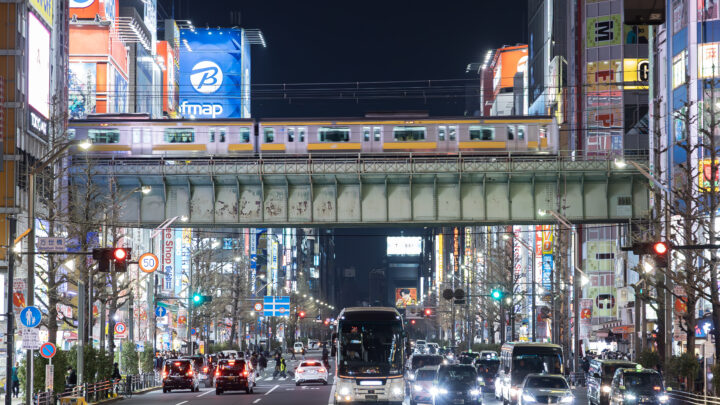
- Akihabara, Tokyo — the densest concentration of novelty machines.
- Sagamihara, Kanagawa — a well-known outdoor retro machine site with working 1970s and 1980s machines selling hot noodles and hamburgers.
- Onsen towns — beer and milk machines outside bathhouses. Cold milk after a bath, drunk standing with one hand on the hip, is a genuine tradition.
- Mountain trailheads and rural stations — where the sheer improbability is the point.
- Gachapon — capsule toy machines, a separate ecosystem entirely, with shops containing hundreds of them.
What it tells you
The vending machine is a small physical summary of several Japanese conditions at once: expensive land, scarce labour, high public safety, heavy coin use, and a retail culture that puts convenience close to the top of its priorities.
It is also, on a mountain road at dusk with nobody else around, a genuinely strange and rather comforting thing to come across.
Questions people actually ask
How many vending machines are there in Japan?
Roughly four million, about half of them selling drinks — the highest number per head of any country.
Why are they not vandalised?
Japan’s rates of vandalism and petty theft are very low, low enough that leaving a cash-filled machine unattended overnight is commercially viable. The same fact explains unlocked bicycles and unattended shop displays.
Can I use my IC card?
On most modern machines, yes — Suica, ICOCA and the other major cards. Older machines are coins and notes only.
What is the red band under the price?
It marks a hot drink. Blue marks cold. The same coffee is frequently sold both ways from the same machine.
Are the drinks expensive?
130–190 JPY, slightly more than a supermarket and slightly less than a station kiosk. Discount machines at 100 JPY exist in some areas.
Where do I put the empty bottle?
In the bin beside the machine, which exists for exactly that. Do not use it for other rubbish.
Keep planning
What Japanese People Think of Tourists — and the Unspoken Rules
Japan welcomed record visitor numbers and then started introducing tourist taxes, screens over viewpoints and residential no-go lanes. The honest version of…
Japan’s Ageing Population, Seen from the Train Window
Closed schools, unstaffed stations, and a taxi driver in his late seventies. Japan's demographic shift is not an abstraction — it is…
Why Japanese Cities Look the Way They Do
A noodle bar under a flat, a car park where a house was, wires overhead and no street names. Japanese cities look…