Nagano: Snow Monkeys, the Alps and Zenkoji
Japan's roof: eight of the country's ten highest peaks, a 1,400-year-old temple that predates the split in Japanese Buddhism, and macaques that learned to use a hot spring. Ninety minutes from Tokyo.
 Signpost Japan
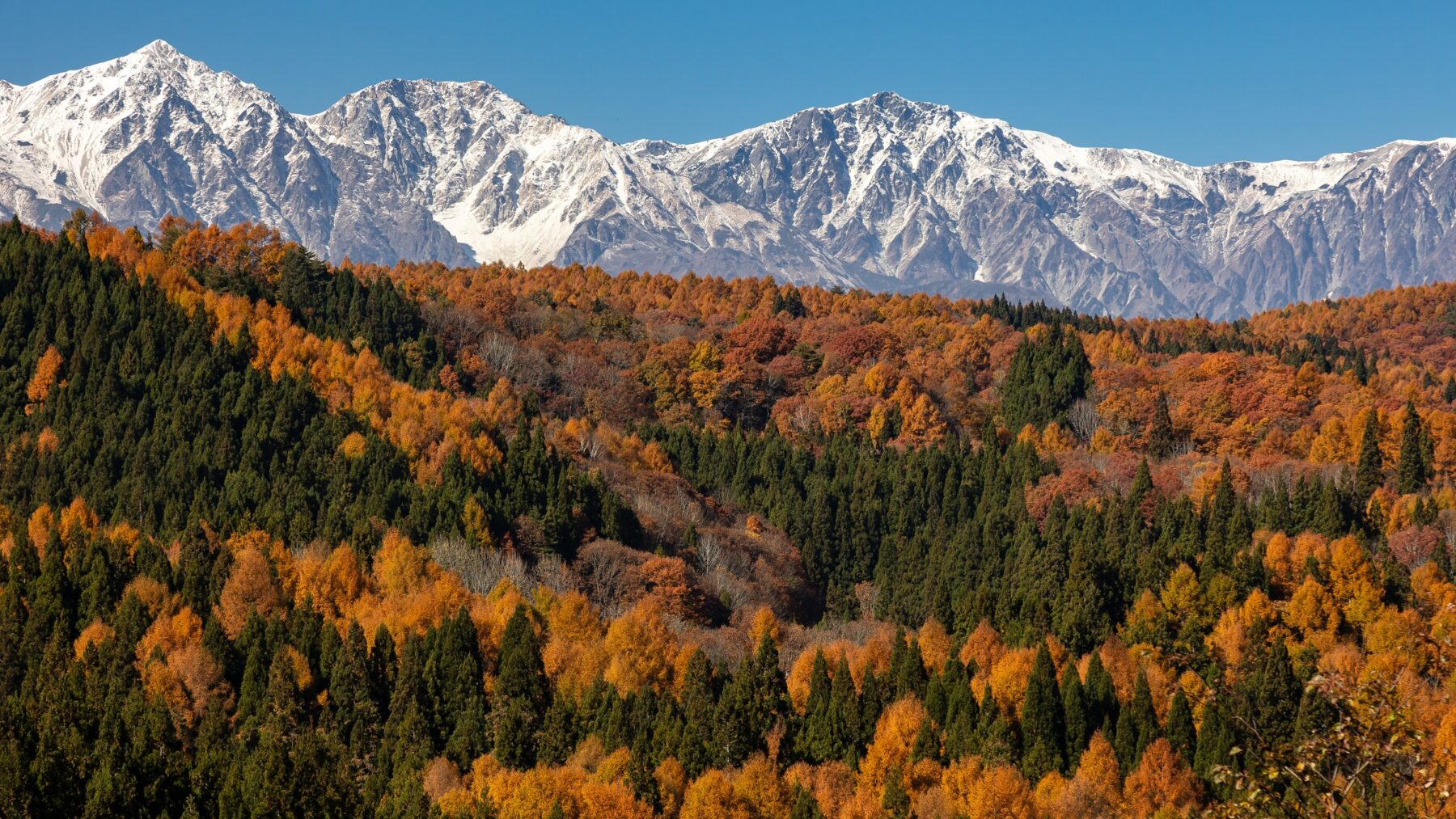
Nagano is the highest, most mountainous prefecture in Japan, landlocked and vertical, containing most of the Japan Alps and eight of the country’s ten highest peaks. It hosted the 1998 Winter Olympics, it produces the country’s best soba and some of its best wine, and it is ninety minutes from Tokyo on the Shinkansen.
It also contains the one wildlife photograph everybody has seen.
At a glance
- Days needed
- 2 for Nagano city and the monkeys. 4–5 to include Matsumoto and the Alps.
- Getting there
- 1h 25m from Tokyo by Hokuriku Shinkansen
- Getting around
- Trains between towns, buses to the mountains. A car helps in the valleys.
- Best months
- Jan–Feb for snow, May–Jun and Sept–Oct for mountains. Kamikochi closed mid-Nov to mid-Apr.
- Rail pass
- JR East Nagano-Niigata Area Pass
- Famous for
- Snow monkeys, Zenkoji temple, Hakuba skiing, Kamikochi, soba
Jigokudani — the snow monkeys
A troop of Japanese macaques that bathe in a hot spring pool in a steep valley, ringed by snow, apparently unbothered by the twenty people photographing them from a metre away.
The behaviour began in the 1960s when monkeys watched people using an outdoor bath at a nearby inn and copied it. The park built them a pool of their own to keep them out of the guest baths. It worked.
Practicalities:
- From Nagano Station, a bus to Kanbayashi Onsen (about 45 minutes), then a 1.6km walk through forest, uphill, taking 30–40 minutes.
- The path is snow-packed and slippery in winter. Boots with grip, not city shoes. Crampons are sold at the trailhead.
- The monkeys are wild and free to leave. On warm days they often do — winter is when they are reliably in the water.
- Entry around 800 JPY.
- Do not touch them, do not make eye contact, do not carry visible food.
Zenkoji
Nagano city grew up around this temple, and it is one of the most important in Japan for a specific reason: it was founded in the 7th century, before Japanese Buddhism split into sects, so it belongs to none of them and admits everyone — men and women, any school, which was unusual for most of Japanese history.
It holds what is said to be the first Buddhist image brought to Japan. Nobody has seen it since 654; it is an absolute secret Buddha, and even the abbot views only a replica, once every six years.
Two things to do:
- The morning service (o-asaji), at dawn, every day of the year. The abbot walks the approach and touches the heads of those kneeling along it.
- O-kaidan meguri — a pitch-dark passage beneath the main altar. You feel along the wall for a metal key said to bring enlightenment. It is completely, disorientingly black.
The approach street to the temple is lined with pilgrim inns and shops, several of which have been trading for centuries.
Matsumoto
An hour south by train, and the prefecture’s other city.
Matsumoto Castle is one of only twelve original castle keeps in Japan and one of five designated National Treasures. Built from 1594, black-walled, sitting in a moat with the Alps behind it. The interior is original: steep wooden ladders, low beams, arrow slits. Allow an hour, and expect a queue on the stairs.
The town also has a preserved merchant street, Nakamachi, with white-walled storehouses, and a good crafts scene.
The mountains
Kamikochi
A high valley in the Northern Alps at 1,500 metres, closed to private cars, reached by bus. The Azusa river runs milky blue-green between forest and 3,000-metre peaks, with a flat, easy walking trail along it.
Open mid-April to mid-November only. In peak season buses are the only access and they fill; go early.
You do not need to be a hiker. The valley floor walk from Taisho Pond to Myojin Pond is level and about two hours.
Hakuba
The 1998 Olympic alpine venue and one of Japan’s two big international ski destinations alongside Niseko. Ten linked resorts, reliable snow from December to April, and a summer season of hiking and paragliding.
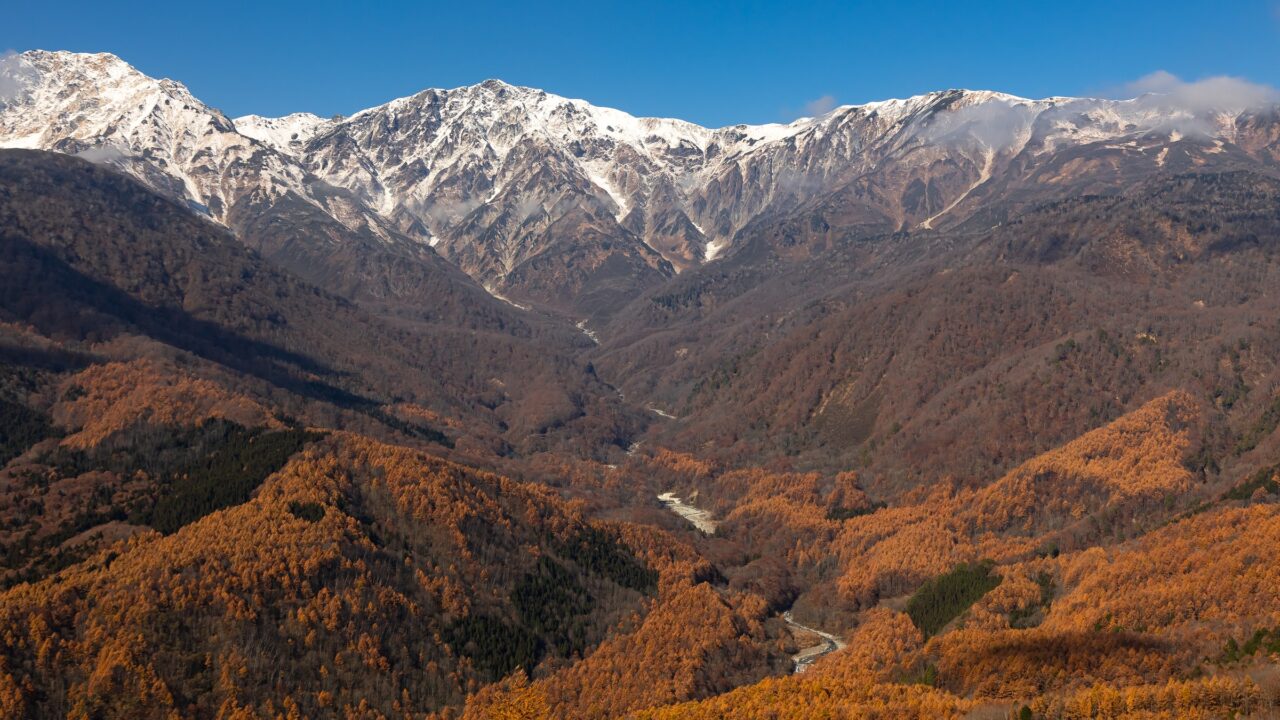
Norikura, Utsukushigahara, Kiso Valley
Quieter alternatives. The Kiso Valley in particular — the old Nakasendo highway between Kyoto and Edo — has two preserved post towns, Magome and Tsumago, linked by an 8km walking trail that is one of the best day hikes in Japan and requires nothing more than shoes.
What to eat
- Soba — Nagano’s climate suits buckwheat and the prefecture takes it very seriously. Eat it cold, dipped.
- Oyaki — steamed or grilled buns stuffed with vegetables, a farmhouse food.
- Sanzoku-yaki — a large fried chicken thigh, marinated in garlic and soy. Enormous.
- Wasabi — the Daio farm near Matsumoto is the largest in Japan.
- Wine — the Chikuma river valley is Japan’s most serious wine region.
- Horse sashimi (basashi) — a Nagano and Kumamoto speciality, if you want it.
Suggested trips
2 days. Nagano city: Zenkoji and the morning service, Jigokudani monkeys, soba.
4 days. Add Matsumoto (castle, Nakamachi) and either Kamikochi in summer or Hakuba in winter.
5 days, walking. Nagano, Matsumoto, then the Kiso Valley — Magome to Tsumago on foot, staying in a minshuku in a post town.
Where to stay
- Nagano city — business hotels near the station; also temple lodging at Zenkoji, which puts you at the morning service without an alarm-clock journey.
- Yudanaka / Shibu Onsen — the onsen village below the monkey park, with nine public baths you walk between in a yukata. The best base for Jigokudani.
- Matsumoto — good small hotels and guesthouses.
- Hakuba — everything from hostels to international resort hotels.
Combine it with
Nagano sits on the Hokuriku Shinkansen between Tokyo and Kanazawa, which makes it an easy stop rather than a detour. To the south, Gifu and Takayama are reachable through the mountains; Yamanashi and the Fuji lakes are two hours away.
→ Kanazawa: Kyoto without the queues
Questions people actually ask
Are the snow monkeys worth the trip?
In winter, yes. In summer they are often absent from the pool and the walk is the same 40 minutes. Go between December and March or consider skipping it.
Can I do the monkeys as a day trip from Tokyo?
Yes — Shinkansen to Nagano, bus, walk, and back — but it is a long day of about eleven hours. A night in Shibu Onsen turns it into a much better trip.
Is Kamikochi difficult?
No. The valley floor is flat, well surfaced and about two hours end to end. Serious climbing exists above it, but the famous views are all from the easy path.
What do I wear for the monkey park in winter?
Waterproof boots with grip, and layers. The path is packed snow and ice, and 40 minutes each way in city shoes is genuinely unpleasant and slightly risky.
Is Matsumoto Castle better than Himeji?
Different. Himeji is larger, white and more spectacular; Matsumoto is black, more compact, and sits with the Alps directly behind it. Both are original. If you can only do one, Himeji — but Matsumoto has a fraction of the queue.
Does the Japan Rail Pass cover Nagano?
Yes, on the Hokuriku Shinkansen from Tokyo. The buses to the monkey park and Kamikochi are not covered.
Keep planning
Ghibli Park and the Ghibli Museum: How to Get Tickets
Two separate places, 350 kilometres apart, with two separate ticket systems and no tickets at the door. Both release on the 10th…
Kamakura and Enoshima: The Easiest Day Trip from Tokyo
An hour from Tokyo Station: a bronze Buddha from 1252, temples in the hills behind the town, and a tram that runs…
Nikko in a Day: The Shrines, the Lake, and Which Pass to Buy
Nikko is two day trips in one place: gilded shrines in the town, and a lake and a waterfall an hour above…