Sendai and Matsushima: The Easy Way into Tohoku
Ninety minutes from Tokyo and almost no foreign visitors. A city of tree-lined avenues, a bay of 260 pine islands, and the grilled beef tongue that a post-war noodle cook invented here.
 Signpost Japan
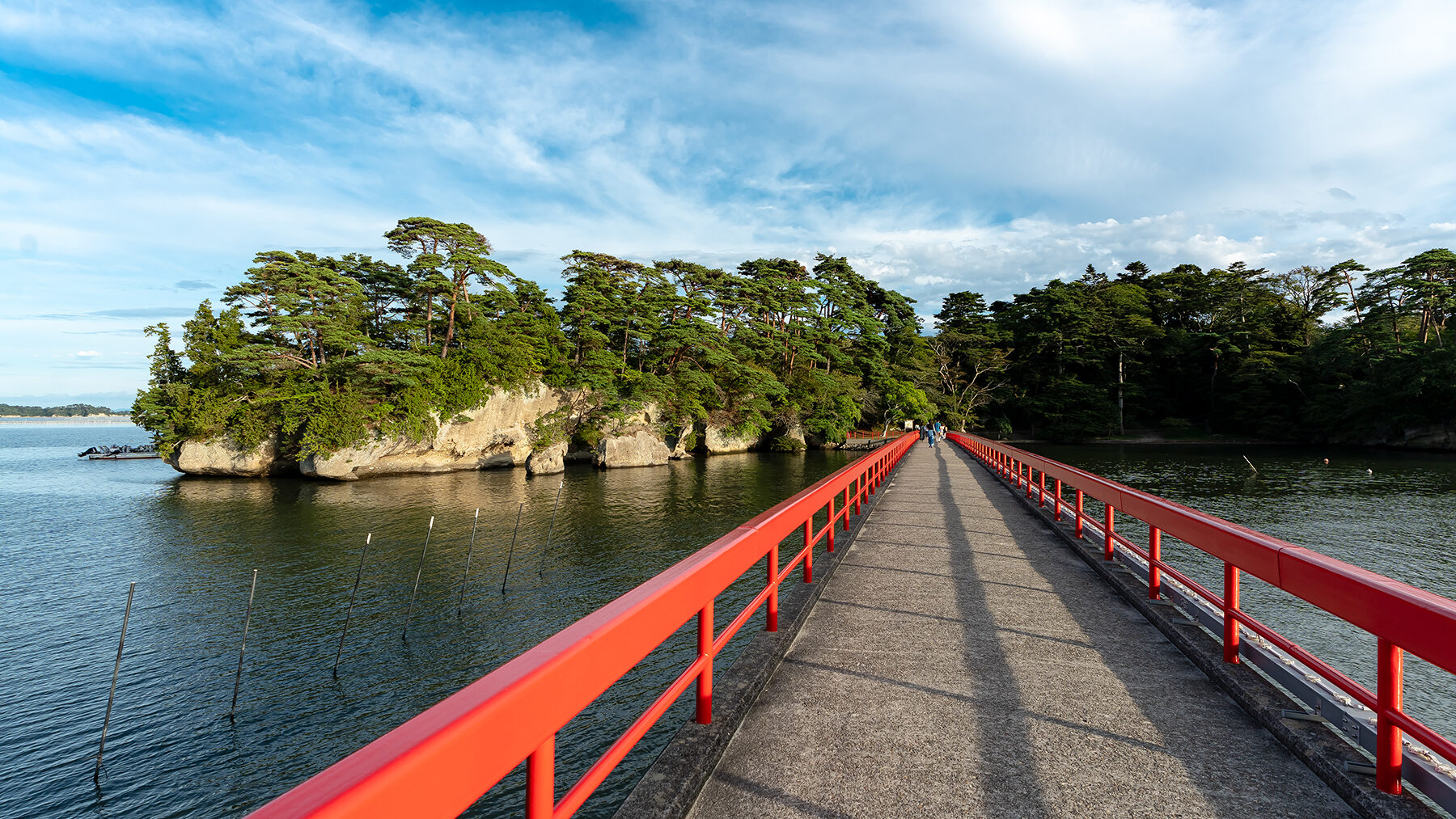
Tohoku — the northern third of Honshu — receives a small fraction of the foreign visitors that Kansai does, and Sendai is the easiest door into it. Ninety minutes from Tokyo on the Shinkansen, a city of a million people, and from there a bay that has been considered one of Japan’s three most beautiful views since the seventeenth century.
If you want somewhere that feels like Japan without feeling like a queue, this is the nearest such place to Tokyo.
At a glance
- Days needed
- 2 days for Sendai and Matsushima. 4–5 to go deeper into Tohoku.
- Getting there
- 1h 30m from Tokyo by Tohoku Shinkansen
- Getting around
- Sendai’s Loople tourist bus; JR Senseki line to Matsushima (40 min)
- Best months
- April for blossom, late October for colour. Summer is mild; winter is cold and clear.
- Rail pass
- JR East Tohoku Area Pass — Tohoku’s distances make this one easy to justify
- Famous for
- Gyutan, Matsushima bay, the Tanabata festival in August
Sendai
Founded in 1600 by Date Masamune, a one-eyed warlord who sent his own diplomatic mission to Rome in 1613 and built a city on a grid of broad, tree-lined avenues. Sendai is still called Mori no Miyako — the City of Trees — and the zelkovas along Jozenji-dori are its best feature.
The city was heavily bombed in 1945 and rebuilt, so this is not a place for old buildings. It is a pleasant, green, well-proportioned modern city with a few specific things worth your time.
Zuihoden — Date Masamune’s mausoleum, on a wooded hill, rebuilt after the war in the elaborate, brightly painted Momoyama style. Small and genuinely beautiful.
Sendai Castle site (Aoba-jo) — the buildings are gone; the stone walls, the view over the city and an equestrian statue of Masamune remain.
Jozenji-dori — the tree-lined boulevard, with sculpture along it, a jazz festival in September and an enormous illumination in December.
Osaki Hachimangu — a 1607 shrine in black lacquer and gold, a National Treasure, and less visited than it should be.
Gyutan — the local dish
Grilled beef tongue, sliced thick, salted, and cooked over charcoal, served with barley rice, oxtail soup and pickled greens.
It was invented in Sendai in 1948 by a soba cook named Keishiro Sano, who noticed that the American occupation forces discarded tongue and tail. It is now the thing the city is known for nationally, and it is genuinely excellent — closer to good steak than to offal.
Every gyutan restaurant serves the same set. Eat it at least once.
Matsushima
Forty minutes east by train. A bay containing about 260 pine-covered islets of white tuff, eroded into arches and pillars.
It has been designated one of the Nihon Sankei — the three great views of Japan — since 1643. The poet Basho came in 1689 and reportedly found himself unable to write about it.
What to do:
- A bay cruise, 50 minutes, from the pier. The standard way to see it.
- Godaido, a small hall on a rocky islet reached by a red bridge with gaps in the planks, so that pilgrims had to look down at the sea and concentrate.
- Zuiganji — Date Masamune’s family temple, a Zen complex with painted gold screens and a cave system carved into the cliff behind it. A National Treasure.
- Entsuin — next door, with a moss garden and a rose garden, and a mausoleum for Masamune’s grandson.
- The four viewpoints — Sokanzan, Otakamori, Tomiyama and Ogitani, each a short climb, each giving a different composition of the bay.
The 2011 tsunami
On 11 March 2011 an offshore earthquake generated a tsunami that devastated this coastline. Miyagi prefecture suffered the greatest loss of life of any in Japan.
Matsushima itself was comparatively protected — the islands broke the wave — and the town was operating again within months. The coast north and south was not.
Several places along the coast now serve as memorials and museums, and the region’s tourism bodies actively encourage visitors: Ishinomaki, half an hour away, has a memorial park at the former Okawa Elementary School, and the rebuilt town is a study in how a place recovers. Visiting is welcomed rather than intrusive, provided it is done with attention.
Beyond Sendai
Yamadera — an hour west, in Yamagata prefecture. A temple complex clinging to a cliff, reached by 1,015 stone steps through cedar forest. Basho wrote his most famous haiku here. It is the single best half-day trip in Tohoku.
Naruko Onsen — an hour north, a hot spring town in a gorge, spectacular in late October.
Zao — the “snow monsters”, fir trees encased in wind-driven ice into strange forms, visible from a ropeway in February.
Hiraizumi — an hour north in Iwate, a UNESCO site: the golden hall of Chuson-ji, all that survives of a twelfth-century northern capital that briefly rivalled Kyoto.
Festivals
Sendai Tanabata, 6–8 August. The largest star festival in Japan: the covered arcades are hung with thousands of enormous paper-and-bamboo streamers, some five metres long, made by hand each year. Two million visitors and, unusually for a Japanese festival, largely quiet.
Where to stay
Around Sendai Station — business hotels, well priced, and the Shinkansen and local lines are underneath you.
Matsushima — a handful of ryokan with bay views. Staying means seeing the islands at dawn without a coach in sight.
Akiu or Sakunami Onsen — hot spring towns within 40 minutes of Sendai, and a good alternative to a city hotel.
Combine it with
Sendai is the gateway to the rest of Tohoku: Yamagata and Yamadera to the west, Iwate and Hiraizumi to the north, and Aomori three hours up the line. Tokyo is 90 minutes back south.
→ Aomori: Nebuta, apples and the far north
Questions people actually ask
Is Tohoku worth it on a first trip?
Not instead of Kyoto. But if you have two weeks and want one region with almost no foreign visitors, Sendai is the easiest to reach and the least demanding to travel in.
Is Matsushima worth a day?
A half day for the cruise and Zuiganji; a full day if you add the viewpoints and Oku-Matsushima. A night there is better than either.
How is Tohoku for English?
Weaker than Tokyo or Kyoto. Signage at major stations and tourist sites is bilingual; menus and small businesses often are not. A translation app covers it.
Is it safe to visit the tsunami-affected coast?
Yes, entirely, and local tourism bodies encourage it. Memorial sites are open, well interpreted and treated seriously by visitors.
How cold is a Tohoku winter?
Sendai is mild for its latitude — coastal, often below freezing but with less snow than the Japan Sea side. Inland Yamagata and Aomori are a different proposition entirely.
Is the Tohoku rail pass worth buying?
Usually yes. Distances are long and fares are high — Tokyo to Aomori alone is over 17,000 JPY one way — so the flexible five-day pass pays for itself quickly.
Keep planning
Ghibli Park and the Ghibli Museum: How to Get Tickets
Two separate places, 350 kilometres apart, with two separate ticket systems and no tickets at the door. Both release on the 10th…
Kamakura and Enoshima: The Easiest Day Trip from Tokyo
An hour from Tokyo Station: a bronze Buddha from 1252, temples in the hills behind the town, and a tram that runs…
Nikko in a Day: The Shrines, the Lake, and Which Pass to Buy
Nikko is two day trips in one place: gilded shrines in the town, and a lake and a waterfall an hour above…