Aomori: Nebuta, Apples and the Far North
The top of Honshu: a festival of illuminated paper warriors, a castle with 2,600 cherry trees, a 5,000-year-old village, and more snow than almost anywhere inhabited on earth.
 Signpost Japan
Aomori is the northern tip of the main island, three hours from Tokyo by Shinkansen and about as far from the standard tourist route as it is possible to get while remaining on a bullet train line. It grows more than half of Japan’s apples, receives some of the heaviest snowfall of any populated place on the planet, and holds a summer festival that is genuinely unlike anything else in the country.
At a glance
- Days needed
- 3 days. 4 with Hirosaki and Lake Towada.
- Getting there
- 3h from Tokyo to Shin-Aomori by Tohoku Shinkansen. 1h from Hakodate.
- Getting around
- Trains between the cities, buses to Oirase and Towada. A car helps.
- Best months
- Late April for Hirosaki blossom, 2–7 August for Nebuta, late October for Oirase
- Rail pass
- JR East Tohoku Area Pass
- Famous for
- Nebuta Matsuri, apples, Jomon archaeology, and extraordinary snow
Nebuta Matsuri — 2–7 August
The reason most people come. Enormous illuminated paper floats — up to nine metres wide and five high, depicting warriors and demons from Japanese and Chinese legend — are pushed through the streets of Aomori city each evening by teams of handlers, accompanied by drums, flutes and thousands of costumed dancers called haneto.
Two things make it different from other Japanese festivals.
The floats are art. Built over a year by named craftsmen on a wooden and wire frame covered in washi paper and lit from within. They are judged, and the winners are displayed afterwards.
You can join in. Anyone may dance as a haneto — the only requirement is the costume, which can be rented in the city for a few thousand yen. This is unusual; most Japanese festivals are watched, not participated in.
Around three million people attend across six days. Book accommodation months in advance, or stay in Hirosaki or Hachinohe and travel in.
Outside the festival, the Nebuta Museum WA RASSE by the station displays several full-size floats year-round and is worth an hour.
Hirosaki
Forty minutes south-west, and the prefecture’s cultural capital — a castle town that was never bombed.
Hirosaki Castle has one of only twelve surviving original keeps in Japan, small and three-storeyed, in a park with about 2,600 cherry trees. The blossom here, in late April, is widely considered the best in the country: the moat fills with fallen petals until the water disappears under a pink layer, a phenomenon locals call hanaikada, the flower raft.
The town also has a well-preserved samurai quarter, a Western-style architecture trail from the Meiji period, and a serious apple pie culture — the tourist office publishes a map of about fifty cafés serving them.
Oirase Gorge and Lake Towada
The prefecture’s natural centrepiece.
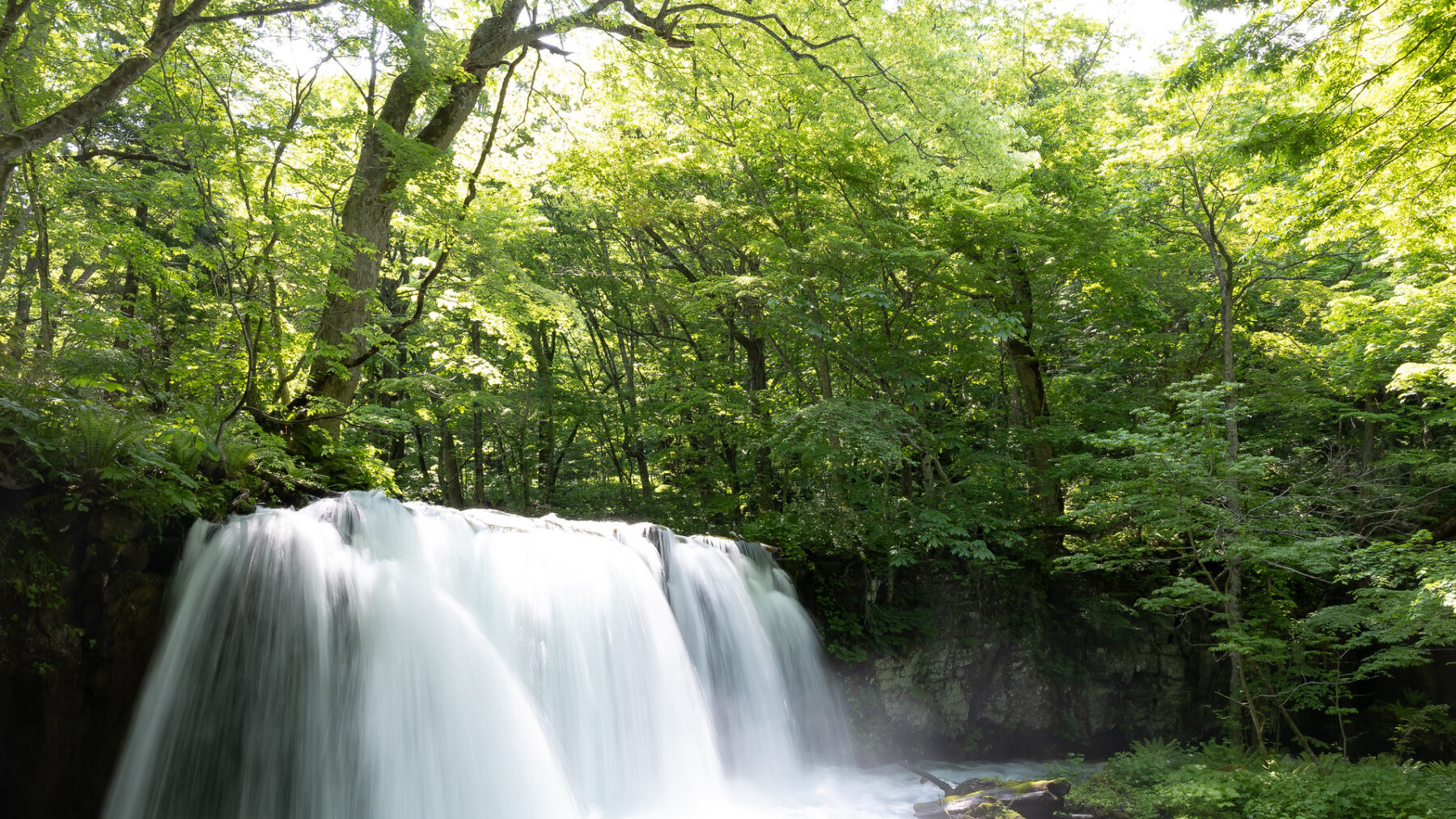
Lake Towada is a caldera lake of extraordinary clarity, and the Oirase Stream runs out of it through a 14km gorge of moss, boulders and about a dozen waterfalls.
A flat walking path follows the stream the whole way, with a road alongside and buses that will pick you up at several points, so you can walk as much or as little as you like. The best section is the 9km from Ishigedo to Nenokuchi.
Late October is the peak, when the beech and maple turn and the gorge becomes one of the most photographed places in Tohoku. Buses fill; go on a weekday.
Sannai-Maruyama
A large Jomon-period settlement, occupied from roughly 3900 to 2200 BC, excavated from 1992 when the prefecture began building a baseball stadium and found a village instead.
Six enormous chestnut posts, over a metre in diameter, mark a structure whose purpose is still debated. There are reconstructed pit dwellings, a longhouse, and a museum of the artefacts — including some of the earliest lacquerware in the world.
Inscribed by UNESCO in 2021 as part of the Jomon Prehistoric Sites in Northern Japan. It reframes what “old” means in Japan: this village was abandoned two thousand years before Nara was built.
Shirakami-Sanchi
A UNESCO natural site on the border with Akita: the largest remaining virgin beech forest in East Asia, essentially untouched since the last ice age. Access is limited and permits are required for the core zone, but the buffer areas — the Anmon falls trail and the twelve lakes of Juniko, one of which is an improbable cobalt blue — are open and walkable.
Snow
Aomori city receives an average of around eight metres of snowfall in a season, which makes it one of the snowiest cities on earth. Nearby Sukayu Onsen has recorded snow depths over five metres.
The consequences are visible everywhere: covered arcades, arrow markers pointing down at the roads for snowplough drivers, and buildings with second-floor entrances.
Two winter-specific things worth planning around:
- Hakkoda — snow monsters, ice-encased fir trees, reached by ropeway, and serious backcountry skiing.
- Sukayu Onsen — a 300-year-old bathhouse with an enormous unpartitioned cypress bath known as the “thousand-person bath”, mixed-gender by tradition with designated women’s hours.
What to eat
- Apples. More than half of Japan’s crop. Try them fresh, as juice, as pie, and as cider — Aomori’s is genuinely good.
- Nokke-don — at Aomori’s Furukawa market, you buy a bowl of rice and then walk between stalls buying individual pieces of seafood to put on it.
- Senbei-jiru — a Hachinohe hotpot with wheat crackers cooked in the broth.
- Ichigo-ni — sea urchin and abalone soup, a delicacy from the eastern coast.
- Scallops from Mutsu Bay, which are among the best in Japan.
- Nihonshu — Aomori’s rice and water make excellent sake; Denshu is the famous label.
Suggested trip
Day 1 — Aomori city
Sannai-Maruyama in the morning, the Nebuta museum after lunch, Furukawa market for a nokke-don, and the Aomori Museum of Art with its Nara Yoshitomo dog.
Day 2 — Hirosaki
The castle and park, the samurai quarter, the Meiji architecture trail, and apple pie. Return in the evening.
Day 3 — Oirase and Towada
Bus to the gorge, walk 9km along the stream, continue to Lake Towada, bus back. A long but easy day.
Where to stay
Aomori city — business hotels near the station, well priced except during Nebuta. Hirosaki — small hotels and guesthouses; a good alternative base. Sukayu or Asamushi Onsen — traditional hot spring inns, and the reason to have a car.
Combine it with
Aomori sits between Sendai (2h) and Hakodate in Hokkaido (1h through the Seikan tunnel), which makes it the natural land bridge to the north island. Akita and its own festivals are two hours west.
→ Hokkaido through the seasons
Questions people actually ask
Is Nebuta worth planning a trip around?
Yes, if you can get accommodation. It is one of the two or three most spectacular festivals in Japan and the only major one where visitors can join the dancing.
When is Hirosaki's cherry blossom?
Typically the last week of April into early May — about a month after Tokyo. Many consider it the best display in Japan, and it is a genuine second chance if you missed the season further south.
Do I need a car?
Not for Aomori city, Hirosaki or Hachinohe, which are all on the rail network. For Oirase, Towada, Shirakami and the onsen, buses exist but run infrequently — a car makes a real difference.
How much English is there?
Less than in Tokyo. Major sites and stations are signed bilingually; restaurants and buses often are not. A translation app and a written destination name cover most situations.
Is winter travel realistic?
Yes, but plan for it. Trains run reliably; buses to rural areas may not. Proper boots are essential, and eight metres of seasonal snowfall is not an exaggeration.
Is Sannai-Maruyama interesting without an archaeology background?
Yes. The scale of the reconstructed structures does most of the work, and the museum is well interpreted in English. Allow two hours.
Keep planning
Ghibli Park and the Ghibli Museum: How to Get Tickets
Two separate places, 350 kilometres apart, with two separate ticket systems and no tickets at the door. Both release on the 10th…
Kamakura and Enoshima: The Easiest Day Trip from Tokyo
An hour from Tokyo Station: a bronze Buddha from 1252, temples in the hills behind the town, and a tram that runs…
Nikko in a Day: The Shrines, the Lake, and Which Pass to Buy
Nikko is two day trips in one place: gilded shrines in the town, and a lake and a waterfall an hour above…