Hokkaido Through the Seasons: Snow, Flowers and Seafood
Japan's north island is the size of Austria with a fifth of the people. Four completely different trips depending on the month you go — and the one thing you need that you would not need anywhere else in Japan.
 Signpost Japan
Hokkaido is the part of Japan that does not look like Japan. There are no ancient capitals, few old temples, and almost none of the density that defines the rest of the country. It was settled systematically only from the 1870s, and it shows: wide streets on a grid, barns, silos, and a road that runs straight for forty kilometres.
It is also the size of Austria with a fifth of its population, which makes it the one part of Japan where you probably want a car.
At a glance
- Days needed
- 4 minimum, 7 to do more than one region
- Main gateway
- New Chitose (CTS), 37 min by rapid train to Sapporo. 1h 40m flight from Tokyo.
- Getting around
- Rent a car. The rail network is thin and shrinking.
- Best months
- Feb for snow, June–August for everything else, late Sept for colour
- Rail pass
- JR Hokkaido Rail Pass, but only if you are staying on the main lines
- The catch
- Winter driving needs snow experience. Summer needs booking months ahead.
Four different trips
Hokkaido is not one destination. What you get depends almost entirely on the month.
Winter (December–March) — snow
The reason Hokkaido has an international reputation. Siberian air crosses the Sea of Japan, picks up moisture, and drops it on the western mountains as some of the driest, lightest snow on earth.
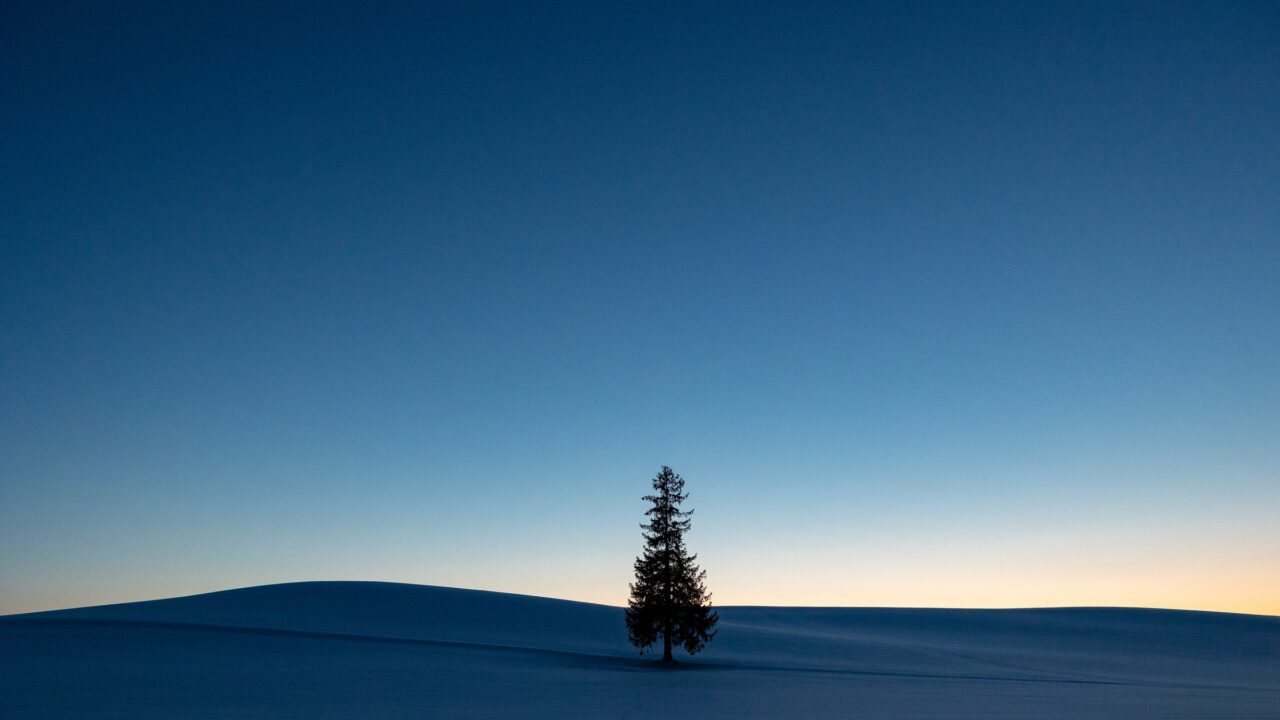
- Niseko — the famous one. Anglophone, well organised, expensive, and the powder deserves the fuss.
- Furano and Rusutsu — quieter, cheaper, arguably better skiing.
- Sapporo Snow Festival — early February, two million visitors, enormous ice sculptures in Odori Park.
- Drift ice at Abashiri — icebreaker cruises through the Sea of Okhotsk pack ice, late January to March. Genuinely extraordinary.
Late spring (May) — blossom, late
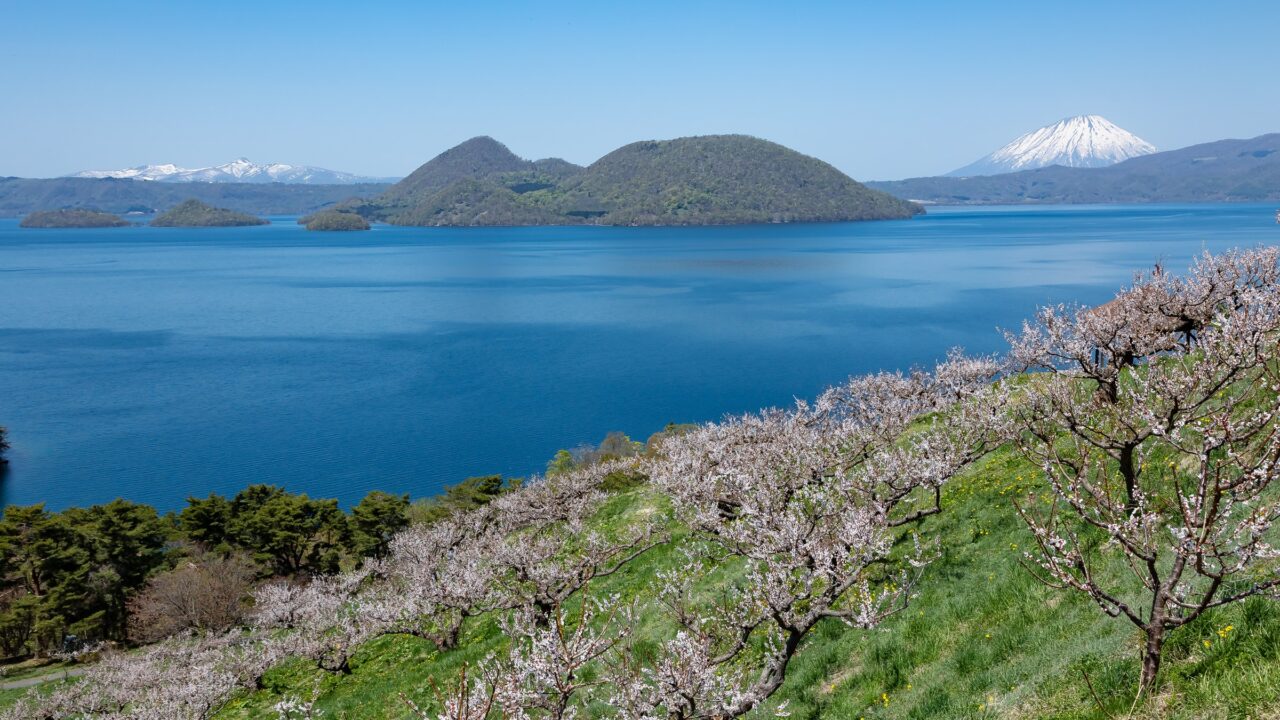
Hokkaido’s cherry blossom arrives in early May, a month after Tokyo’s, and often overlaps with plum. If you missed the blossom further south, this is the second chance.
Summer (June–August) — the best summer in Japan
While the rest of the country is at 34°C and humid, Hokkaido sits in the mid-twenties with low humidity and no rainy season. This is when Japanese people come.
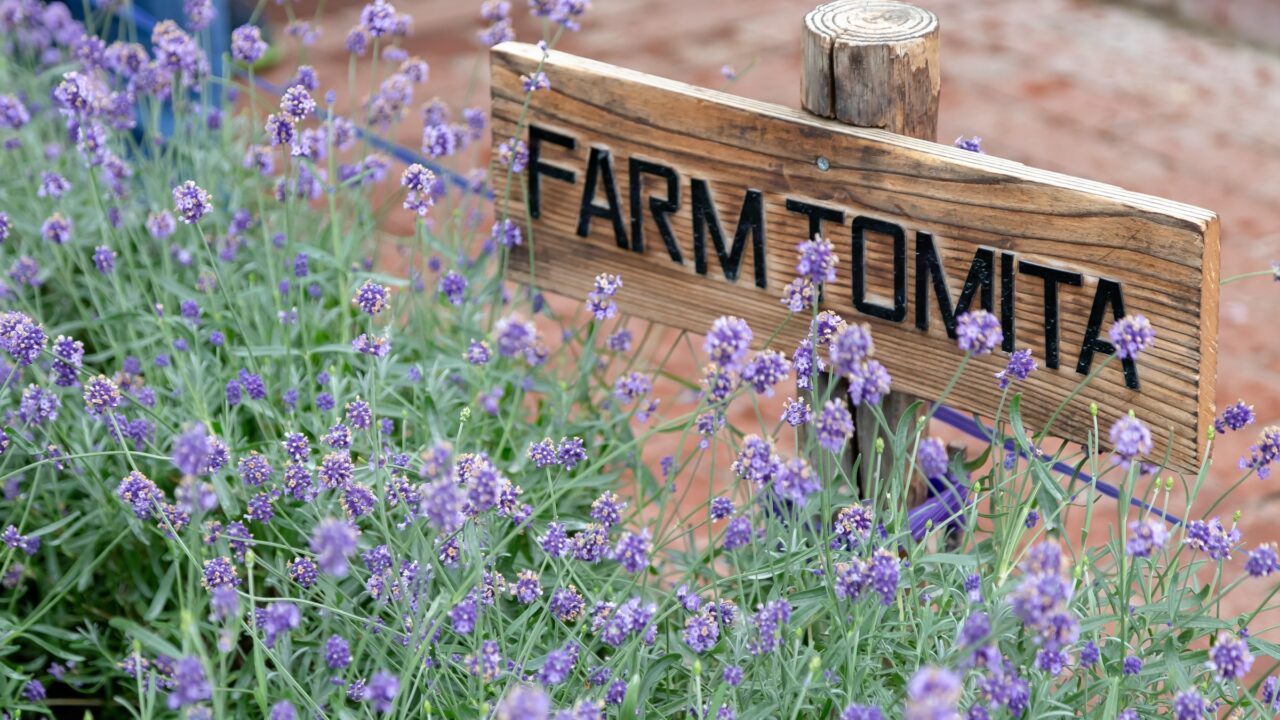
- Furano and Biei — lavender fields in July, and the rolling patchwork farmland that appears on every Hokkaido poster.
- Daisetsuzan National Park — the largest national park in Japan, and real wilderness.
- Shiretoko — a UNESCO peninsula with brown bears, sea eagles and no roads for the last stretch.
- Rebun and Rishiri — northern islands with alpine flowers at sea level.
Autumn (late September–October) — colour, first
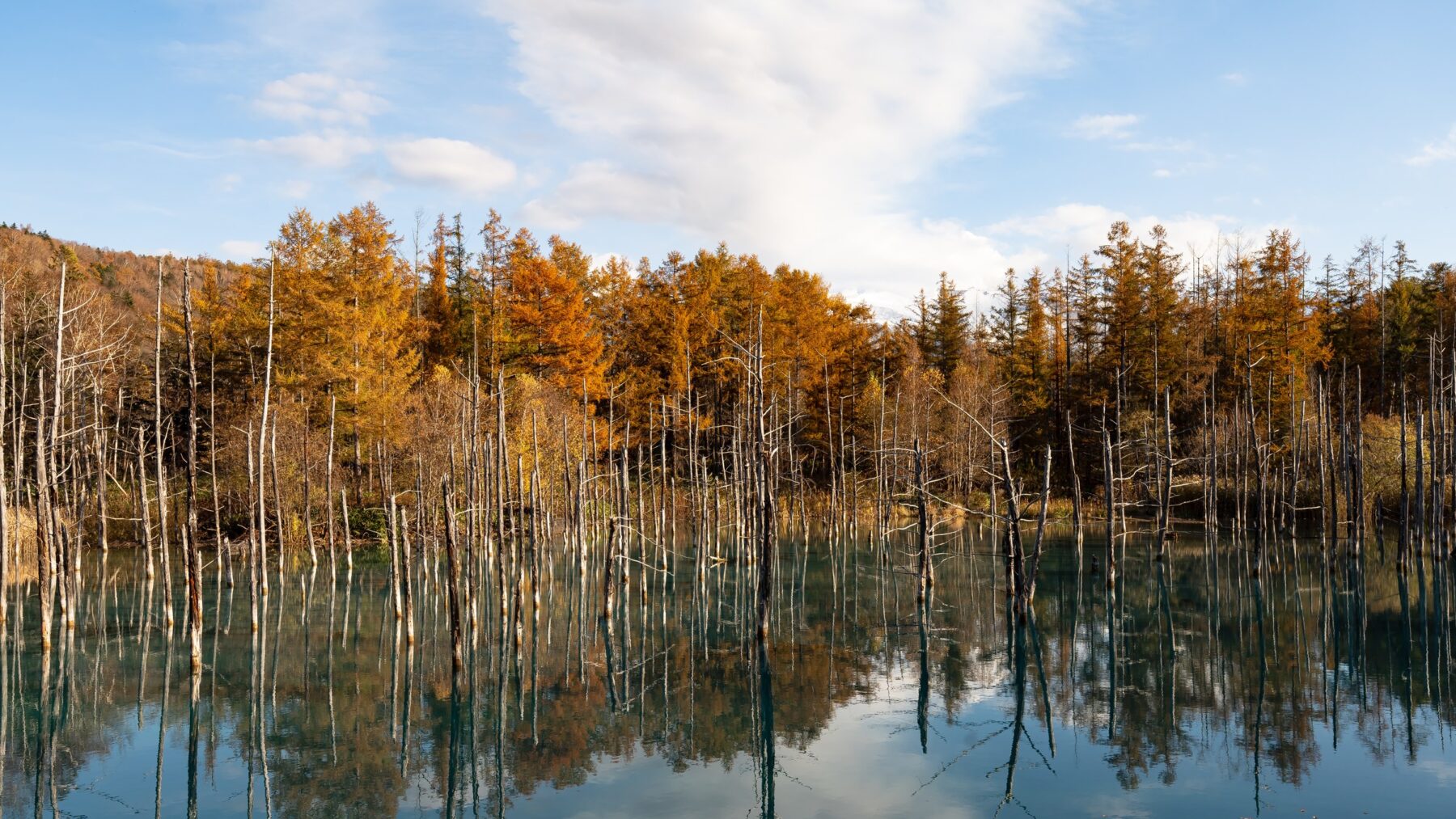
Hokkaido’s autumn colour starts in mid-September, three weeks ahead of Honshu, and Daisetsuzan is the first place in Japan to turn.
Sapporo
Japan’s fifth city, laid out on an American grid in the 1870s, and a good base for two nights.
- Odori Park — a green strip through the centre, the site of the Snow Festival.
- Nijo Market — small, working, and where you eat a seafood rice bowl for breakfast.
- The Sapporo Beer Museum — the brewery is from 1890 and the beer garden serves lamb barbecue.
- Mount Moiwa — a ropeway to a night view over the city.
- Susukino — the entertainment district, and Japan’s northernmost serious nightlife.
Sapporo is also where you eat miso ramen, which was invented here in the 1950s: heavier and richer than the Tokyo or Fukuoka styles, and made for the cold.
What to eat
Hokkaido’s food is the least Japanese-tasting in Japan, in the best way. Cold water, volcanic soil, and a dairy industry that exists almost nowhere else in the country.
- Uni and ikura — sea urchin and salmon roe, on rice, for breakfast
- Kani — three kinds of crab; the season is winter
- Genghis Khan — grilled lamb on a domed skillet, a Sapporo institution
- Soup curry — a Sapporo invention, thin spiced broth with whole vegetables
- Dairy — the ice cream and the cheese are the best in Japan
- Melon — Yubari melons at auction prices are a news story; ordinary ones are excellent
Getting around: rent a car
This is the practical heart of a Hokkaido trip.
The rail network covers Sapporo, Hakodate, Asahikawa and the main corridors, and increasingly little else — JR Hokkaido has been closing unprofitable lines for a decade. Furano, Biei, Shiretoko and the Shakotan coast are all much better by road, and some are barely reachable without one.
Get your International Driving Permit before leaving home
Mandatory, and unobtainable in Japan. Rental companies will refuse you without it.
Book the car well ahead in summer
July and August sell out, particularly automatics with snow-free tyres.
Buy the Hokkaido Expressway Pass
Unlimited tolls for foreign visitors, from about 3,500 JPY for two days. On a week-long road trip it saves a great deal.
In winter, think hard
Rentals come with snow tyres, but ice, drifting and whiteouts are real. If you have never driven on snow, base yourself on the rail network and take tours instead.
→ Renting a car in Japan: licence, tolls, ETC and parking
Suggested routes
4 days, no car. Sapporo (2 nights), Otaru, Noboribetsu Onsen. All on the rail network.
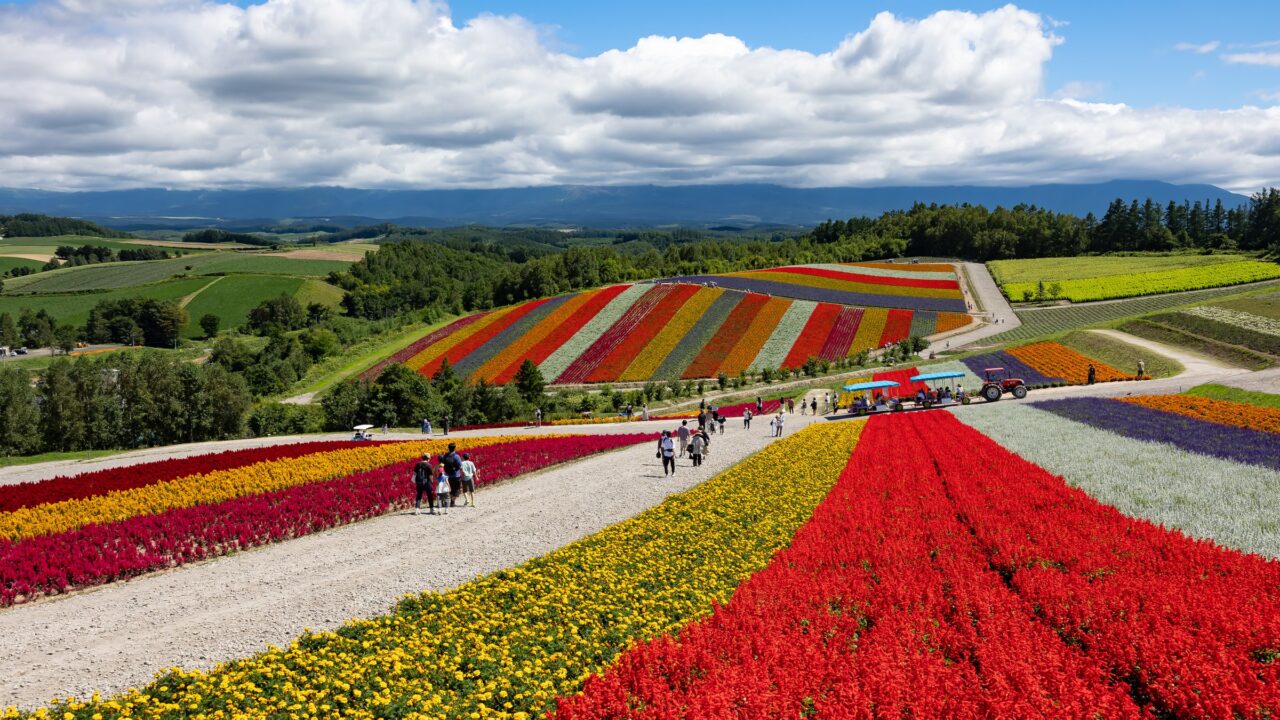
7 days, with a car. Sapporo, Furano and Biei, Asahikawa, Daisetsuzan, then Otaru and the Shakotan coast.
7 days, winter. Sapporo for the festival, Niseko or Furano for skiing, Noboribetsu for the onsen, Abashiri for the drift ice by train.
10 days, east. Sapporo, Kushiro’s marshland and cranes, Akan, Shiretoko, Abashiri. The empty half of the island.
Hakodate
Worth its own mention. At the southern tip, the first Japanese port opened to foreign trade in 1859, with a hillside of Western-style buildings, a working morning market, and a night view from Mount Hakodate that Japanese guidebooks rank among the country’s three best.
It is now 4 hours from Tokyo by Shinkansen, or a 1h 20m flight.
Where to stay
- Sapporo — business hotels around the station and Susukino, all good value.
- Niseko — apartments and international-standard hotels, expensive in season, book a year out for New Year.
- Noboribetsu, Jozankei, Sounkyo — onsen towns with traditional ryokan.
- Furano and Biei — pensions and farm stays, which is the right way to do it.
Combine it with
Hokkaido does not combine easily with anything — it needs a flight and at least four nights. The one natural link is Aomori, at the northern tip of Honshu, connected by the Seikan tunnel: Hakodate to Shin-Aomori is about an hour by Shinkansen.
→ Aomori: Nebuta, apples and the far north
Questions people actually ask
Do I really need a car?
For Sapporo, Otaru, Hakodate and the main onsen towns, no. For Furano, Biei, Shiretoko, the Shakotan coast and most national parks, effectively yes.
How cold does it get?
Sapporo averages around −4°C in January with regular days below −10°C, and inland Asahikawa is colder. It is a dry cold and manageable with proper layers and boots with grip.
Is the JR Hokkaido Rail Pass worth it?
Only if your itinerary stays on the main lines — Sapporo, Hakodate, Asahikawa, Kushiro. If you are going to the parks and the coast, put the money into a car and an expressway pass.
When exactly is the lavender in Furano?
Mid-July is the reliable peak, with a window from roughly early July to early August. Book accommodation months ahead — this is Hokkaido’s busiest fortnight.
Are the bears a real concern?
Brown bears are present in Shiretoko, Daisetsuzan and much of the interior, and are taken seriously. Carry a bell on trails, follow local closures, and do not hike alone at dawn or dusk in bear country.
Can I do Hokkaido as a side trip from Tokyo?
Only with a flight and at least three nights. The Shinkansen takes over eight hours and reaches only Hakodate.
Keep planning
Ghibli Park and the Ghibli Museum: How to Get Tickets
Two separate places, 350 kilometres apart, with two separate ticket systems and no tickets at the door. Both release on the 10th…
Kamakura and Enoshima: The Easiest Day Trip from Tokyo
An hour from Tokyo Station: a bronze Buddha from 1252, temples in the hills behind the town, and a tram that runs…
Nikko in a Day: The Shrines, the Lake, and Which Pass to Buy
Nikko is two day trips in one place: gilded shrines in the town, and a lake and a waterfall an hour above…