What Does a Japanese Person Earn? Average Salary, Explained
The headline figure is around 4.6 million yen, and it tells you almost nothing on its own. What comes out of it, how it varies by region and age, and why the convenience store cashier may be a career employee.
 Signpost Japan
Japan’s average annual salary is roughly 4.6 million yen — about £24,000 or $31,000 at recent exchange rates. That number appears in every article about Japanese working life and explains very little by itself, because Japanese pay is structured differently from most Western countries in ways the average conceals.
Here is what the figure actually contains.
At a glance
- Average annual salary
- Roughly 4.6 million JPY, private sector, all workers
- Median
- Lower — around 4 million. The average is pulled up by high earners.
- Minimum wage
- Set by prefecture. Around 1,000–1,200 JPY per hour, highest in Tokyo.
- Bonus
- Two a year, typically 2–5 months of salary combined, and not guaranteed
- Take-home
- Roughly 75–80% of gross after tax and social insurance
- The gap
- Non-regular employees earn roughly half what regular employees do
What the salary is made of
A Japanese salary is not one number. It is usually:
Base salary (基本給) — the monthly figure, and the one everything else is calculated from.
Allowances (手当) — commuting costs, which employers almost universally pay in full; housing allowance; family allowance for dependents; overtime.
Bonus (賞与) — paid twice a year, in summer and winter, typically totalling two to five months’ salary. It is discretionary in principle and near-universal in practice, and it is why annual figures diverge so much from monthly ones.
The commuting allowance is worth noting for visitors: it explains why Japanese people cheerfully commute ninety minutes each way. The employer pays for the season ticket.
What comes out
Roughly 20–25% of gross, and it is more automatic than in most countries — income tax is withheld by the employer and most employees never file a return.
| Deduction | Roughly |
|---|---|
| Income tax | 5–20%, progressive |
| Residents’ tax | About 10%, paid to your municipality |
| Health insurance | About 5% |
| Pension | About 9% |
| Employment insurance | Under 1% |
A gross salary of 4.6 million yen produces something in the region of 3.5–3.7 million in hand.
By age
Japanese pay has traditionally risen with length of service rather than performance, and while this is weakening, the shape is still visible.
| Age | Rough average |
|---|---|
| Early 20s | 2.7–3.2 million JPY |
| Late 20s | 3.5–4.0 million |
| 30s | 4.3–5.0 million |
| 40s | 5.0–5.8 million |
| 50s | 5.5–6.5 million, peaking around 50–54 |
| 60+ | Falls sharply on re-employment after retirement age |
That last line matters. Many companies set retirement at 60 or 65 and then re-employ the same person on a substantially reduced contract. This is one reason you see so many people in their late sixties and seventies working in Japan.
By region
The spread is wider than visitors expect.
Tokyo sits well above the national average; the lowest-paying prefectures are roughly 30% below it. But Tokyo rents are two to three times those in a regional city, and the commuting allowance means distance costs the employee nothing — which is why so many Tokyo workers live an hour out.
→ How much does life cost in Japan? A local’s monthly budget
The division that actually explains things
The single most important fact about Japanese employment is the split between regular and non-regular employees.
Regular (正社員, seishain) — permanent, full-time, salaried, with bonuses, pension contributions, training and near-total job security. Traditionally hired straight from university in an annual cohort.
Non-regular (非正規) — part-time, contract, dispatched, or fixed-term. Paid hourly, usually no bonus, less security, and limited progression.
Roughly 37% of the workforce is non-regular, and they earn on the order of half what regular employees do for comparable work. The category is disproportionately women, older workers and young people who missed the graduate hiring window.
This is the gap the average salary hides, and it explains a great deal about modern Japan — including why the convenience store staff serving you at 2am may be a fifty-year-old career employee of that chain, or may be someone with a degree who could not get a regular position in the year they graduated.
Why wages stalled
Japanese wages barely moved for about thirty years. Average pay in the late 2010s was, in nominal terms, close to where it had been in the mid-1990s — a stagnation unmatched in any other large developed economy.
The causes are argued over: deflation that removed the pressure to raise pay, lifetime employment traded against wage growth, the expansion of non-regular work, and low productivity growth in the domestic service sector.
Since 2023 this has begun to change. Annual shunto wage negotiations have produced the largest increases in three decades, and minimum wages have risen substantially. Whether it holds is one of the central questions in Japanese economics.
What it buys
The salary figure is misleading without the cost side, and Japan is cheaper than most visitors assume for daily life.
| Monthly, single person, regional city | Cost |
|---|---|
| Rent, 1K apartment | 55,000 JPY |
| Utilities | 12,000 JPY |
| Phone and internet | 9,000 JPY |
| Food, mostly cooking at home | 40,000 JPY |
| Transport | 0 JPY — paid by employer |
| Health insurance and pension | 45,000 JPY |
| Everything else | 19,000 JPY |
| Typical outgoings | About 180,000 JPY |
Against take-home pay of around 250,000 JPY a month for a mid-career worker, that leaves real savings — which is consistent with Japan’s high household savings rate.
Tokyo changes the arithmetic substantially: the same apartment is 100,000–140,000 JPY.
What this means for a visitor
Three things worth carrying around.
Service is not cheap labour. The person serving you is paid a proper wage without tips, which is part of why service standards are consistent and why tipping is refused.
Prices reflect stagnant wages. Japan feels inexpensive to visitors partly because domestic prices were held down for decades against flat incomes. That is a difficulty for residents, not a bargain the country arranged for you.
The uniformed older worker is normal. Parking attendants, station staff, security guards and construction flaggers in their seventies are visible everywhere, a product of retirement-and-re-employment and of a shrinking working-age population.
→ Japan’s ageing population, seen from the train window
Questions people actually ask
Is Japan a rich country?
By GDP, yes. By household income relative to other developed countries, it has slipped considerably over thirty years of flat wages, and average pay is now below the OECD average.
Why is everything so cheap for tourists?
Two reasons: domestic prices held flat through decades of deflation and stagnant wages, and a yen that weakened substantially against major currencies in the 2020s.
Do people really work extremely long hours?
Less than the stereotype, and legally capped since 2019 reforms. Long hours persist in some industries and among regular employees, but average annual hours are now close to the US figure and below Korea’s.
What is the minimum wage?
Set by prefecture, roughly 1,000–1,200 JPY per hour, highest in Tokyo. It has risen sharply since 2023 after decades of small increases.
Do Japanese workers get much holiday?
Around 20 days of statutory paid leave after several years, and historically low take-up — a 2019 law now requires employees to take at least five days. Public holidays are numerous, which is why everyone travels at once.
Is lifetime employment still a thing?
Weakening but not gone. It applies mainly to regular employees at large companies, which is a minority of the workforce, and job-changing among younger workers has risen sharply.
Keep planning
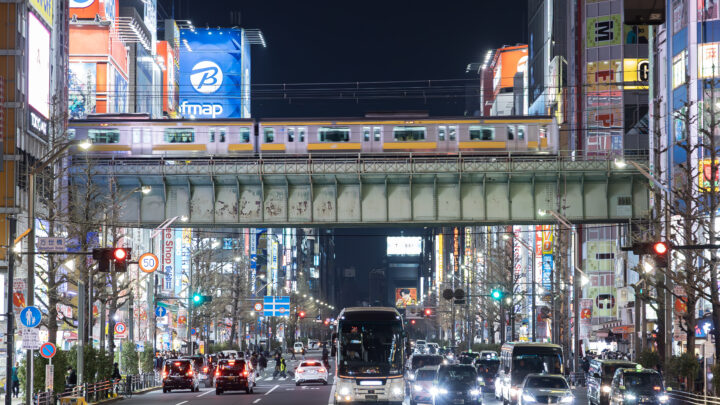
What Japanese People Think of Tourists — and the Unspoken Rules
Japan welcomed record visitor numbers and then started introducing tourist taxes, screens over viewpoints and residential no-go lanes. The honest version of…
Japan’s Ageing Population, Seen from the Train Window
Closed schools, unstaffed stations, and a taxi driver in his late seventies. Japan's demographic shift is not an abstraction — it is…
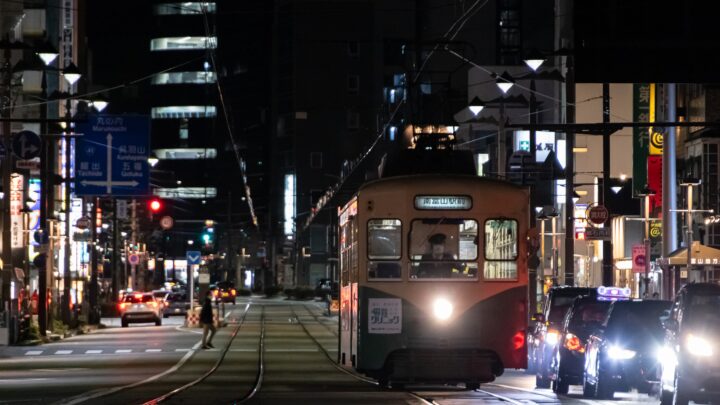
Why Japanese Cities Look the Way They Do
A noodle bar under a flat, a car park where a house was, wires overhead and no street names. Japanese cities look…