Japan Entry Requirements: Visit Japan Web, Customs and Duty-Free
The fifteen minutes of admin that turn a long immigration queue into a walk-through, plus the two things visitors genuinely get stopped for at Japanese customs — one of them is probably in your washbag.
 Signpost Japan
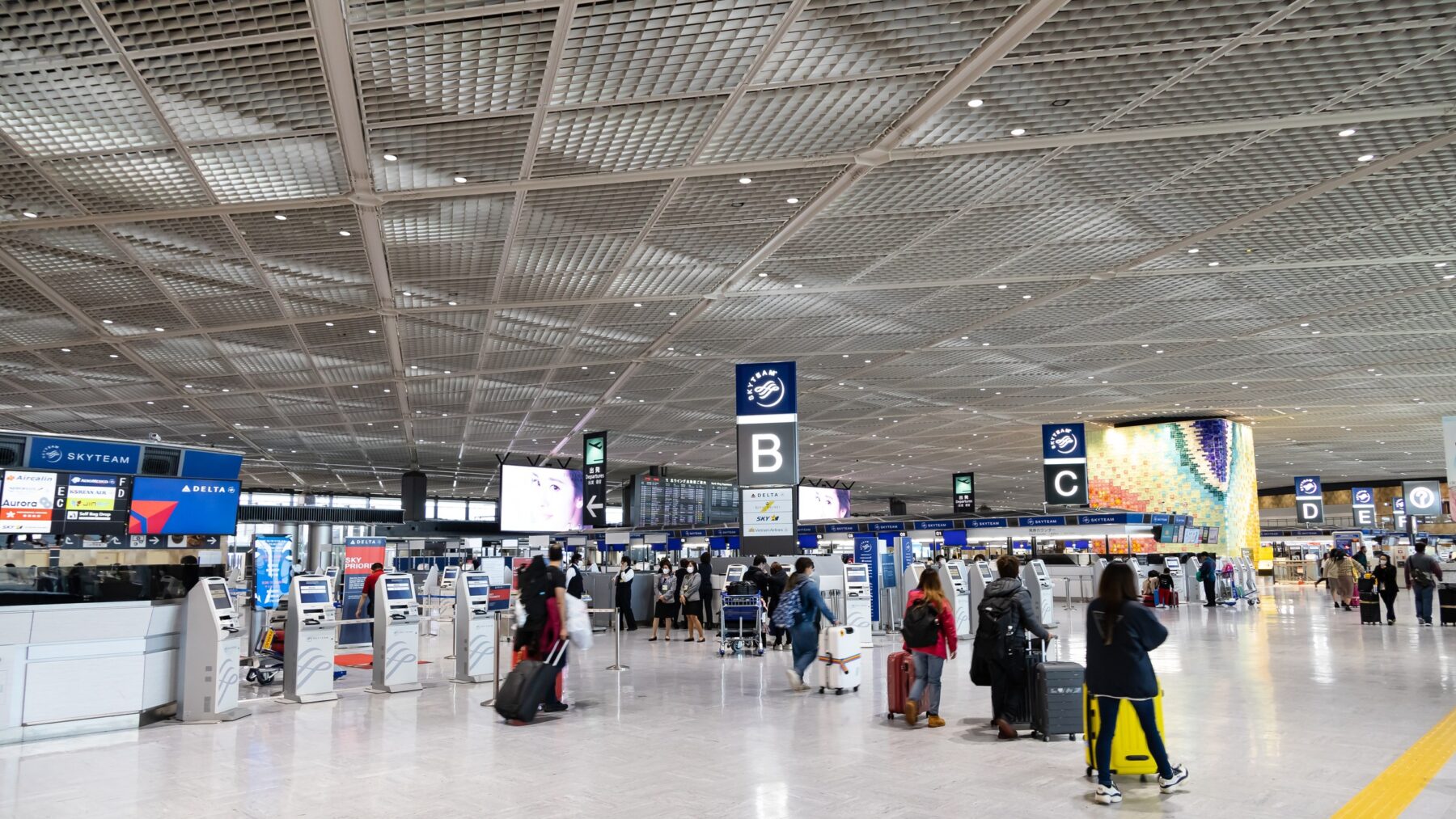
Entering Japan is straightforward for most visitors, and the process has been almost entirely digitised. Do fifteen minutes of work before you fly and you will walk through immigration and customs scanning QR codes.
There are also two rules that catch people out every day, and one of them concerns ordinary over-the-counter medication.
At a glance
- Visa
- Visa-free for up to 90 days for about 70 nationalities, including the UK, EU, US, Canada, Australia, NZ
- Passport
- Must be valid for your stay. Carry it at all times in Japan — this is a legal requirement.
- Before you fly
- Register on Visit Japan Web and get your QR codes
- At the airport
- Face photo and fingerprints at immigration, then customs
- Duty-free allowance
- 3 bottles of alcohol, 200 cigarettes, gifts up to 200,000 JPY
- The one to check
- Prescription and cold medication — some common drugs are banned
Do you need a visa?
Around 70 nationalities enter Japan visa-free as temporary visitors, generally for up to 90 days. That includes the United Kingdom, the EU and Schengen countries, the United States, Canada, Australia, New Zealand, Singapore, South Korea and Taiwan.
Visa-free entry is for tourism, visiting friends and family, and business meetings. It does not permit paid work, and that includes remote work in some interpretations — if you plan to work while in Japan, check your situation properly rather than assuming.
Your passport must be valid for the duration of your stay. Japan does not require six months’ validity, but airlines sometimes apply their own rule, so check with the carrier.
Visit Japan Web
Visit Japan Web is the government portal that handles immigration and customs declarations digitally. Registering before you fly produces QR codes you scan at the airport instead of filling in paper cards.
Create an account a few days before you fly
You need an email address. The site works on a phone browser and is available in English.
Register everyone travelling with you
One account can hold family members, including children. Add each person’s passport details.
Enter your trip details
Flight number, arrival date and your first night’s accommodation address and phone number. Have your hotel booking to hand.
Complete the customs declaration
The same questions as the old paper form. Answer honestly — the declaration is a legal document.
Screenshot the QR codes
There are separate codes for immigration and customs. Save them offline. Airport Wi-Fi at arrivals can be slow.
Registration is not mandatory — paper forms are still available on the aircraft and at the airport — but the digital queues are dramatically shorter.
At immigration
You will be photographed and fingerprinted, both index fingers, at the counter. You may be asked how long you are staying and where. Have your accommodation address ready.

A landing permission sticker or stamp goes in your passport. This is what proves you are a temporary visitor, and you will need to show it when buying a Japan Rail Pass, a regional rail pass, or claiming tax-free shopping.
At customs
The two things people are genuinely stopped for:
1. Meat and meat products. Japan bans the import of almost all meat, including cured meat, jerky, sausage and anything containing meat — a ham sandwich in your bag counts. This is enforced seriously because of animal disease control, and detector dogs work the arrivals hall. Penalties are substantial.
2. Medication. See below. This is the one that catches ordinary travellers.
Fruit, vegetables and plants are also restricted. Dairy is restricted from many countries.
Duty-free allowances
| Item | Allowance |
|---|---|
| Alcohol | 3 bottles of 760ml |
| Cigarettes | 200, or 50 cigars, or 250g of tobacco |
| Perfume | 2 ounces |
| Other goods | Total value up to 200,000 JPY |
| Cash | Must declare over 1,000,000 JPY or equivalent |
Medication — read this before you pack
Japan’s controlled substances rules are stricter than most countries and apply to drugs that are sold over the counter elsewhere.
Commonly banned or restricted:
- Pseudoephedrine — in many cold and sinus remedies, including some Sudafed and Vicks formulations
- Codeine — in many cough medicines and combination painkillers
- Some ADHD medications, notably those containing amphetamines
- Certain strong opioid painkillers
Bringing these in, even in small personal quantities, can result in detention. This is not a theoretical risk; it happens to tourists.
If you take prescription medication:
- Bring it in the original labelled packaging, with a copy of the prescription
- Up to one month’s supply of most prescription drugs is permitted without extra paperwork
- For larger quantities, controlled substances, or injectable medication, apply for a Yakkan Shoumei (薬監証明) — an import certificate from the Japanese health ministry. Apply several weeks in advance; it is free but not fast.
What you can bring
Japan is relaxed about most things. Electronics, cameras, drones (registration required for heavier models and flight rules are strict), and personal effects are fine.
E-cigarettes and vaping devices are permitted; nicotine-containing e-liquid is technically a regulated pharmaceutical and importing it for personal use is limited. Nicotine-free liquid is fine, and heated tobacco products are widely sold and used in Japan.
Leaving
Departure is simple. There is no exit immigration interview and no paper form. If you claimed tax-free shopping, keep your purchases available in case customs asks to see them.
→ Money in Japan: cash, cards, ATMs and tax-free shopping
Questions people actually ask
Do I need a return ticket?
Officially you should be able to show onward travel. In practice it is rarely checked at Japanese immigration, though airlines sometimes ask at check-in. Have the booking available.
Can I extend a 90-day visa-free stay?
Not usually. Visa-free entry is a single 90-day period and extensions are granted only in exceptional circumstances. Leaving and immediately re-entering to reset the clock is treated with suspicion.
Is Visit Japan Web compulsory?
No. Paper forms remain available. But the digital lanes are much faster, and it costs you fifteen minutes at home instead of forty in a queue.
What happens if I forget my passport when going out?
Legally you are required to carry it. In practice it is rarely checked, but if you are stopped without it you can be taken to your accommodation to retrieve it. Carry it.
Can I bring my prescription medication?
Up to one month’s supply of most prescription drugs, in original packaging with a copy of the prescription. Controlled substances and larger quantities need a Yakkan Shoumei import certificate applied for in advance.
Do I need travel insurance?
It is not a legal requirement, but Japanese healthcare is excellent and expensive for non-residents. An ambulance ride and a night in hospital will cost more than the policy. Get it.
Keep planning

Japan with Children: What Works, and What to Skip
Japan is one of the easiest countries in the world to travel with children, with two exceptions: hotel rooms are sized for…
Where to Stay in Kyoto: The Five Areas, and the New Lodging Tax
Kyoto is a city you see before nine in the morning, which makes where you sleep matter more than it does in…
Where to Stay in Tokyo: Which Area, and What a Night Costs
In Tokyo you are not choosing a neighbourhood so much as a station. Six areas that work for a first trip, what…