How Much Does a Trip to Japan Cost? A Real Daily Budget
Three budgets built from actual prices — backpacker, mid-range and comfortable — plus the four costs that blow a Japan budget apart and the places where Japan is genuinely cheaper than home.
 Signpost Japan
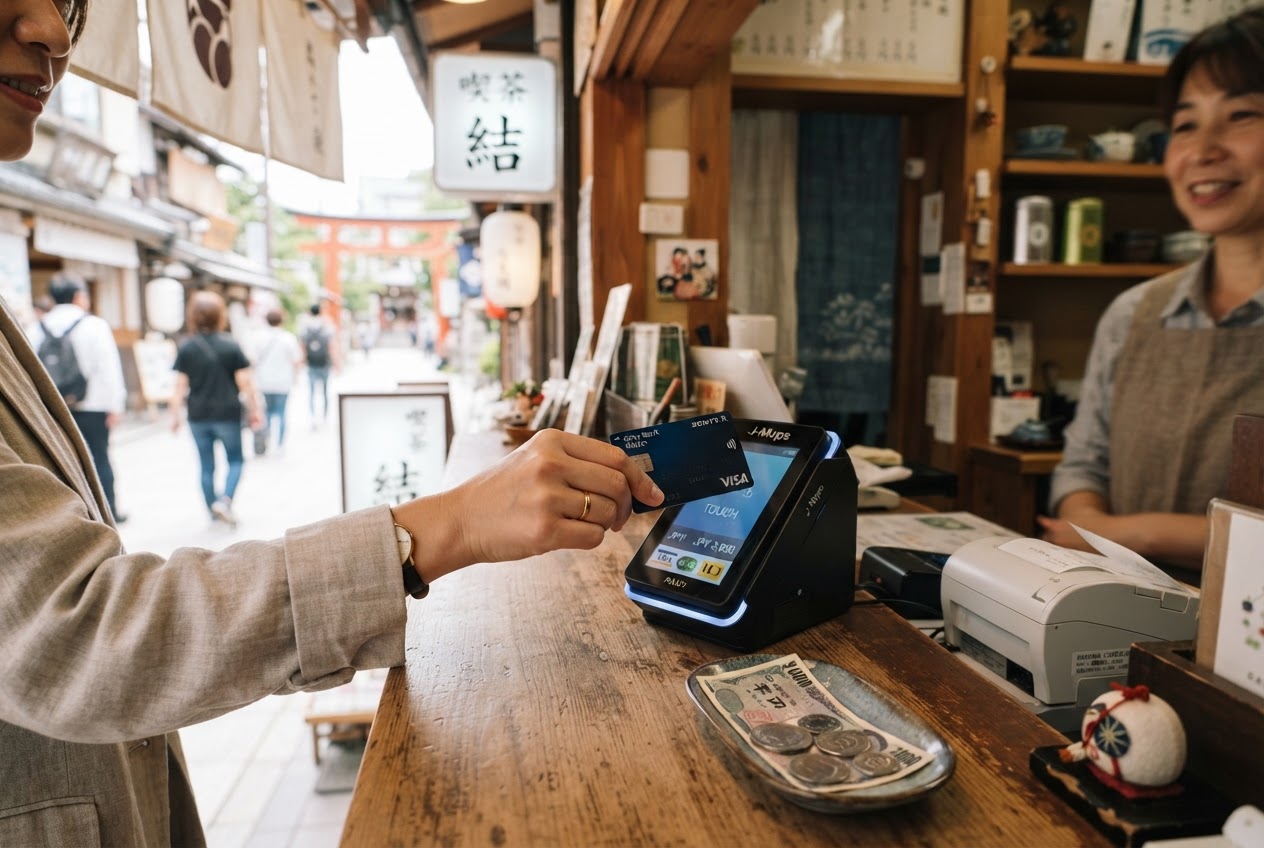
Japan has a reputation for being expensive that is roughly thirty years out of date. Food and transport are cheaper than in most of western Europe. Accommodation is comparable. What catches people out is not the daily cost but four specific line items that nobody budgets for.
Here are three complete daily budgets, and where the money actually goes.
At a glance
- Backpacker
- 8,000–10,000 JPY per person per day
- Mid-range
- 14,000–20,000 JPY
- Comfortable
- 28,000–40,000 JPY
- Excluded from all three
- International flights and intercity transport — budget those separately
- Cheaper than Europe
- Eating out, coffee, local transport, museum entry
- More expensive
- Fruit, dairy, wine, taxis, and anything imported
The three budgets
Backpacker — about 9,000 JPY a day
| One day, backpacker | Cost |
|---|---|
| Hostel dorm bed | 3,500 JPY |
| Konbini breakfast | 500 JPY |
| Lunch, standing soba or a rice bowl | 700 JPY |
| Dinner, ramen or a chain restaurant | 1,200 JPY |
| Local transport | 900 JPY |
| One paid sight | 800 JPY |
| Coffee, snacks, a beer from the konbini | 1,300 JPY |
| Daily total | 8,900 JPY |
This is not a punishing budget in Japan. Hostels are clean and well-run, konbini food is genuinely good, and a 900 JPY bowl of ramen is often the best thing you eat all week.
Mid-range — about 17,000 JPY a day
| One day, mid-range | Cost |
|---|---|
| Business hotel, single room | 9,000 JPY |
| Breakfast at a café or the hotel | 900 JPY |
| Lunch, a proper set meal | 1,300 JPY |
| Dinner at an izakaya with a drink | 3,500 JPY |
| Local transport | 1,000 JPY |
| Two paid sights | 1,200 JPY |
| Daily total | 16,900 JPY |
This is the budget most first trips actually run at. It buys a private room with a good bath, real meals, and no rationing of temple entry fees.
Comfortable — about 33,000 JPY a day
| One day, comfortable | Cost |
|---|---|
| Four-star hotel or mid-range ryokan | 22,000 JPY |
| Breakfast included | 0 JPY |
| Lunch, a good restaurant | 2,500 JPY |
| Dinner, sushi counter or kaiseki | 6,000 JPY |
| Taxis and transport | 1,700 JPY |
| Sights and a guided experience | 1,000 JPY |
| Daily total | 33,200 JPY |
The four costs that break a Japan budget
1. Intercity transport. Not included above, and it is the big one. Tokyo–Kyoto is about 13,300 JPY each way. Three or four long journeys can add 60,000 JPY to a trip. Price your route before you commit, and check whether a regional pass covers it.
2. Peak-season accommodation. A 9,000 JPY business hotel room in Kyoto becomes 20,000 JPY in the first week of April. This is the single largest swing in a Japan budget, and it is entirely a function of your dates.
3. Taxis after the last train. A cross-Tokyo fare after midnight can exceed 10,000 JPY. Two of those and you have spent a night’s accommodation.
4. Shopping. Japan is very good at making you want things. Camera gear, knives, stationery, ceramics, whisky, vintage clothing. This is not a criticism — just budget for it deliberately rather than being surprised.
Where Japan is cheaper than you expect
| Item | Japan | Roughly |
|---|---|---|
| Bowl of ramen | 900–1,200 JPY | Cheaper than a sandwich in London |
| Coffee at a chain | 350–450 JPY | Half of most European capitals |
| Konbini lunch | 500–700 JPY | Genuinely good, not a compromise |
| Subway journey | 180–320 JPY | Comparable or cheaper |
| Temple or shrine entry | 300–600 JPY | Far cheaper than European museums |
| Domestic beer, konbini | 220–280 JPY | Cheap |
| Set lunch at a good restaurant | 1,000–1,800 JPY | The best value in Japanese dining |
That last one is the trick worth knowing. Restaurants that charge 8,000 JPY at dinner frequently serve a set lunch of the same quality for 1,800 JPY. Eat your expensive meal at midday.
Where it is more expensive
Fruit (a single perfect peach can be 800 JPY), dairy, cheese, wine, imported anything, and taxis. Also, unexpectedly, domestic travel by rail — Japan’s Shinkansen is superb and priced accordingly.
A worked two-week budget
Two people, mid-range, fourteen days, Tokyo–Kyoto–Osaka–Hiroshima, travelling in October.
| Two people, 14 days | Cost |
|---|---|
| Accommodation, 13 nights | 260,000 JPY |
| Food and drink | 190,000 JPY |
| Intercity transport | 110,000 JPY |
| Local transport | 28,000 JPY |
| Sights and experiences | 45,000 JPY |
| Luggage forwarding, lockers, laundry | 12,000 JPY |
| Shopping and contingency | 85,000 JPY |
| Total, excluding international flights | About 730,000 JPY |
That is roughly 26,000 JPY per person per day all-in — higher than the mid-range daily figure because it includes the intercity legs and shopping that the daily budget excludes.
Ways to spend meaningfully less
Move your dates by two weeks
Avoiding peak blossom or peak autumn can cut accommodation by a third for almost identical weather.
Take one overnight bus
Tokyo to Osaka overnight saves the fare difference and a hotel night — roughly 19,000 JPY in one move.
Eat your big meal at lunch
The same kitchen, a third of the price. This is the biggest single food saving available.
Base yourself and take day trips
Fewer hotel changes, fewer long train fares, and regional passes cover day trips cheaply.
Use business hotels, not international chains
Toyoko Inn, APA, Dormy Inn and Route Inn are clean, central and half the price of a global brand. Dormy Inn includes a large communal bath.
Tax-free shopping
Foreign visitors can buy consumption-tax-free at licensed shops on purchases over 5,000 JPY, with a passport. That is a 10% saving on electronics, cosmetics and clothing, and it adds up on a shopping-heavy trip.
Note that the mechanics of this scheme are changing — see the money guide for the detail.
→ Money in Japan: cash, cards, ATMs and tax-free shopping
Questions people actually ask
How much cash should I bring?
Bring little and withdraw locally. 7-Eleven ATMs accept foreign cards and are everywhere. Carry 20,000–30,000 JPY at a time and top up as you go.
Is tipping expected?
No, anywhere, ever. Attempting to tip causes confusion and is sometimes refused outright. The price you are quoted is the price you pay.
Do I need to budget for service charges?
Rarely. Some izakaya add a small seating charge (お通し, otoshi) of 300–500 JPY that comes with a small dish. Upmarket restaurants may add 10% service. Both are disclosed.
Is a rail pass a way to save money?
Only on wide, fast itineraries. Since the 2023 price rise, most first trips are cheaper on individual tickets. Do the arithmetic for your own route.
What is the cheapest month to visit?
Late January and February, outside the ski regions. Accommodation is at its lowest and the major sites are quiet.
Keep planning
Japan with Children: What Works, and What to Skip
Japan is one of the easiest countries in the world to travel with children, with two exceptions: hotel rooms are sized for…
Where to Stay in Kyoto: The Five Areas, and the New Lodging Tax
Kyoto is a city you see before nine in the morning, which makes where you sleep matter more than it does in…
Where to Stay in Tokyo: Which Area, and What a Night Costs
In Tokyo you are not choosing a neighbourhood so much as a station. Six areas that work for a first trip, what…