Okinawa: Islands, Reefs and a Different Japan
A separate kingdom until 1879, with its own language, food and architecture, and 160 islands strung out over a thousand kilometres. The main island is not the best part — here is where to actually go.
 Signpost Japan
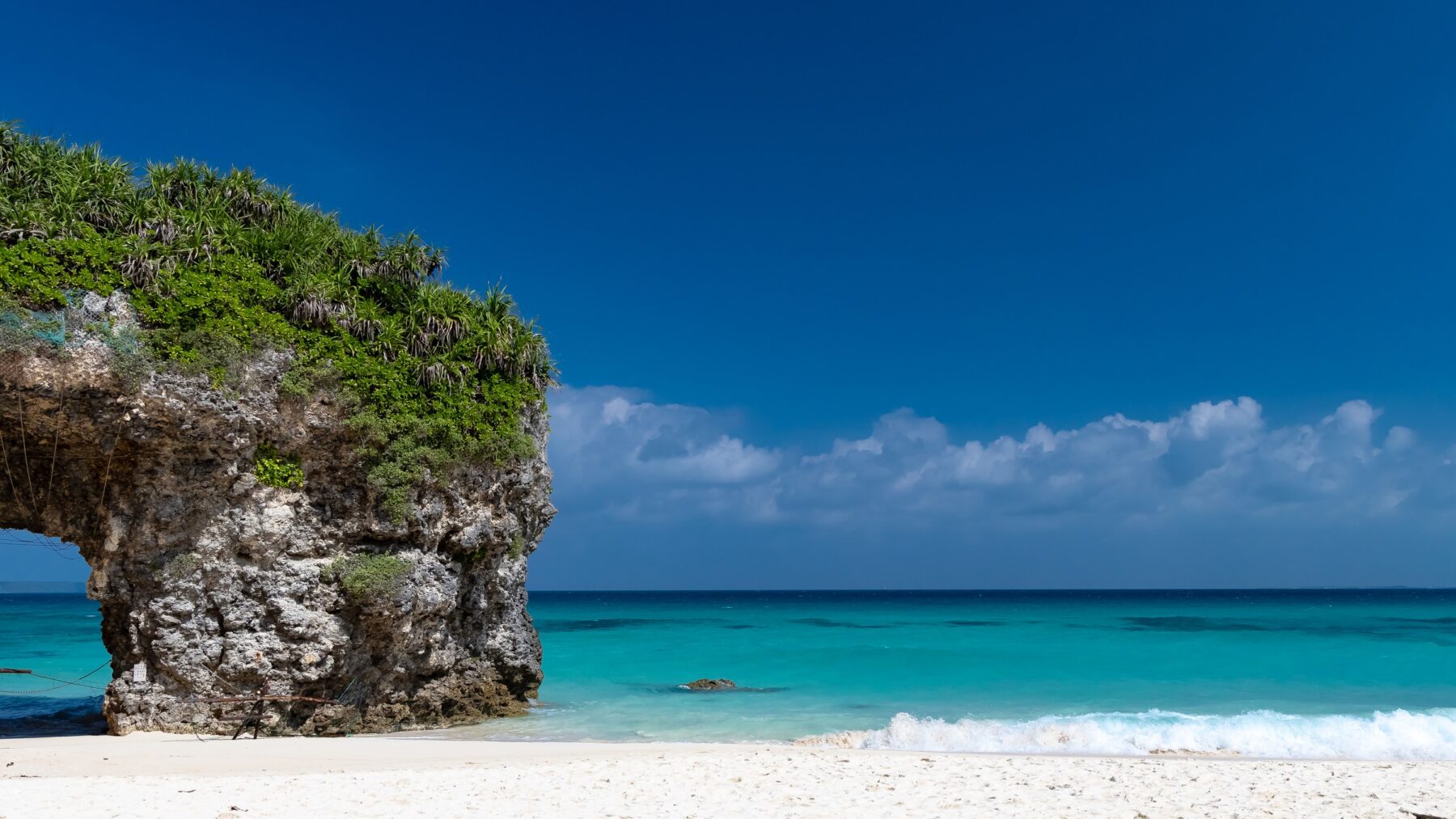
Okinawa was the Ryukyu Kingdom, an independent state trading with China, Korea and Southeast Asia, until Japan annexed it in 1879. It has its own languages, its own musical scale, its own architecture, its own food, and a history that includes the worst battle of the Pacific war followed by twenty-seven years of American administration.
It is Japan, and it is not much like the rest of Japan. That is the reason to go.
At a glance
- Days needed
- 5 minimum. 7+ if you want the outer islands.
- Main gateway
- Naha (OKA), 2h 50m from Tokyo, 2h 15m from Osaka
- Getting around
- Rent a car on the main island. Ferries and flights to the others.
- Best months
- April–June and October–November. Swimmable roughly April to October.
- Avoid
- August–September typhoons, and Golden Week
- Key decision
- Main island, Kerama, Miyako or Ishigaki — they are very different trips
The four Okinawas
The most common mistake is treating “Okinawa” as one place. The islands span over a thousand kilometres — Ishigaki is closer to Taiwan than to Naha.
The main island (Okinawa Honto)
Where the flights land and 90% of the population lives. Good beaches in the north, a serious history in the south, and a lot of American military presence in the middle.
- Shuri Castle, Naha — the Ryukyu royal palace. The main hall burned in 2019 and reconstruction is ongoing; the site and the surrounding stonework remain worth visiting, and watching a national restoration in progress is its own experience.
- The southern battlefields — the Peace Memorial Park and Himeyuri Monument. The 1945 battle killed roughly a quarter of Okinawa’s civilian population. This is not a light afternoon.
- Churaumi Aquarium — one of the largest in the world, with whale sharks. Genuinely excellent, and the main reason families come north.
- Cape Manzamo and the northern coast — limestone cliffs and the good beaches.
- Kokusai-dori, Naha — the main tourist street. An hour is plenty; the covered market streets behind it are better.
The Kerama Islands
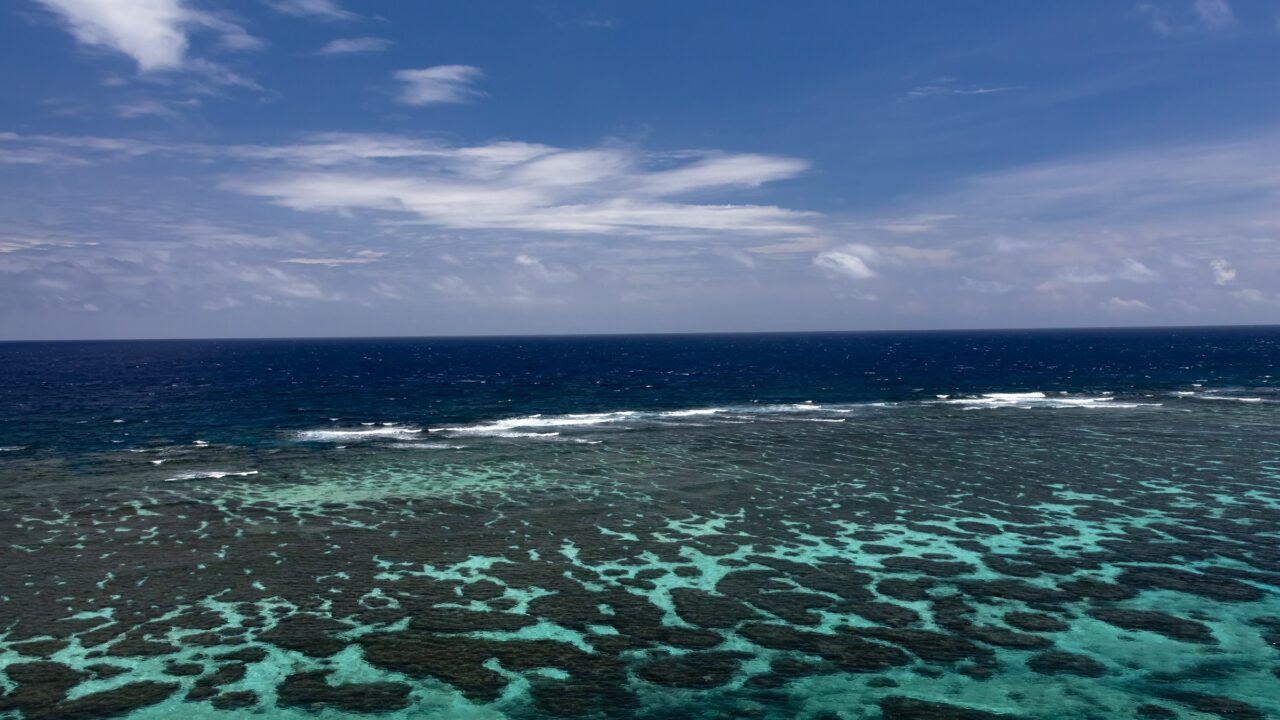
Forty minutes by high-speed ferry from Naha, and the best value in Okinawa. Kerama Blue is a real thing — visibility of thirty metres and some of the most accessible coral in Japan. A national park since 2014. Zamami and Tokashiki both take day trips or overnight stays.
If you have one spare day on the main island, spend it here.
Miyako
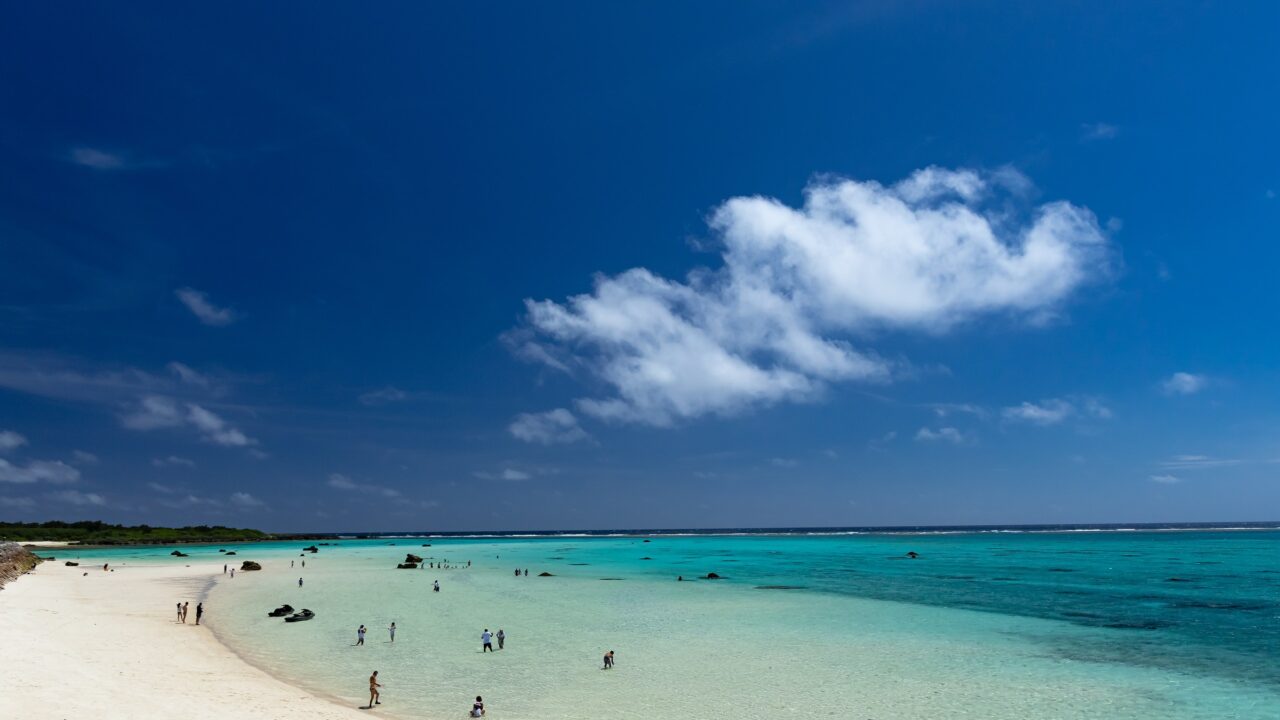
A 50-minute flight from Naha. Flat, coral-built, with the best beaches in Japan — Yonaha Maehama is seven kilometres of white sand — and a series of long bridges linking outlying islands that make for very good driving.
Less developed than Ishigaki, fewer restaurants, better sand.
Ishigaki and the Yaeyama Islands
The far south, a 55-minute flight from Naha, and the most interesting of the four.
Ishigaki is the hub. From it: Taketomi, a tiny island of red-tiled roofs, coral walls and water buffalo carts where the entire village is a preservation district; Iriomote, 90% jungle, with mangrove river cruises and a wildcat nobody sees; and Yonaguni, Japan’s westernmost point.
This is the trip for people who want the least-Japanese-feeling part of Japan.
What to eat
Okinawan food is closer to Southeast Asia than to Tokyo, and pork is central to it.
- Okinawa soba — thick wheat noodles in a pork and bonito broth, with stewed pork belly. Not buckwheat, despite the name.
- Goya champuru — bitter melon stir-fried with tofu, egg and pork. The island’s signature dish.
- Rafute — pork belly simmered in awamori and brown sugar.
- Umibudo — “sea grapes”, a seaweed that pops.
- Awamori — the local spirit, distilled from long-grain Thai rice, aged in clay pots. Stronger than shochu.
- Blue Seal ice cream — an American legacy, and a genuine local institution.
Getting around
Rent a car on the main island. The monorail in Naha covers the city and nothing else, and buses to the north are slow and infrequent. The expressway runs about half the length of the island.
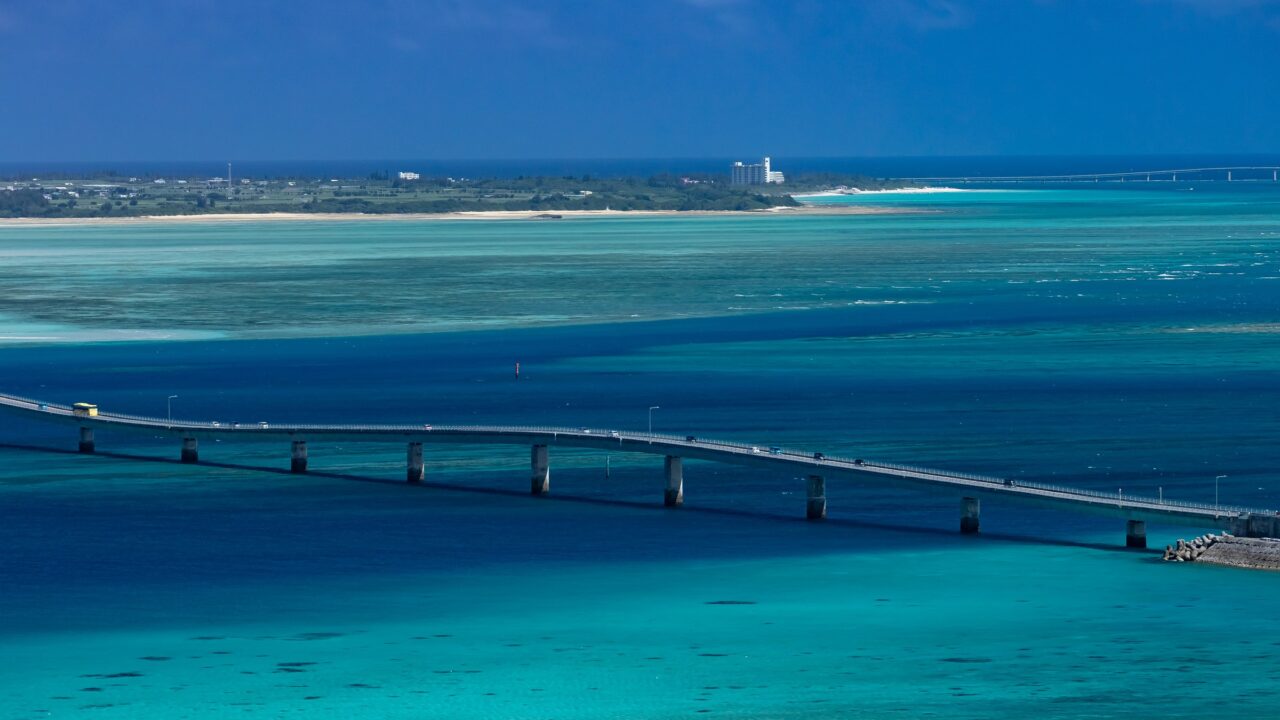
On Miyako and Ishigaki, also rent a car — or a scooter, which is more fun on Miyako’s bridges.
On Taketomi and the smaller islands, bicycles.
→ Renting a car in Japan: licence, tolls, ETC and parking
When to go
| Period | Conditions |
|---|---|
| Mar–Apr | Warm, dry, quiet. Swimming from late April. |
| May–Jun | Best balance. Warm sea, before the crowds. Short rainy season in May. |
| Jul–Aug | Hot, busy, expensive. Peak Japanese holiday season. |
| Aug–Oct | Typhoon risk at its highest |
| Oct–Nov | Excellent. Warm sea, empty beaches, low prices. |
| Dec–Feb | 17–20°C, too cool to swim, very quiet, cheap. Whale watching from January. |
Suggested trips
5 days, main island. Naha (2 nights), the south and its history, then north to Churaumi and the beaches (3 nights). Add a Kerama day trip.
7 days, Ishigaki and Yaeyama. Fly to Ishigaki, base there, and day-trip to Taketomi and Iriomote by ferry.
7 days, mixed. Naha (2), Kerama (2), then a flight to Miyako (3).
Where to stay
- Naha — city hotels, cheap, good for a first and last night.
- Onna village, west coast — the resort strip, and where most beach hotels are.
- Motobu, north — near Churaumi, quieter.
- Kerama / Taketomi — small guesthouses (minshuku). Book early; there are not many.
History, taken seriously
Okinawa’s twentieth century is not background. The 1945 battle lasted 82 days and killed an estimated 240,000 people, including a quarter of the civilian population. American administration continued until 1972, and US bases still occupy roughly 15% of the main island’s land.
The Peace Memorial Museum in the south presents this from the Okinawan civilian perspective rather than a military one. It is the most important thing on the island, and it is worth arranging your itinerary so you are not going to a beach immediately afterwards.
Combine it with
Okinawa is a standalone trip. It needs a flight from anywhere and at least five nights. The one natural pairing is Kyushu — Kagoshima is a 1h 20m flight and shares some of the volcanic, southern character.
Questions people actually ask
Is Okinawa worth it if I only have ten days in Japan?
Probably not on a first trip — it costs a flight and five nights that Kyoto, Hakone and Hiroshima would use well. On a second trip, or if beaches are the point, absolutely.
Which island has the best beaches?
Miyako, by a clear margin — Yonaha Maehama and Sunayama are exceptional. The Kerama islands have the best snorkelling and diving.
Can I swim in winter?
The sea is 20–22°C in January. Divers do, in wetsuits; most people do not. Winter is for whale watching and empty beaches instead.
Do I need a car?
On the main island, Miyako and Ishigaki, yes. Buses exist but are slow and infrequent, and the point of these islands is the coast road.
Is Okinawan spoken?
The Ryukyuan languages are severely endangered and everyday speech is Japanese, with a distinct accent and vocabulary. You will hear Okinawan in music, place names and greetings — mensore means welcome.
How expensive is it?
Flights and resort hotels cost more than the mainland; food and everyday costs are lower. Off-season, Okinawa is one of the cheaper parts of Japan.
Keep planning
Ghibli Park and the Ghibli Museum: How to Get Tickets
Two separate places, 350 kilometres apart, with two separate ticket systems and no tickets at the door. Both release on the 10th…
Kamakura and Enoshima: The Easiest Day Trip from Tokyo
An hour from Tokyo Station: a bronze Buddha from 1252, temples in the hills behind the town, and a tram that runs…
Nikko in a Day: The Shrines, the Lake, and Which Pass to Buy
Nikko is two day trips in one place: gilded shrines in the town, and a lake and a waterfall an hour above…