Osaka: Eating Your Way Through Japan’s Kitchen
Kyoto is where Japan keeps its manners. Osaka is where it eats, argues and laughs at itself. Two days, the food that made the city's reputation, and the streets behind the neon where it actually happens.
 Signpost Japan
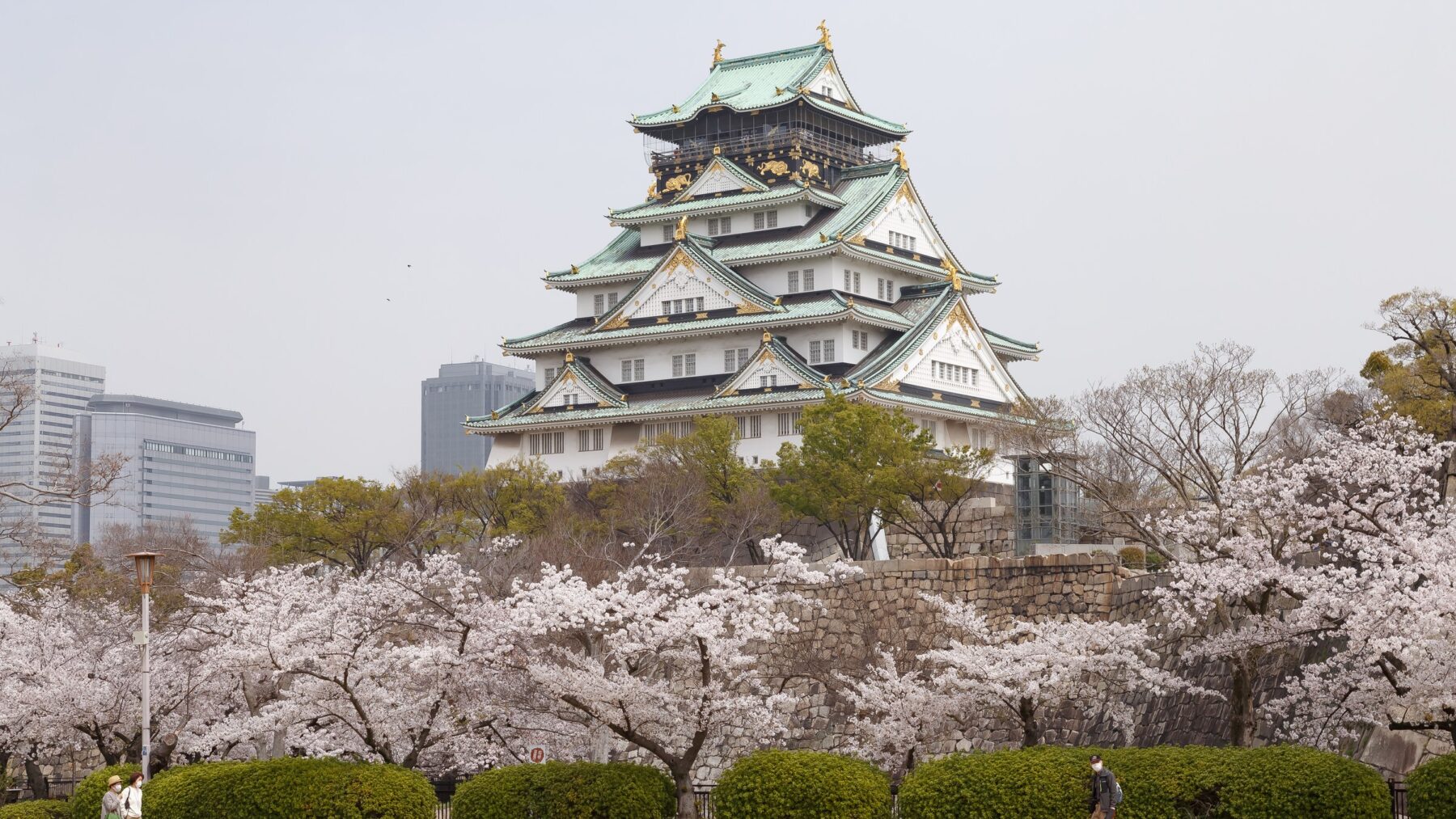
Osaka calls itself tenka no daidokoro — the nation’s kitchen — a title it earned as the rice-trading centre of Edo-period Japan and has never given up. It is Japan’s second city by any measure that matters, and it is almost the opposite of Kyoto: loud, direct, funny, and built for eating.
There is a local word, kuidaore, meaning to ruin yourself through food. It is used approvingly.
At a glance
- Days needed
- 2 days. 1 if you are day-tripping from Kyoto.
- Main gateway
- Kansai Intl (KIX) 38–65 min, or Itami (ITM) 30 min for domestic flights
- Getting around
- Osaka Metro. The Midosuji line runs through everything.
- Best months
- Any. Osaka is an all-weather city with covered arcades everywhere.
- Rail pass
- Osaka Amazing Pass if you are doing 3+ paid attractions in a day
- Base here if
- You want cheaper hotels and better nightlife than Kyoto, 29 minutes away
The shape of the city
Two centres, and knowing which is which saves you an hour a day.
Kita (“north”), around Umeda station: offices, department stores, the transport hub, a slightly more formal Osaka.
Minami (“south”), around Namba and Shinsaibashi: Dotonbori’s neon, the food streets, the nightlife, the tourists. This is the Osaka of the photographs.
The Midosuji line — red, letter M — connects them in eight minutes and continues to Shin-Osaka for the Shinkansen and Tennoji in the south.
Day 1 — Minami and the food
Morning — Kuromon Ichiba market. A 600-metre covered market that has fed the city since the Edo period. Grilled scallops, tuna cut to order, fruit, and stalls that will cook what you point at. Go before eleven.
Midday — Shinsaibashi and Amerikamura. A kilometre of covered shopping arcade running north from Namba, and to its west a scruffier district of second-hand clothes, record shops and skaters.
Afternoon — Dotonbori. The Glico running man, the mechanical crab, the canal. It is a spectacle and it is worth an hour; the food here is aimed at visitors. The streets one block back are where locals eat — Hozenji Yokocho in particular, a stone-paved alley with a moss-covered statue that people splash water on for luck.
Evening — Shinsekai and Tsutenkaku. A district built in 1912 in imitation of Paris and New York, then left alone. Kushikatsu — deep-fried skewers — was invented here for labourers, and the one rule everywhere is no double dipping in the communal sauce.
Day 2 — Kita, the castle, and the water
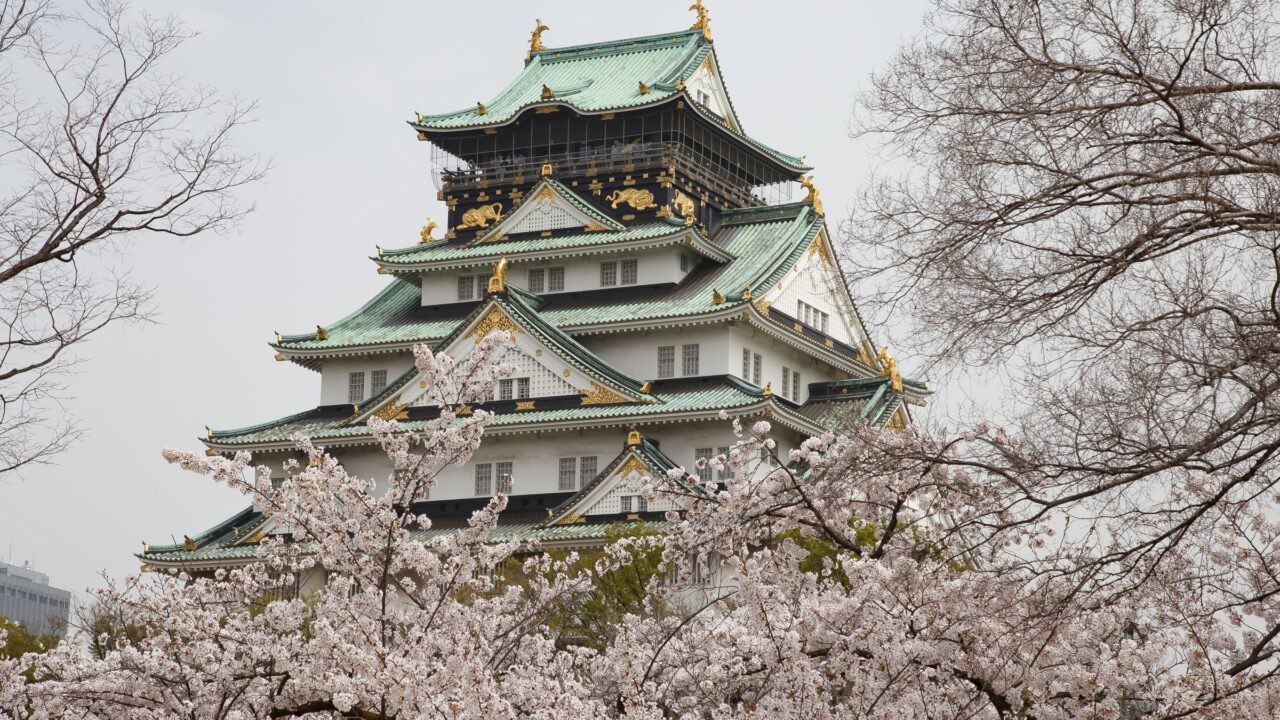
Morning — Osaka Castle. The reconstruction is concrete and the museum inside is fine rather than remarkable; the park and the stonework are the real thing. Some of the granite blocks in the outer walls weigh over a hundred tonnes and were floated in from Seto Inland Sea islands in the 1620s.
Midday — Nakanoshima. The island between two rivers: the Museum of Oriental Ceramics, the 1918 Central Public Hall, and a rose garden. Osaka’s quietest, most European stretch.
Afternoon — Umeda. The Umeda Sky Building‘s floating garden observatory, which is genuinely one of the better views in Japan, and a basement restaurant floor built as a mock-up of a 1920s Osaka street.
Evening — pick a standing bar. Osaka’s tachinomi culture is the best in Japan: no seats, cheap drinks, small plates, and strangers who will talk to you.
What to eat, and where
| Dish | What it is | Where |
|---|---|---|
| Takoyaki | Octopus in a molten batter sphere | Everywhere. Wait for it to cool. |
| Okonomiyaki | A cabbage pancake, mixed then griddled | Anywhere with a hotplate in the table |
| Kushikatsu | Battered, deep-fried skewers | Shinsekai |
| Kitsune udon | Udon with sweet fried tofu — an Osaka invention | Any standing noodle shop |
| Horumon | Grilled offal, superb, cheap | Tsuruhashi, the Korean district |
| Battera | Pressed mackerel sushi | Old sushi shops near Kuromon |
Day trips from Osaka
| Destination | Time | What for |
|---|---|---|
| Kyoto | 29m | Temples |
| Nara | 40m | The Great Buddha and the deer |
| Kobe | 21m | Beef, the port, Arima Onsen behind the mountain |
| Himeji | 60m | Japan’s finest surviving castle |
| Koyasan | 2h | Mountain-top monastery complex, temple lodging |
→ Hyogo: Himeji Castle, Kobe and Arima Onsen in two days → Wakayama: Koyasan and the Kumano Kodo
Passes worth buying
The Osaka Amazing Pass (about 3,300 JPY for a day) gives unlimited subway and bus travel plus free entry to around thirty attractions including the castle, the Sky Building and a Dotonbori river cruise. Three paid attractions in a day and it pays for itself.
For day trips, the JR West Kansai Area Pass is better value than anything Osaka-specific.
Where to stay
Namba / Shinsaibashi for food and nightlife within walking distance. Umeda for transport, including the airport bus and the Shinkansen connection. Tennoji for the cheapest decent hotels, well connected and increasingly good.
Osaka hotels run roughly 20–30% cheaper than Kyoto for equivalent quality, which is why a lot of people base here and commute.
Osaka versus Kyoto as a base
A genuine question, and the answer depends on your mornings.
Base in Kyoto if you want to be at Fushimi Inari at 6:30am. The early start is the whole trick in Kyoto and it does not survive a commute.
Base in Osaka if you want cheaper rooms, better evenings, and you are content to arrive in Kyoto at nine rather than seven.
Combine it with
Osaka is the natural southern anchor of a Kansai trip and the departure point for Kansai Airport. Going west, the Sanyo Shinkansen runs from Shin-Osaka to Himeji, Okayama, Hiroshima and Kyushu.
Questions people actually ask
Is Osaka worth a night, or just a day trip from Kyoto?
A night, at least. Osaka is an evening city — the standing bars, the arcades and the food streets are at their best after dark, and a day trip means leaving at nine.
Is Dotonbori a tourist trap?
The canal frontage largely is. The alleys one block back — Hozenji Yokocho, Ura-Namba — are where Osaka eats, and they are two minutes’ walk away.
Is Universal Studios Japan worth a day?
If you have children or you want the Nintendo and Harry Potter areas, yes, and book timed entry well ahead. Otherwise it is a full day that Osaka’s own streets would use better.
Are Osaka people really different?
The stereotype — direct, funny, commercially minded, less formal — is one Osakans enthusiastically maintain. In practice it means people are more likely to start a conversation with you, which is unusual in Japan and rather nice.
How much should I budget for food?
Osaka is cheap. 3,000–4,000 JPY a day covers a market breakfast, a noodle lunch and a proper dinner with a drink. It is one of the few cities where eating well is the budget option.
Keep planning
Ghibli Park and the Ghibli Museum: How to Get Tickets
Two separate places, 350 kilometres apart, with two separate ticket systems and no tickets at the door. Both release on the 10th…
Kamakura and Enoshima: The Easiest Day Trip from Tokyo
An hour from Tokyo Station: a bronze Buddha from 1252, temples in the hills behind the town, and a tram that runs…
Nikko in a Day: The Shrines, the Lake, and Which Pass to Buy
Nikko is two day trips in one place: gilded shrines in the town, and a lake and a waterfall an hour above…