Regional Specialities, Prefecture by Prefecture
Japan organises its food by place with a seriousness other countries reserve for wine. One dish per prefecture worth changing your route for, and how the whole meibutsu system works.
 Signpost Japan
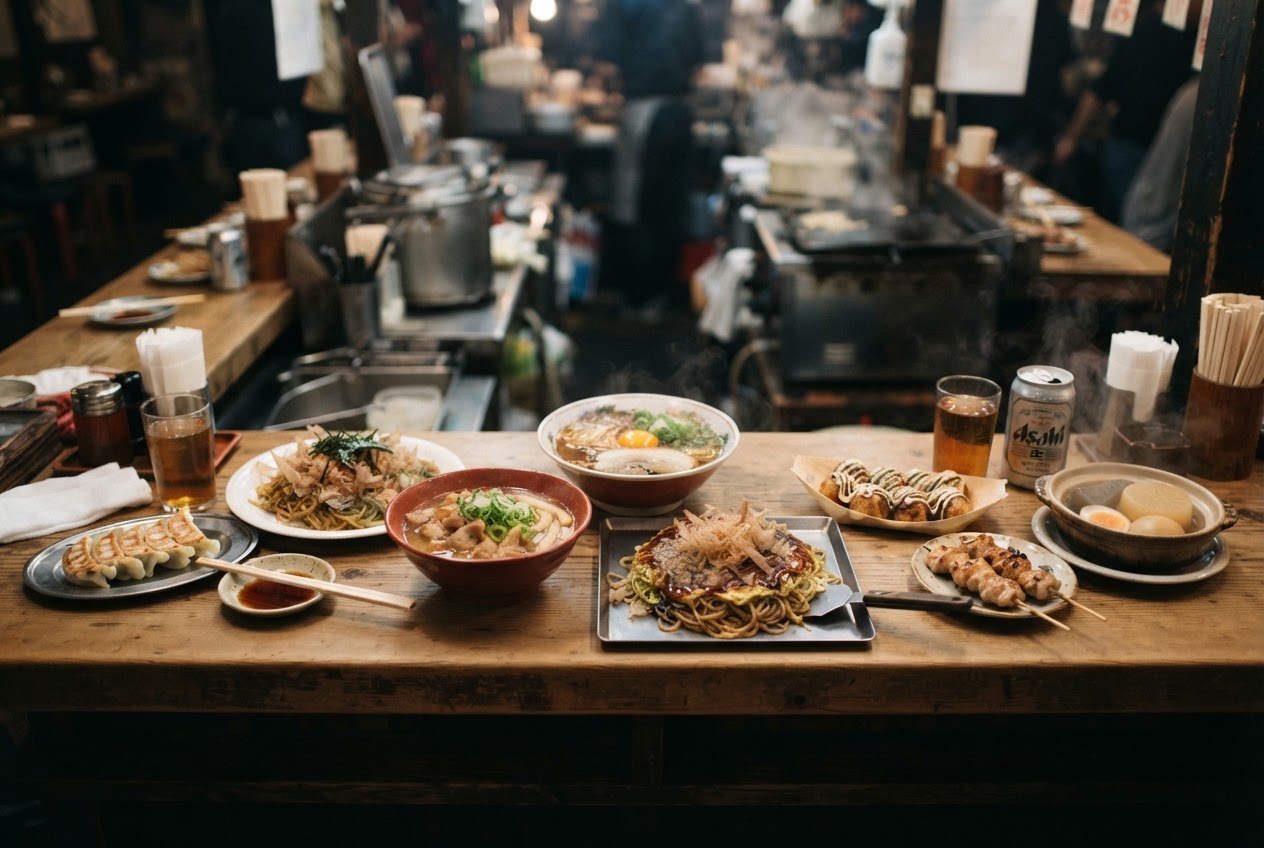
Ask a Japanese person about a prefecture they have never lived in and they will very often answer with a food. Kagawa is udon. Aomori is apples. Okayama is peaches. This is not a tourist-board invention; it is how the country is mentally mapped.
The system has a name — meibutsu, “famous product” — and it drives an enormous domestic industry of regional souvenirs, station lunchboxes and food-motivated weekend travel. As a visitor it is the single most useful lens for deciding where to eat, because in Japan the local speciality is genuinely local.
At a glance
- The system
- Meibutsu — a regional speciality food, formally recognised and heavily marketed
- Where to find it
- Station buildings, department store basements, roadside stations (michi-no-eki)
- Ekiben
- Station lunchboxes, made to a regional recipe. A genre in itself.
- Rule of thumb
- If the station sells it in a box with the prefecture’s name on it, eat it
- Best hunting ground
- Department store basements, which sell every region’s specialities
Why this exists
Japan was, until 1868, a country of about 260 semi-autonomous domains with restricted movement between them. Local ingredients, local preservation methods and local tastes developed in relative isolation, and the mountainous geography reinforced it.
When the railways arrived, they carried this into a national culture: ekiben — station bento — appeared in the 1880s, each station selling its own, and buying the local one became part of travelling.
That has never stopped. Tokyo Station’s ekiben shop stocks around 200 varieties from across the country and is worth twenty minutes of anyone’s time.
One dish per region
Hokkaido
Seafood, dairy and lamb. Uni and ikura over rice at Hakodate’s morning market; Sapporo miso ramen, invented for the cold; Genghis Khan grilled lamb; soup curry; and the best ice cream and cheese in Japan. Crab from November.
Tohoku
- Aomori — apples, more than half of Japan’s crop, and scallops from Mutsu Bay.
- Iwate — wanko soba, served in tiny bowls refilled until you surrender, and the local record is in the hundreds.
- Miyagi — gyutan, grilled beef tongue, invented in post-war Sendai.
- Akita — kiritanpo, pounded rice on a cedar skewer, in a chicken hotpot.
- Yamagata — cherries, and imoni, a taro hotpot cooked on riverbanks in autumn.
- Fukushima — kitakata ramen, thick wavy noodles in a light soy broth. Locals eat it for breakfast.
Kanto
- Tokyo — monjayaki in Tsukishima, tsukemen dipping noodles, Edo-style sushi.
- Tochigi — gyoza in Utsunomiya, which competes annually with Hamamatsu for the national title.
- Gunma — okkirikomi, flat noodles in miso, and konjac.
- Chiba — peanuts, and namero, minced raw fish with miso.
- Kanagawa — shirasu, whitebait, eaten raw in Kamakura and Enoshima.
Chubu
- Niigata — rice, specifically Koshihikari, and consequently some of Japan’s best sake.
- Toyama — shiro-ebi, tiny white shrimp caught almost nowhere else; masu-zushi, pressed trout.
- Ishikawa — kaisendon at Omicho market; jibuni, simmered duck.
- Fukui — echizen-gani snow crab, the most prized in Japan, tagged by port.
- Yamanashi — hoto, flat noodles in a pumpkin and miso stew; grapes and wine.
- Nagano — soba, wasabi, oyaki stuffed buns.
- Gifu — Hida beef, and ayu sweetfish caught by cormorant fishing on the Nagara river.
- Shizuoka — green tea, roughly 40% of the national crop, and eel from Lake Hamana.
- Aichi — miso katsu, hitsumabushi (grilled eel served three ways), tebasaki chicken wings.
Kansai
- Kyoto — obanzai home cooking, yudofu, kaiseki, matcha from Uji.
- Osaka — takoyaki, okonomiyaki, kushikatsu.
- Hyogo — Kobe beef, and akashiyaki, a softer egg-rich cousin of takoyaki.
- Nara — kakinoha-zushi, sushi wrapped in persimmon leaves; miwa somen.
- Wakayama — mandarins, umeboshi from Minabe, and tuna at Kii-Katsuura.
- Shiga — funazushi, fermented crucian carp. Extremely pungent, over a thousand years old, and a genuine test.
- Mie — Matsusaka beef, and Ise lobster.
Chugoku
- Tottori — matsuba-gani snow crab, and pears.
- Shimane — izumo soba, served cold in stacked round lacquer boxes.
- Okayama — white peaches and muscat grapes, both premium-priced nationally.
- Hiroshima — layered okonomiyaki, and oysters, about 60% of Japan’s farmed crop.
- Yamaguchi — fugu, pufferfish, from Shimonoseki, where the national trade is centred.
Shikoku
- Kagawa — sanuki udon, and the prefecture’s entire identity.
- Tokushima — sudachi citrus, and Tokushima ramen with a raw egg on top.
- Ehime — mandarins, and taimeshi, sea bream over rice.
- Kochi — katsuo no tataki, bonito seared over burning straw at the table.
Kyushu and Okinawa
- Fukuoka — tonkotsu ramen, motsunabe, mentaiko.
- Saga — Saga beef, and squid at Yobuko served alive and translucent.
- Nagasaki — champon, castella, toruko rice.
- Kumamoto — basashi horse sashimi, and karashi renkon, mustard-stuffed lotus root.
- Oita — toriten chicken tempura, and Seki mackerel.
- Miyazaki — chicken nanban with tartare sauce, and mangoes.
- Kagoshima — kurobuta black pork, shochu, and Japan’s best sweet potatoes.
- Okinawa — goya champuru, rafute, Okinawa soba, awamori.
How to eat regionally
Look in the station building
Almost every major station has a floor of restaurants and a souvenir hall selling the prefecture’s specialities. It is not a tourist trap; locals buy their gifts here.
Buy the ekiben
Station lunchboxes are made to regional recipes and sold on the platform. Buy before boarding — the trolley selection is worse.
Go to the depachika
Department store basements sell prepared food from every region, labelled by origin. The best single place to taste widely.
Stop at a michi-no-eki if driving
Roadside stations sell local produce and serve local food in the restaurant. Often the best lunch in a rural area.
Ask what is famous here
Kono chihou no meibutsu wa nan desu ka? Nobody has ever failed to answer this question.
Asking about local food
Seasonal, not just regional
Japanese food is doubly indexed: by place and by season. Shun — the moment an ingredient is at its peak — is taken seriously, and menus change accordingly.
- Spring — bamboo shoots, sea bream, firefly squid, strawberries
- Summer — eel, ayu, hamo, peaches, watermelon
- Autumn — matsutake mushrooms, chestnuts, sanma (Pacific saury), new rice
- Winter — crab, fugu, oysters, yellowtail, mandarins
Asking for the shun no mono — the seasonal thing — at an izakaya reliably produces the best dish on the menu.
Souvenirs that travel
Most Japanese travellers bring back omiyage for colleagues, which is why every station sells individually wrapped boxes of regional sweets. For a foreign visitor, what actually survives the flight:
- Dried and cured — mentaiko in vacuum packs, dried scallops, katsuobushi
- Sweets — castella from Nagasaki, momiji manju from Miyajima, shiroi koibito from Hokkaido
- Condiments — yuzu kosho from Kyushu, sansho pepper from Wakayama, good soy sauce
- Drink — sake and shochu, though check your airline’s liquid rules and buy after security
Note that meat products cannot be taken out of Japan into most countries, and fresh fruit is usually prohibited too.
Questions people actually ask
Is regional food actually different, or is it marketing?
Genuinely different. Ramen broth, soy sauce sweetness, dashi composition and noodle shape all vary systematically by region, and locals can identify them.
Are ekiben worth it?
Yes — they are cold by design and made to be eaten that way, they are regionally specific, and at 900–1,500 JPY they are good value. Tokyo Station’s Ekibenya Matsuri stocks around 200 kinds.
What if I only visit Tokyo and Kyoto?
Department store basements and antenna shops solve this. Almost every prefecture runs an “antenna shop” in Tokyo selling its own produce — there is a cluster of them around Yurakucho and Ginza.
Is the expensive fruit worth trying?
Once. A Japanese white peach or a muscat grape in season is genuinely a different thing from the supermarket version elsewhere. The gift-grade melons at 20,000 JPY are a separate phenomenon about presentation.
What is the strangest regional speciality?
Shiga’s funazushi — crucian carp fermented in rice for up to three years. It is over a thousand years old, an ancestor of modern sushi, and it smells like a cheese cave. Worth trying once, with sake.
Keep planning
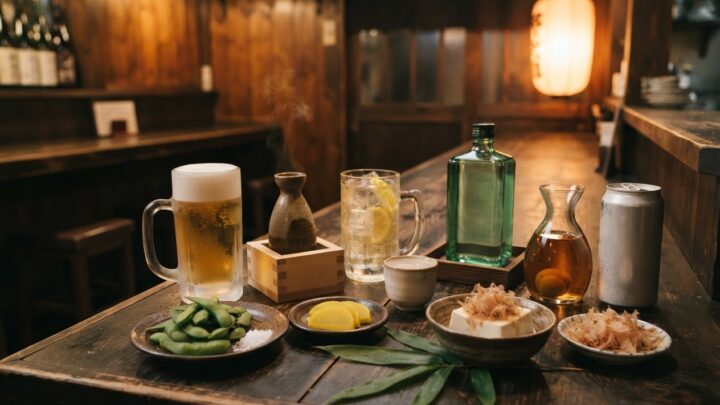
Drinking in Japan: Sake, Shochu, Highballs and Where to Try Them
How to read a sake label, why everyone is drinking whisky and soda, and the difference between a standing bar and a…
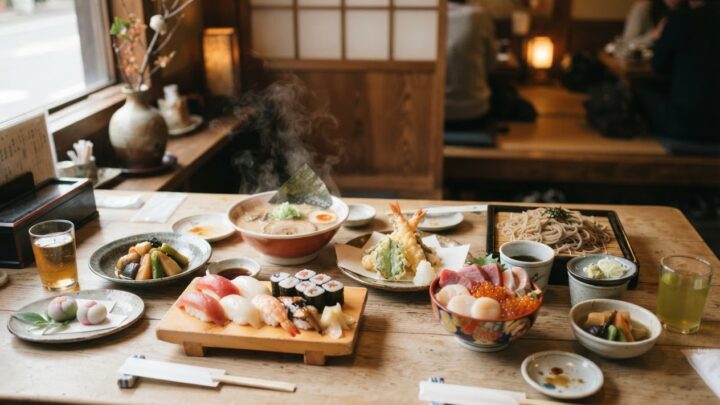
Sushi, Ramen, Udon, Soba: What to Eat Where
Six things worth eating properly at least once, what separates a good version from a bad one, and roughly what each should…
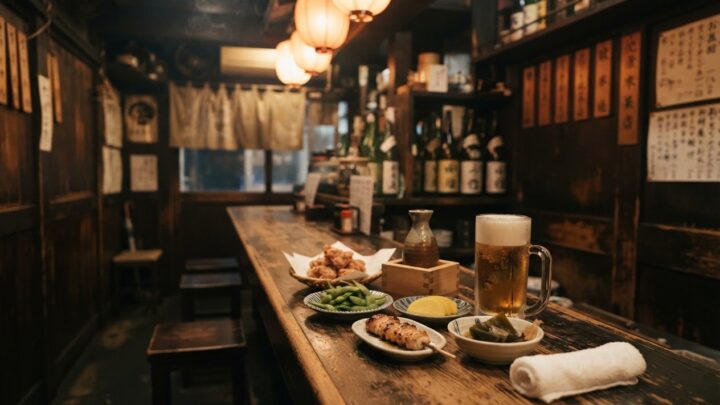
Izakaya Etiquette: How a Japanese Night Out Actually Works
The small dish you did not order, the rule about pouring your own drink, and why everyone orders a beer first. An…