Staying in a Ryokan: What Actually Happens, Hour by Hour
You are not booking a room. You are booking an evening with a fixed schedule, two enormous meals and a set of small rituals. Here is the whole thing in order, so nothing surprises you.
 Signpost Japan
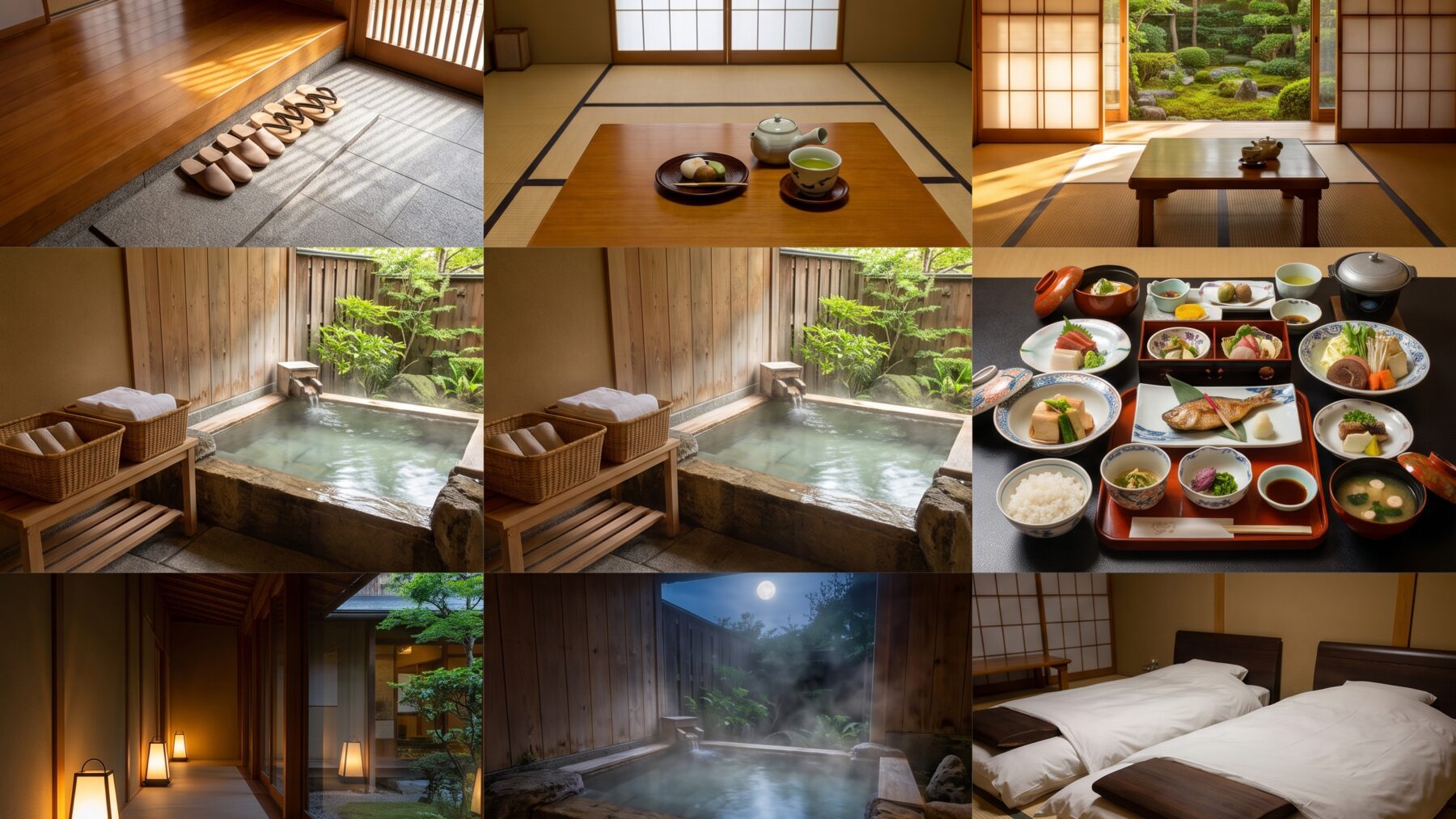
A ryokan is the one form of Japanese accommodation that genuinely requires explanation. Guests who treat it as a hotel end up confused: dinner is at a time somebody else chose, the bed is not there when you arrive, and a stranger comes into your room while you are eating.
Understood properly, it is one of the best nights available in Japan. Here is the whole sequence.
At a glance
- Price
- Quoted per person, including dinner and breakfast. 20,000–60,000 JPY is typical.
- Arrival
- 3–5pm, and firm. Arriving after 6pm is a real problem.
- Dinner
- 6 or 6:30pm, at a set time you choose when booking
- Departure
- Usually 10am. Also firm.
- What to bring
- Nothing. Yukata, towels, toothbrush and toiletries are provided.
- Best for
- One or two nights in a fortnight, in an onsen town rather than a city
Booking
Prices are per person and include two meals. A room listed at 30,000 JPY means 30,000 per person — the two of you will pay 60,000. This is the single most common misunderstanding, and it is not a scam: dinner alone is worth 8,000–15,000 of it.
Book on Japanese sites where you can. Jalan and Rakuten Travel carry far more ryokan than the international platforms, and machine translation handles them adequately.
Say everything at booking time. Dietary requirements, arrival time, tattoos, whether you want a private bath. Kaiseki is bought and prepared in advance and cannot be changed on the day.
Arrival, 3–5pm
You take your shoes off at the entrance and change into slippers. Someone — often the okami, the female proprietor who runs the house — will show you to your room and serve tea and a small sweet at a low table.
This is not an inconvenient formality. Sit down, drink the tea, and let them explain the bath times and the dinner time. It sets the pace of the whole evening.
The room is tatami, with a low table, floor cushions, an alcove (tokonoma) holding a scroll and a flower arrangement, and a view. There is no bed.
Do not step on the tatami in slippers. Slippers off at the room’s edge; socks or bare feet on tatami.
The yukata
A cotton robe, provided, in a size roughly matched to you. You wear it for the entire stay — to dinner, to the bath, to bed, and out into the street in onsen towns.
Wrap left side over right. Right over left is how the dead are dressed, and it is one of the few genuine errors here. Tie the sash (obi) at the waist, not tight.
In cold weather there is a tanzen, a padded outer jacket, over it. Outside there will be wooden geta sandals at the door.
The bath, before dinner
Take a long bath before eating. This is the standard order and there is a reason: you eat better, and the meal is long.
If baths are single-sex with fixed hours, they may swap over during the evening so that everyone gets both. Check the times posted.
→ Onsen for beginners: rules, tattoos and the small towel
Dinner, 6 or 6:30pm
Kaiseki — a multi-course seasonal meal, served either in your room or in a dining room. Eight to fourteen small courses, arriving in sequence.
The structure is roughly: an appetiser, clear soup, sashimi, a grilled dish, a simmered dish, a fried dish, a vinegared dish, then rice, pickles and miso soup, and finally fruit. Everything is chosen for the season and for the local area.
What to know:
- Eat in the order served. The sequence is intentional.
- Lids come off and go beside the bowl, upside down.
- The rice comes near the end, not with the main dishes. This is the signal that the meal is closing.
- You will not finish it. That is normal. Nobody is offended.
- Ask what things are. Staff enjoy explaining, and there will be at least one thing you cannot identify.
Sake and beer are ordered separately and added to the bill.
While you eat
If dinner is in a dining room, staff lay out your futon while you are away — mattress, duvet and pillow, directly on the tatami. You come back to a bedroom.
If dinner is in your room, they clear the table and lay the futon afterwards.
The buckwheat-husk pillow takes some getting used to. Many ryokan keep soft pillows to hand — just ask.
Evening
In an onsen town, this is when people walk. Guests go out in yukata and geta, visit other bathhouses, buy a beer from a vending machine, and clack along the street. Kinosaki in Hyogo is built entirely around this, with seven public baths and a pass that admits guests to all of them.
There may be a second bath before bed. Two or three baths in an evening is normal.
Breakfast, 7:30 or 8am
Japanese, and substantial: grilled fish, rice, miso soup, pickles, a small hot pot, tamagoyaki, dried seaweed and often a raw egg to mix into the rice. Some ryokan offer a Western option; the Japanese one is better and is what you came for.
Breakfast is at a set time too. This is a place that gets up early.
Departure, 10am
Firm, because the rooms have to be turned around and the futons aired. The okami will very often see you out to the road and stand there until you are out of sight, which is a small formality that is nonetheless quite affecting.
What it costs
| One night, two people, mid-range ryokan | Cost |
|---|---|
| Room with dinner and breakfast, per person | 28,000 JPY |
| Second person | 28,000 JPY |
| Sake and beer with dinner | 4,000 JPY |
| Private bath rental, one hour | 3,000 JPY |
| Bathing tax and service | 5,000 JPY |
| Total for two | About 68,000 JPY |
Choosing one
Room with a private open-air bath — the biggest upgrade available. Expensive, and the difference between a good night and a memorable one, particularly in winter.
Meals in your room — traditional and more private; meals in a dining room are increasingly common and no worse.
Location — an onsen town rather than a city. Hakone, Kinosaki, Kusatsu, Kurokawa, Nyuto, Yufuin, Gero.
Size — smaller inns give you the okami and a family atmosphere; large ones give you facilities and anonymity.
Minshuku — the budget version. Family-run, simpler rooms, shared bathrooms, home cooking rather than kaiseki. From about 8,000 JPY per person with meals, and often more memorable than a mid-range ryokan.
At a ryokan
Questions people actually ask
Is a ryokan worth the price?
For one or two nights in a fortnight, yes. It includes two substantial meals and the bath, so the comparison with a room-only hotel rate is misleading. More than two nights and the fixed schedule starts to constrain your days.
Do I have to wear the yukata?
No, but everyone does, and in an onsen town it is what you wear outside as well. Wrap left over right.
Is sleeping on a futon comfortable?
More than expected — the mattress is thicker than it looks and tatami has some give. The buckwheat pillow is the part people struggle with, and a soft one is usually available on request.
Can I stay in a ryokan with tattoos?
The room and meals, always. The communal bath, sometimes not. Book a room with a private bath or ask when reserving.
What if I do not like Japanese breakfast?
Many ryokan offer a Western alternative if you ask when booking. Otherwise, the grilled fish and rice is milder than it sounds and the pickles are optional.
Should I tip the staff?
No. A formal kokorozuke in an envelope at the start of a stay exists at high-end inns but is optional and increasingly rare. Cash handed over at departure will be politely refused.
Keep planning
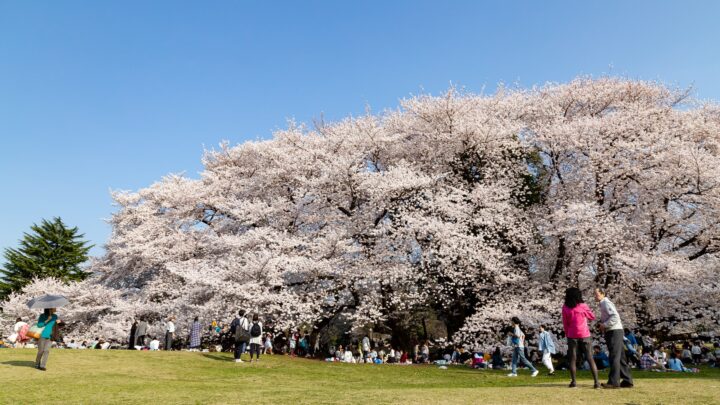
The Japanese Year: Hanami, Tsuyu, Momiji and New Year
Japan pays more attention to the calendar than almost any country, and the whole population moves in step with it. What each…

Matsuri: What Happens at a Japanese Festival and How to Join In
Portable shrines carried by four hundred people, illuminated paper warriors, and a dance anyone can join. The dozen festivals worth planning a…
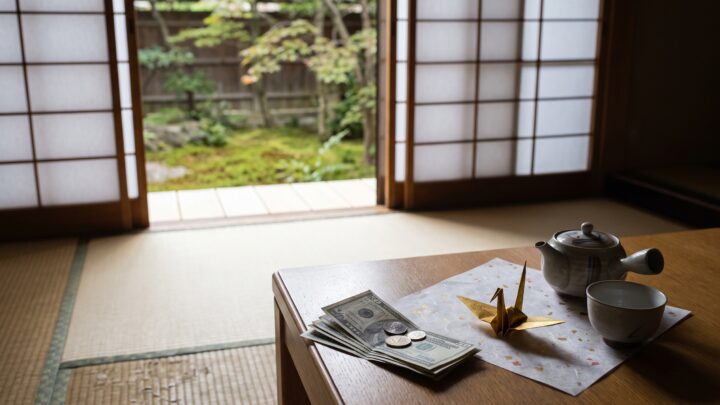
Tipping in Japan, and Why Nobody Wants Your Money
There is no tipping in Japan, in any situation, and attempting it causes a small crisis. Here is why, what the charges…