Shrines and Temples: What to Do from the Gate Onwards
How to tell a shrine from a temple in three seconds, what to do at each, and what all those wooden plaques, paper strips and stamp books are for. Nobody will mind if you get it wrong — but it is more interesting if you do not.
 Signpost Japan
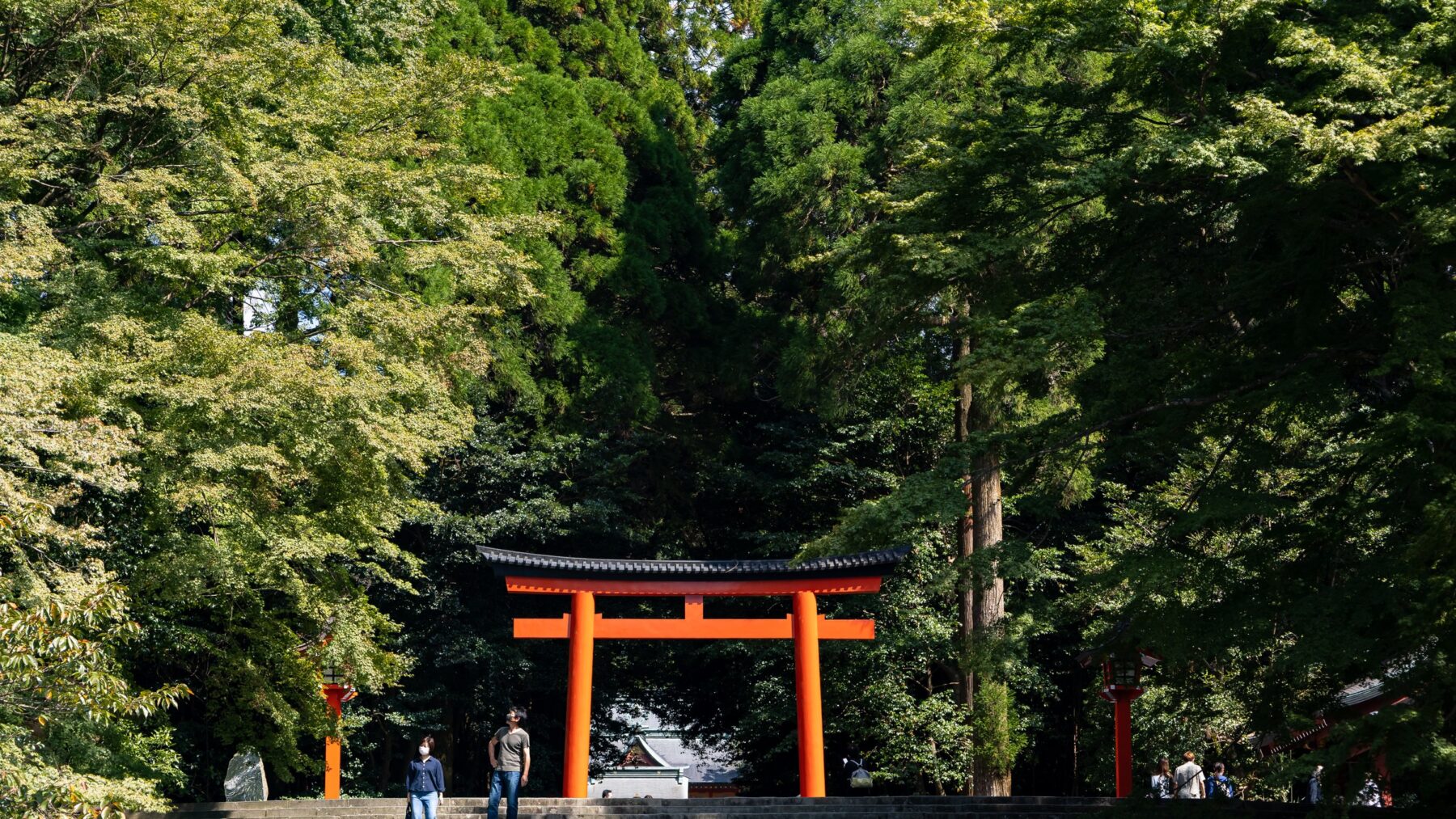
You will visit a great many of these, and after about the fifth they begin to blur unless you know what you are looking at. The distinction is not decorative: shrines and temples belong to two different religions that have coexisted, borrowed from each other and occasionally merged for 1,400 years.
Neither expects anything of you. Both are more interesting when you know the shape of the thing.
At a glance
- Shrine (神社, jinja)
- Shinto. Look for a torii gate. Ends in -jingu, -taisha, -jinja, -gu.
- Temple (寺, tera)
- Buddhist. Look for an incense burner and Buddha statues. Ends in -ji, -dera, -in.
- At a shrine
- Bow, wash hands, then bow twice, clap twice, bow once
- At a temple
- Bow, wash hands, incense, then hands together — no clapping
- Entry
- Shrines are usually free. Temples often charge 300–600 JPY, cash.
- Photography
- Usually fine outside, often not inside halls. Signs are posted.
Telling them apart
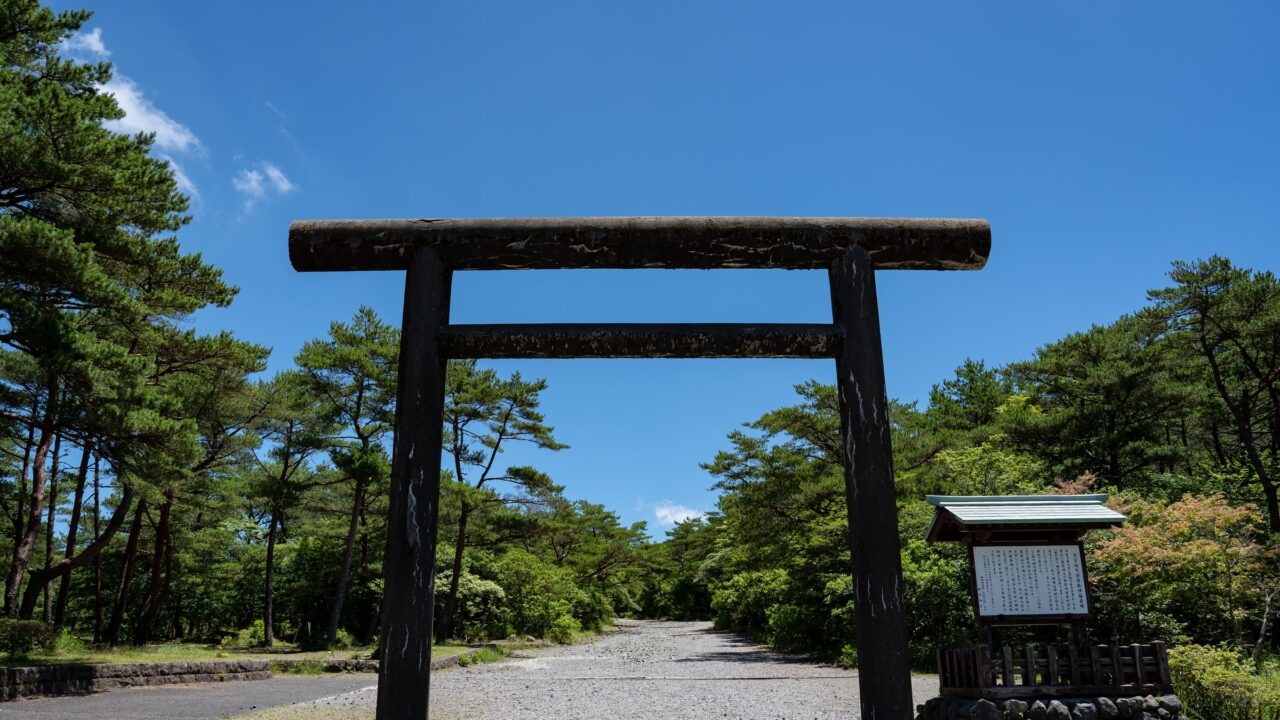
The gate. A shrine has a torii — two uprights and two crossbars, often vermillion, marking the boundary between ordinary and sacred space. A temple has a substantial roofed gate, frequently with two muscular guardian statues in it.
The guardians. Shrines have paired komainu, lion-dogs, one with an open mouth and one closed. Temples have Nio, fierce human guardians, in the same open-and-closed arrangement — the sounds a and un, the beginning and end of everything.
Incense. A large bronze burner with smoke coming out of it means a temple. Shinto does not use incense this way.
Graves. Cemeteries are Buddhist. A shrine will not have one — Shinto regards death as impure.
Clapping. You clap at a shrine. You never clap at a temple.
At a shrine
Bow once at the torii
A small bow before passing through. You are entering sacred ground.
Walk to the side of the path
The centre of the approach is for the deity. Locals keep to one side; it costs you nothing to do the same.
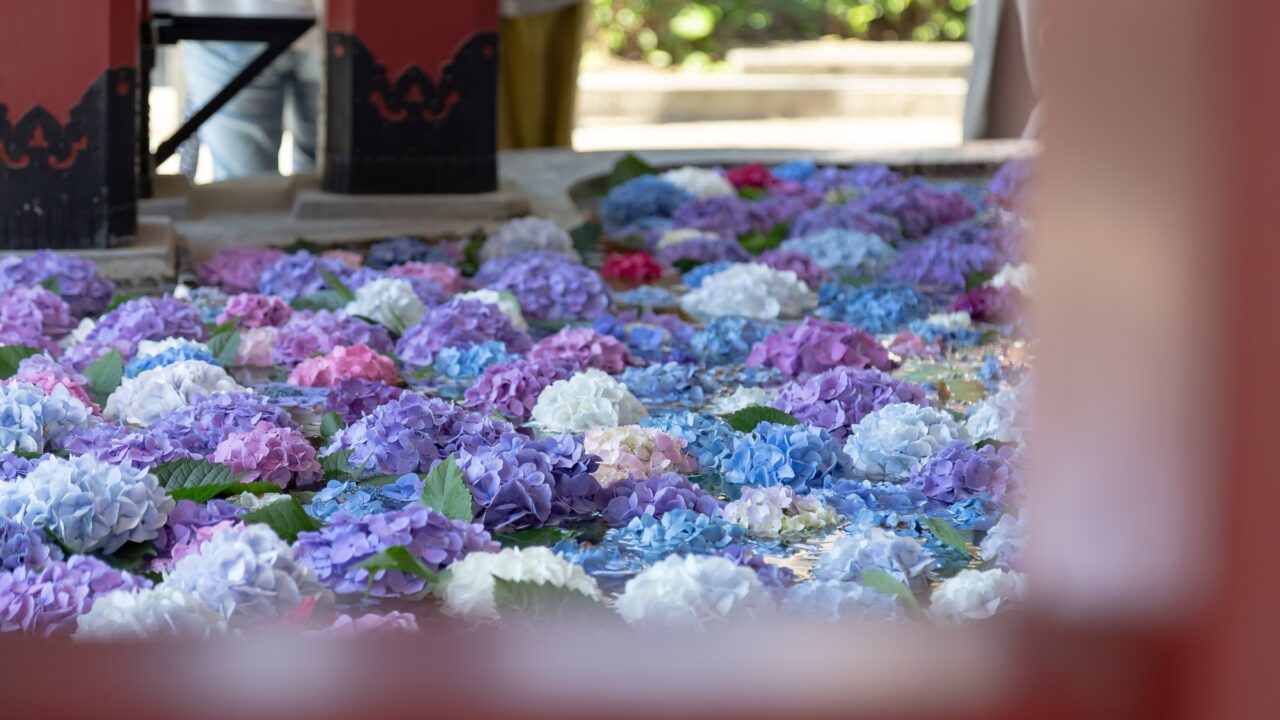
Wash at the water basin
Take the ladle in your right hand, rinse your left. Swap, rinse your right. Pour into your cupped left hand, rinse your mouth (do not drink from the ladle), spit beside the basin. Tip the ladle upright to rinse the handle. Replace it face down.
At the hall: coin, bell, then two-two-one
Toss a coin into the box. Ring the bell if there is one. Then bow twice, clap twice, hold your hands together and make your wish or thanks, then bow once more.
Bow again on the way out at the torii
Turning back to face the shrine.
The coin. A 5-yen coin is traditional — go-en is a pun on “good fortune” and “connection”. Any coin is fine; nobody is counting.
At a temple
Similar, minus the clapping.
Bow at the gate. Wash your hands at the basin the same way. If there is a large incense burner, buy a stick, light it, place it upright, and waft the smoke over yourself — over a part of you that needs healing, by tradition.
At the hall: coin in the box, hands together in front of your chest, bow your head. No clapping. Bow once when you finish.
Some temples have a bell you may ring; many have one you must not. If it is roped off or has a sign, leave it.
The things you will see
Ema — small wooden plaques hung in racks. You write a wish on one and hang it. 500–1,000 JPY. Many are decorated with the zodiac animal or the shrine’s own motif, and reading other people’s is one of the small pleasures of a visit — university entrance, safe childbirth, a grandmother’s health.
Omikuji — paper fortunes, drawn at random, 100–200 JPY. Ranked from dai-kichi (great blessing) down through several grades to kyo (curse). If you get a bad one, tie it to the rack provided and leave the misfortune there. Good ones you take with you.
Omamori — cloth amulets for specific purposes: traffic safety, study, health, love, safe childbirth. 500–1,000 JPY. Do not open them — the paper inside is the point and opening it voids the charm. Traditionally returned to a shrine after a year and burned.
Shimenawa — thick twisted rice-straw rope with paper zigzags, marking something sacred. Often on very old trees.
Goshuin — a calligraphic stamp, hand-drawn in ink with a red seal, recorded in a goshuincho book you buy at any shrine or temple for 1,500–2,500 JPY. Each stamp costs about 300–500 JPY.
This is the best souvenir available in Japan: personal, cheap, made by hand in front of you, and it becomes a record of your trip. Buy the book at the first place you visit.
What not to do
- Do not walk down the exact centre of a shrine approach.
- Do not drink directly from the ladle at the water basin.
- Do not enter roped-off areas, and there are more of these than are obvious.
- Do not photograph inside halls unless it is explicitly permitted. Signs are posted, and the rule varies between buildings at the same site.
- Do not photograph people praying.
- Take your shoes off where indicated — usually to enter a temple’s interior.
- Do not smoke or eat within the grounds.
- Keep your voice down. These are working religious sites, not ruins.
Which ones to actually visit
After a while they blur, so it is worth choosing for variety rather than for fame.
Shrines
- Ise Jingu (Mie) — the most important in Shinto, rebuilt entirely every twenty years for over 1,300 years.
- Fushimi Inari (Kyoto) — ten thousand torii up a mountain.
- Itsukushima (Hiroshima) — built out over the water.
- Izumo Taisha (Shimane) — the oldest, where all the gods of Japan gather each October.
- Meiji Jingu (Tokyo) — a 1920 shrine in a planted forest of 100,000 trees.
Temples
- Todai-ji (Nara) — the Great Buddha in one of the world’s largest wooden buildings.
- Horyu-ji (Nara) — believed to be the oldest wooden buildings anywhere.
- Ryoan-ji (Kyoto) — fifteen rocks in raked gravel.
- Koyasan (Wakayama) — a mountain of 117 temples, and a night in one.
- Chuson-ji (Iwate) — a gold-leafed hall from 1124.
→ Wakayama: Koyasan and the Kumano Kodo
A note on belief
Most Japanese people describe themselves as non-religious and nonetheless visit a shrine at New Year, marry in a Christian-style chapel, and hold funerals at a Buddhist temple. Religion here is more a matter of practice and occasion than of doctrine and belonging.
This is why nobody minds a visitor performing the rituals, and equally why nobody minds if you do not. Doing it is a form of politeness rather than a claim of faith.
At a shrine or temple
Questions people actually ask
Do I need to be religious to visit?
No, and most Japanese visitors would not describe themselves as religious either. The rituals are treated as courtesy rather than declaration.
What if I do the ritual wrong?
Nobody will react. The sequence at a shrine is two bows, two claps, one bow; at a temple, no clapping. Get those right and everything else is detail.
Is there an entry fee?
Shrines are usually free. Temples often charge 300–600 JPY for the main halls or gardens, and it is generally cash only.
What is the book everyone is carrying?
A goshuincho, for collecting hand-brushed calligraphic stamps. Buy one at any shrine or temple for 1,500–2,500 JPY. It is the best souvenir in Japan.
Can I take photos?
Outside, almost always. Inside halls, often not, and the rule differs between buildings at the same site. Look for signs and follow them strictly.
Why do some shrines have fox statues?
They are Inari shrines, dedicated to the deity of rice, agriculture and commerce, with foxes as messengers. There are said to be over 30,000 of them nationwide, more than any other type.
Keep planning
The Japanese Year: Hanami, Tsuyu, Momiji and New Year
Japan pays more attention to the calendar than almost any country, and the whole population moves in step with it. What each…
Matsuri: What Happens at a Japanese Festival and How to Join In
Portable shrines carried by four hundred people, illuminated paper warriors, and a dance anyone can join. The dozen festivals worth planning a…
Tipping in Japan, and Why Nobody Wants Your Money
There is no tipping in Japan, in any situation, and attempting it causes a small crisis. Here is why, what the charges…