Airport to City: Narita, Haneda, Kansai, Chubu, Fukuoka, New Chitose
Every major Japanese airport has at least two rail options at very different prices. Which to take from each one, what it costs, and the one where the cheap option is genuinely better.
 Signpost Japan
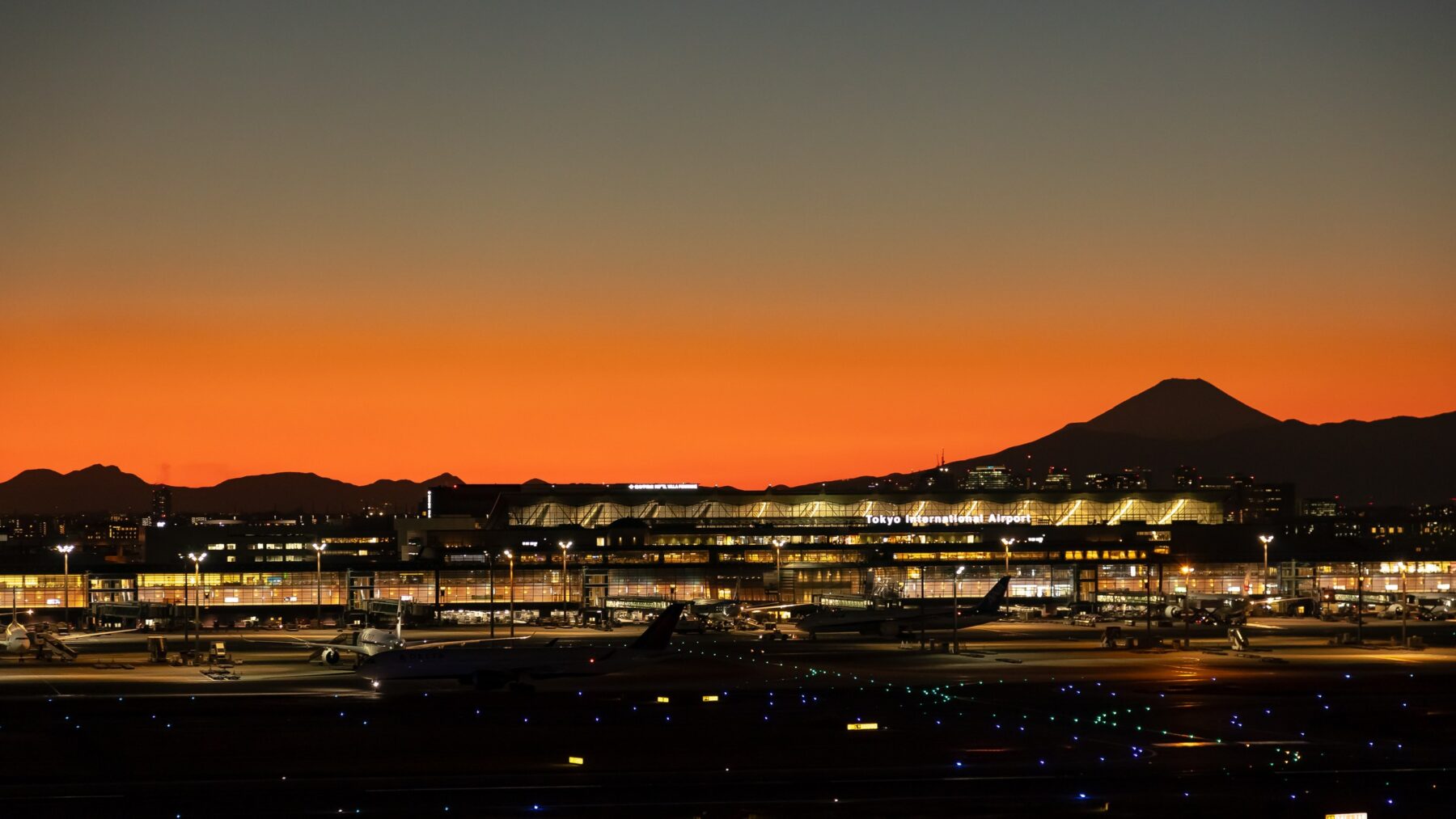
The first decision you make in Japan is at the airport, jet-lagged, in front of four ticket counters. Every major airport has a fast expensive train, a slower cheap train, and a bus that goes to your hotel door. The right answer depends on where you are sleeping and how much luggage you are dragging.
Here is each airport, decided.
Narita (NRT) → Tokyo
Narita is 60km from central Tokyo, which is why this is the airport transfer people get wrong.
| Option | Time | Fare | Goes to |
|---|---|---|---|
| Keisei Skyliner | About 41 min | About 2,600 JPY | Nippori, Ueno |
| Narita Express (N’EX) | 60–80 min | About 3,100 JPY | Tokyo, Shinjuku, Shibuya, Yokohama |
| Keisei Access Express | About 60 min | About 1,300 JPY | Asakusa, Nihonbashi, Shinagawa |
| Airport Limousine Bus | 90–120 min | About 3,600 JPY | Major hotels, direct |
Take the Skyliner if you are staying near Ueno or on the north side of the loop — it is the fastest thing on the route by a clear margin.
Take the N’EX if you are staying near Shinjuku, Shibuya or Yokohama, or if you have a Japan Rail Pass, which covers it entirely.
Take the Access Express if you are staying near Asakusa or Nihonbashi. It is half the price of the Skyliner, uses the same tracks for most of the way, and runs through onto the Toei Asakusa subway line so you may not need to change at all.
Take the bus if you have three suitcases and a hotel it stops at. It is slow and hostage to traffic, but it is door to door.
Haneda (HND) → Tokyo
Haneda is inside the city and this transfer is easy and cheap. Do not overthink it.
| Option | Time | Fare | Goes to |
|---|---|---|---|
| Keikyu line | 11–14 min | About 300 JPY | Shinagawa, then anywhere |
| Tokyo Monorail | 13–18 min | About 500 JPY | Hamamatsucho |
| Limousine bus | 30–60 min | 1,000–1,400 JPY | Hotels |
Take the Keikyu to Shinagawa and change to the Yamanote line. It is the cheapest and usually the fastest. Some Keikyu trains run through onto the Toei Asakusa line, going straight to Ginza and Asakusa without a change.
The Monorail is covered by the Japan Rail Pass; the Keikyu is not.
Kansai (KIX) → Osaka and Kyoto
Built on an artificial island, so everything takes a while.
| Option | Time | Fare | Goes to |
|---|---|---|---|
| JR Haruka | About 75 min | About 3,600 JPY | Kyoto |
| Nankai Rapi:t | About 38 min | About 1,500 JPY | Namba |
| Nankai Airport Express | About 45 min | About 1,000 JPY | Namba |
| JR Kansai Airport Rapid | About 65 min | About 1,200 JPY | Osaka Station |
| Limousine bus | 50–90 min | 1,600–2,600 JPY | Hotels, Kyoto, Kobe |
To Kyoto: the Haruka. Buy the ICOCA & Haruka package, which bundles an IC card with a heavily discounted Haruka ticket and is one of the few genuinely good-value airport deals in Japan.
To Namba or southern Osaka: the ordinary Nankai Airport Express. The Rapi:t is prettier and seven minutes faster for 500 JPY more; the ordinary train is the better buy.
To Osaka Station or the north: the JR Kansai Airport Rapid.
Chubu Centrair (NGO) → Nagoya
One good answer: the Meitetsu μ-SKY, about 28 minutes to Nagoya Station for roughly 1,300 JPY including the reserved-seat surcharge. The ordinary Meitetsu express takes about 37 minutes for around 900 JPY.
Fukuoka (FUK) → Hakata
The easiest airport transfer in Japan, and possibly in the world. The subway runs from the domestic terminal to Hakata Station in about five minutes for roughly 260 JPY, and on to Tenjin in eleven.
The international terminal is on the other side of the runway; a free shuttle bus connects it to the domestic terminal in about ten minutes.
New Chitose (CTS) → Sapporo
The JR Rapid Airport runs every fifteen minutes to Sapporo in about 37 minutes for roughly 1,200 JPY. Reserved seats (the U-Seat car) cost a few hundred yen more and are worth it with luggage in winter.
In heavy snow, allow more time and check for cancellations before leaving the hotel.
What to do before you leave the airport
Buy an IC card
At the station ticket machines inside the terminal. Welcome Suica at Narita and Haneda, ICOCA at Kansai. Load 5,000 JPY.
Get cash
7-Bank ATMs in the arrivals hall reliably accept foreign cards. Take out 20,000–30,000 JPY. Japan is less cash-dependent than it was, but rural buses, small restaurants and temple entry are still cash.
Sort connectivity
If you did not buy an eSIM before flying, the SIM and pocket Wi-Fi counters are in arrivals. An eSIM bought in advance is cheaper and means you have data the moment you land.
Consider forwarding your suitcase
Luggage forwarding counters in the arrivals hall will send a bag to your hotel, often same day within the city. Worth it if your first afternoon involves sightseeing.
Then buy your train ticket
Not before. The IC card may be all you need for the cheaper options.
→ Your first 24 hours in Japan, hour by hour
Questions people actually ask
Is the Narita Express worth it over the cheaper Keisei trains?
Only if you are going to Shinjuku, Shibuya or Yokohama, or you hold a Japan Rail Pass. For Ueno the Skyliner is faster; for Asakusa the Access Express is far cheaper and just as convenient.
What if I land late at night?
Haneda has trains until roughly midnight and buses beyond. Narita’s last trains leave around 10pm, after which you are looking at a night bus, an expensive taxi, or an airport hotel. Check your arrival time against the last train before booking a late flight into Narita.
Can I use an IC card for the airport trains?
For the ordinary services, yes. Reserved limited express trains — Skyliner, N’EX, Haruka, Rapi:t, μ-SKY — need a separate ticket on top.
Should I book the airport train in advance?
Not necessary except in peak holiday weeks. Discounted foreign-visitor tickets for the Skyliner and Haruka are worth buying in advance because they are cheaper, not because they sell out.
How much luggage space is there on these trains?
The N’EX, Skyliner, Haruka and Rapi:t all have proper luggage racks. Ordinary commuter trains do not, which is an argument for forwarding your suitcase from the airport.
Keep planning
Tokyo to Kyoto: Shinkansen, Night Bus or Plane?
The Shinkansen is the right answer for almost everyone: 2 hours 15 minutes, about 14,000 JPY, no check-in. Here is what the…
When Things Go Wrong: Missed Trains, Lost Tickets and the Last Train
You will miss a connection, feed the wrong ticket into a gate, or look up at 11:40pm and realise the last train…
Luggage in Japan: Coin Lockers, Takkyubin and Oversized Baggage Rules
Japanese trains were not built for suitcases, so Japan moves the suitcase separately. How luggage forwarding works, what the 160cm rule means,…