Kansai Transport: Which Pass for Which Trip
Kyoto is a bus city, Osaka is a subway city, and the fastest train between them is not the one you would guess. Plus the Kyoto pass that was abolished in 2023 and still appears in half the guides online.
 Signpost Japan
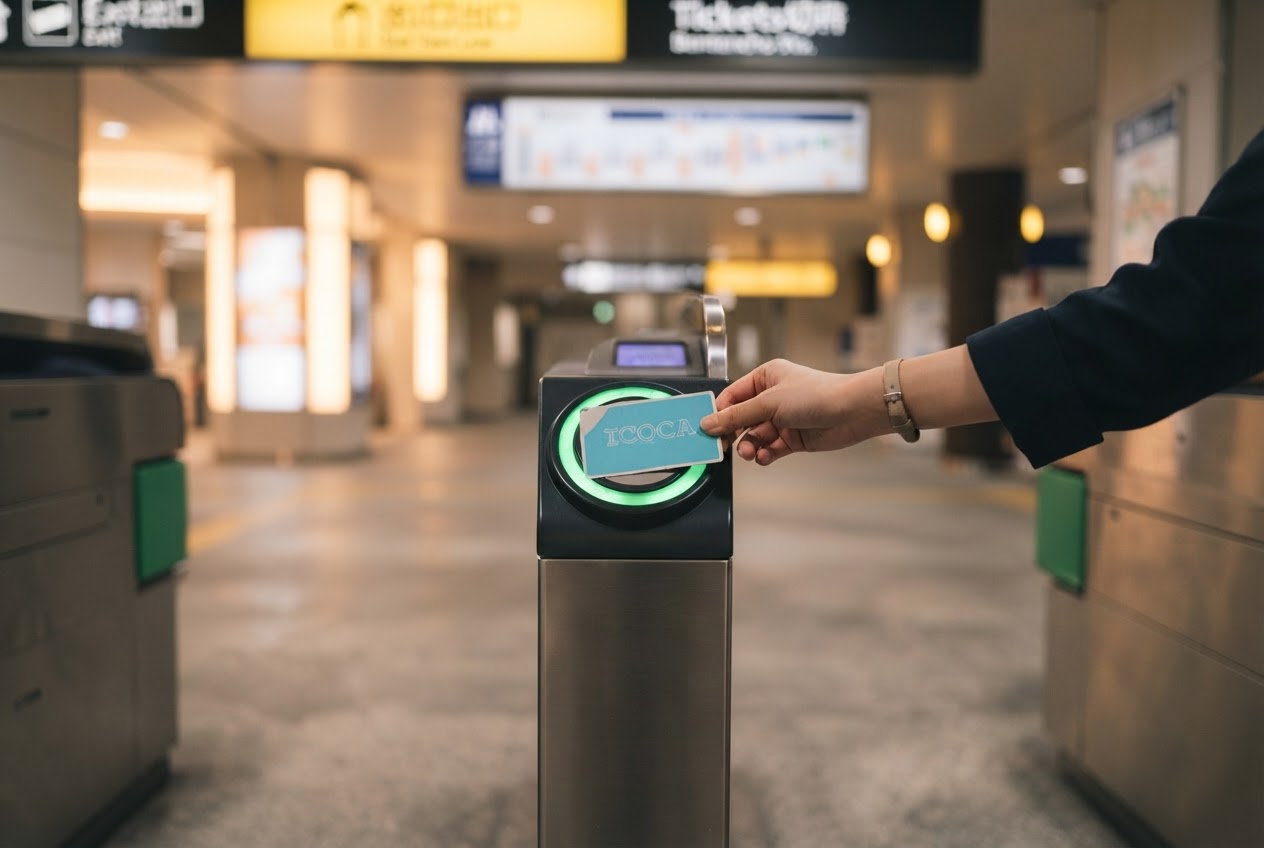
Kansai is compact. Kyoto to Osaka is under half an hour, Nara and Kobe are day trips, and Himeji is an hour and a bit away. That closeness is why so many people base themselves in one city for a week — and why the transport question here is about passes rather than routes.
It is also the region where old advice does the most damage, because a widely recommended Kyoto pass no longer exists.
At a glance
- Kyoto
- A bus city with two subway lines. Buses go where the temples are.
- Osaka
- A subway city. The Midosuji line does most of the work.
- Between them
- JR Special Rapid, about 29 minutes. Hankyu is slower and cheaper.
- Nara
- Kintetsu gets you closer to the park than JR does.
- The trap
- The Kyoto City Bus One-Day Pass was abolished in September 2023.
Kyoto: a bus city
Kyoto has only two subway lines — Karasuma running north to south, Tozai running east to west — and they cross in the middle. Most of what you came to see is not near either.
Kinkaku-ji, Ginkaku-ji, Kiyomizu-dera, Arashiyama and the Philosopher’s Path are all served primarily by city bus. Buses are frequent, cheap and slow, and in autumn they are extremely full.
You board at the back, take a numbered ticket if the route is zoned, and pay at the front when you get off. Within the flat-fare central zone it is a single fare regardless of distance. IC cards work.
Is the replacement pass worth it? A single central bus fare is about 230 JPY. The pass costs about 1,100 JPY, so you need roughly five journeys, or four plus a subway leg. On a temple-heavy day you will hit that. On a day walking Higashiyama, you will not — that day is two bus rides and a lot of walking.
Osaka: a subway city
Osaka Metro is straightforward. The Midosuji line (red, M) runs north to south through everything: Shin-Osaka for the Shinkansen, Umeda for the shops and the station district, Shinsaibashi, Namba for Dotonbori, and Tennoji for the tower and the zoo.
The JR Osaka Loop Line circles the centre, useful for Osaka Castle and the aquarium.
The Osaka Amazing Pass (about 3,300 JPY for a day) bundles unlimited subway and bus travel with free entry to around thirty attractions including Osaka Castle, the Umeda Sky Building and a Dotonbori river cruise. If you are doing three or more paid attractions in a day, it is one of the better-value tourist passes in Japan.
Between the cities
This is where people overpay without noticing.
| Route | Fastest | Cheapest |
|---|---|---|
| Kyoto – Osaka | JR Special Rapid, about 29 min | Hankyu, about 45 min, roughly half the fare |
| Kyoto – Nara | Kintetsu Limited Express, about 35 min | Kintetsu Express, about 45 min |
| Osaka – Nara | Kintetsu, about 40 min | Kintetsu, same |
| Kyoto – Kobe | JR Special Rapid, about 55 min | Hankyu, about 70 min |
| Osaka – Himeji | JR Special Rapid, about 62 min | Same |
Two things to notice. The JR Special Rapid (新快速) is one of the best trains in Japan — free of any surcharge, fast, and it runs the whole length of the region. And Kintetsu, not JR, is the line for Nara: Kintetsu Nara station is a few minutes’ walk from the deer park, while JR Nara is a good fifteen minutes further out.
Choosing a pass
Based in Kyoto or Osaka, day trips only, no Shinkansen
JR West Kansai Area Pass, 1–4 days from about 3,000 JPY. Covers Kyoto, Osaka, Kobe, Nara, Himeji and the airport express. Excellent value and the pass most visitors should buy.
Adding a Shinkansen run west
Kansai Wide Area Pass (5 days, about 12,000 JPY) reaches Okayama. Kansai-Hiroshima Area Pass (5 days, about 19,000 JPY) reaches Hiroshima and Miyajima.
One heavy day in Kyoto
Subway & Bus One-Day Pass, about 1,100 JPY, if you will make five or more journeys. Otherwise just tap your IC card.
One heavy day in Osaka
Osaka Amazing Pass, about 3,300 JPY, if you are visiting three or more paid attractions.
Nara, Ise or Koyasan
Kintetsu Rail Pass for Nara and Ise. Nankai for Koyasan and Kansai Airport — no JR pass touches either.
From Kansai Airport
Four options, and the right one depends entirely on where you are sleeping.
- To Kyoto: JR Haruka limited express, about 75 minutes. Buy the ICOCA and Haruka package for a substantial discount over the walk-up fare.
- To Namba (southern Osaka): Nankai Rapi:t, about 38 minutes, or the ordinary Nankai Airport Express for roughly half the price and seven minutes longer.
- To Osaka Station: JR Kansai Airport Rapid, about 65 minutes.
- To anywhere else: the airport limousine bus, which serves a long list of hotels directly.
→ Airport to city: Narita, Haneda, Kansai, Chubu, Fukuoka, New Chitose
On a Kyoto bus
Questions people actually ask
Should I base myself in Kyoto or Osaka?
Kyoto if you want temples and quiet mornings; Osaka if you want food, nightlife and cheaper hotels. They are 29 minutes apart, so the choice is about atmosphere rather than access.
Is the Kyoto bus one-day pass still available?
No. The bus-only pass was abolished at the end of September 2023 and replaced by a combined Subway & Bus One-Day Pass at a higher price. Ignore any guide that still recommends the old one.
Do I need a rail pass at all for a Kansai-only trip?
Often not. Fares within Kansai are low and the JR Kansai Area Pass covers most day trips for a few thousand yen. The national Japan Rail Pass is almost never the right choice for a Kansai-only trip.
How crowded is Kyoto really?
Between about 10am and 3pm at the famous sites, very. Arrive at opening time — most temples open at 8 or 9am — and the same places are almost empty.
Can I use my Suica in Kansai?
Yes. All ten major IC cards work interchangeably on trains, subways and buses across the region.
Keep planning
Tokyo to Kyoto: Shinkansen, Night Bus or Plane?
The Shinkansen is the right answer for almost everyone: 2 hours 15 minutes, about 14,000 JPY, no check-in. Here is what the…
When Things Go Wrong: Missed Trains, Lost Tickets and the Last Train
You will miss a connection, feed the wrong ticket into a gate, or look up at 11:40pm and realise the last train…
Luggage in Japan: Coin Lockers, Takkyubin and Oversized Baggage Rules
Japanese trains were not built for suitcases, so Japan moves the suitcase separately. How luggage forwarding works, what the 160cm rule means,…