How to Ride the Shinkansen Without Speaking Japanese
Buying the ticket is the easy part. This is what happens between the ticket machine and your seat, including the two gates almost everybody gets wrong on their first trip.
 Signpost Japan
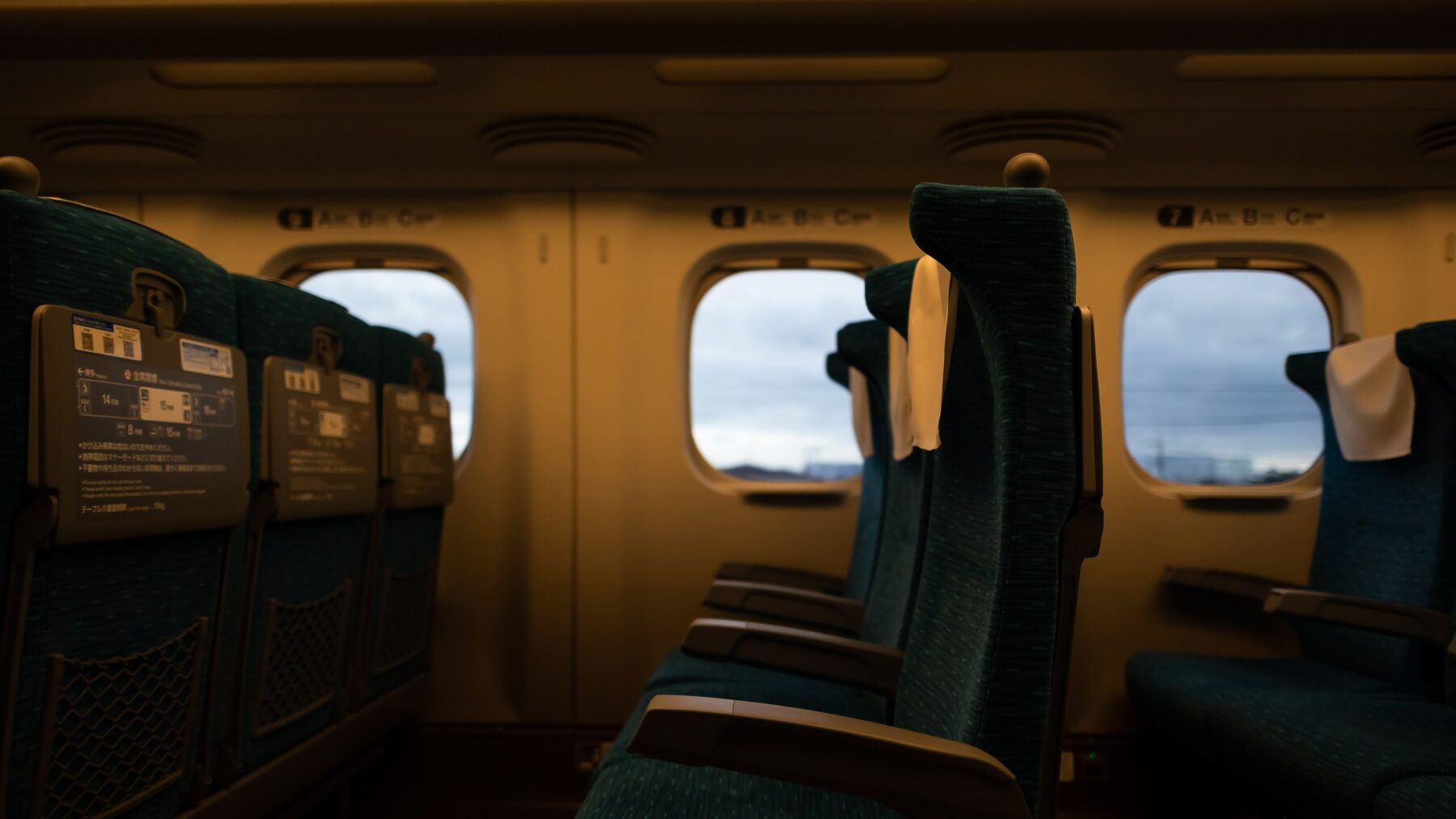
The Shinkansen is the easiest long-distance transport system in the world to use, right up until the moment you put a ticket into the gate and it spits it back at you. The reason is almost always the same: a Shinkansen journey needs two tickets, and you have only fed it one.
Nothing else about the system is hard. Trains leave to the second, every major station has English signage, and the staff at the gate are used to confused visitors. This guide walks through the whole journey in order, from the ticket machine to the moment you step off at the other end.
At a glance
- Tickets needed
- Two — a base fare ticket and a limited express ticket. Insert both together, face up.
- Reserve a seat?
- Not required on most routes. Do it for Golden Week, Obon and New Year.
- Luggage
- Bags over 160cm total need a free oversized baggage reservation on the Tokaido, Sanyo and Kyushu lines.
- Eating
- Expected and encouraged. Buy an ekiben before you board.
- IC card
- A plain tap-in does not work. See the FAQ below.
What a Shinkansen ticket actually is
Japanese rail fares split into two parts, and understanding this one thing prevents most first-trip problems.
The base fare ticket (乗車券, joshaken) covers the distance you travel. It is the same kind of ticket you would buy for a local train.
The limited express ticket (特急券, tokkyuken) is the surcharge for the Shinkansen being fast. It also carries your seat information if you reserved one.
Buy both at once and the machine prints two cards. Both go into the gate together — stack them, insert them as a pair, and take them both from the far side. You need them again to exit at your destination.
Buying your ticket
At a ticket machine
Every station that serves the Shinkansen has dedicated ticket machines, usually green-fronted and marked Shinkansen. They are separate from the small machines by the local train gates.
Find the Shinkansen machines
Follow the blue signs marked Shinkansen. The machines sit just outside the Shinkansen transfer gates, not at the station entrance.
Press English before anything else
The language button is in a corner of the screen, usually top right. Press it first — the flow is identical in English, just readable.
Choose your destination by city name
Destinations are listed in Roman letters by city, not by station code. If your city has several stations, the machine will show them; for Kyoto and Osaka there is effectively one Shinkansen station each.
Pick reserved or non-reserved
Non-reserved (自由席, jiyuseki) is cheaper and fine outside peak weeks. Reserved (指定席, shiteiseki) guarantees a specific seat and costs a few hundred yen more.
Pay, then take both tickets
Cash and foreign credit cards both work. Two tickets will come out of the slot. Take both, and keep them together until you have left the station at the other end.
With a Japan Rail Pass
A Japan Rail Pass covers both parts of the fare on almost everything. The exceptions are the fastest services on the Tokaido and Sanyo lines: Nozomi and Mizuho. Since late 2023 you can ride those with a pass by paying a supplement, but the cheaper approach is usually to take the next Hikari instead.
Seat reservations with a pass are free. Make them at a ticket office (みどりの窓口, Midori no Madoguchi) or at a reservation machine.
Getting to the platform
Large stations have two sets of gates. First the ordinary ticket gates, then — deeper inside — the Shinkansen transfer gates. Insert both tickets at each one, collect them, and keep going.
If a gate rejects your tickets, do not queue again. Walk to the staffed window at the end of the gate line and hold the tickets out. This happens constantly and takes about fifteen seconds to resolve.
Say it in Japanese
On board
Platforms are marked with numbers and symbols showing exactly where each car door will open. Trains stop within centimetres of those marks, so stand at the mark for your car and the door arrives in front of you.
Dwell time at intermediate stations can be as short as fifty seconds. Be ready to step off before the train arrives.
On Nozomi services, the non-reserved cars are usually cars 1 to 3. On Hikari there are more. The car numbers are printed on your ticket and displayed on the platform boards.
Seats face forward in the direction of travel; the whole cabin is rotated by cleaning staff at the terminus, which is why you sometimes see a crew spinning rows of seats through 180 degrees in three minutes.
| Service | Tokyo to Osaka | Covered by Japan Rail Pass |
|---|---|---|
| Nozomi | About 2h 30m | Supplement required |
| Hikari | About 2h 55m | Yes |
| Kodama | About 4h | Yes |
Eating on board is normal and expected. Buy an ekiben — a station lunchbox — before boarding; the choice on the platform is far better than the trolley. Talking on the phone in the cabin is not done. Take calls in the vestibule between cars.
What it costs
| Tokyo to Kyoto, one way, non-reserved | Cost |
|---|---|
| Base fare ticket | 8,360 JPY |
| Limited express fee, non-reserved | 4,960 JPY |
| Ekiben and a drink | 1,400 JPY |
| Total with lunch | 14,720 JPY |
Fares are set nationally and do not change with demand, so there is no advantage to booking early on price alone. Booking early only buys you a seat.
Luggage
On the Tokaido, Sanyo and Kyushu Shinkansen, any bag whose height, width and depth add up to more than 160cm needs a free oversized baggage seat reservation. Turning up without one carries a surcharge and the crew will move your bag.
Under 160cm — which covers most suitcases up to roughly 28 inches — you can use the overhead rack or the space behind the last row of seats.
If your bag is large and your itinerary is tight, consider takkyubin luggage forwarding instead. Hand your suitcase in at a hotel front desk or convenience store, and it arrives at your next hotel the following day for roughly 2,000 JPY.
Questions people actually ask
Can I use a Suica or ICOCA card on the Shinkansen?
Not by tapping in. You can register an IC card to a Shinkansen eTicket booking made online, and then the card opens the Shinkansen gate — but the booking has to exist first. A plain tap-in with a charged card will be rejected.
What happens if I miss my reserved train?
Your reserved ticket becomes valid for a non-reserved seat on a later train the same day, on the same route. You do not need to buy anything again and you do not need to speak to anyone. Just board a non-reserved car.
Do I need to book weeks ahead?
No. Outside Golden Week, Obon and the New Year period, non-reserved cars almost always have seats, and reservations can usually be made on the day. During those three peak periods, book as far ahead as you can.
Is there a luggage rack for big suitcases?
Yes, behind the last row of each car, but it fills quickly. On the Tokaido, Sanyo and Kyushu lines, seats in the last row come with a dedicated luggage space, and that is what an oversized baggage reservation books.
Can I get a refund if my plans change?
Yes, before departure, with a handling fee. Take the tickets to a ticket office. After the departure time of a reserved train, only the base fare portion can normally be refunded.
Keep planning
Tokyo to Kyoto: Shinkansen, Night Bus or Plane?
The Shinkansen is the right answer for almost everyone: 2 hours 15 minutes, about 14,000 JPY, no check-in. Here is what the…
When Things Go Wrong: Missed Trains, Lost Tickets and the Last Train
You will miss a connection, feed the wrong ticket into a gate, or look up at 11:40pm and realise the last train…
Luggage in Japan: Coin Lockers, Takkyubin and Oversized Baggage Rules
Japanese trains were not built for suitcases, so Japan moves the suitcase separately. How luggage forwarding works, what the 160cm rule means,…