Getting Around Japan: The Complete Transport Guide
Which trains to take, which passes are worth buying, and how to move around a country where almost nothing is written in your alphabet. The one page to read before you book anything.
 Signpost Japan
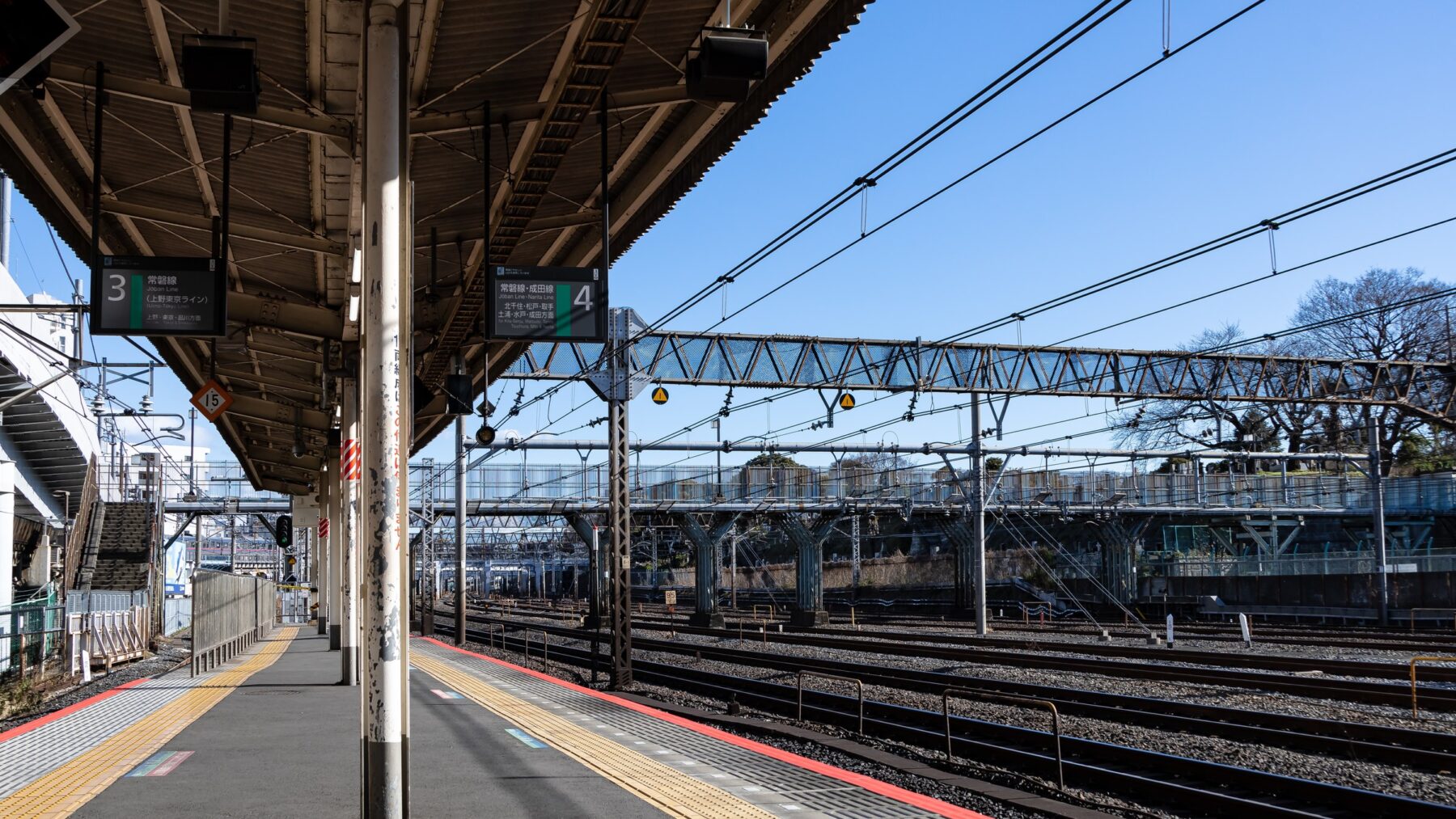
Japan runs the best public transport system on earth and explains almost none of it to visitors. Signs are excellent. Announcements are clear. What nobody tells you is the shape of the thing: that there are several separate railway companies who each sell their own tickets, that the fastest train is the one your rail pass does not cover, and that the card in your pocket which opens every ticket gate in Tokyo will be rejected at a gate in Kyoto if you try to board a Shinkansen with it.
This page is the map of the system. Every section links to a guide that goes deeper.
At a glance
- Get an IC card
- Do it at the airport. It covers local trains, subways, buses and convenience stores nationwide.
- Rail pass
- Since the 2023 price rise, most two-week trips no longer break even. Do the arithmetic before you buy.
- Long distance
- Shinkansen for anything under about 700km. Fly beyond that. Bus if you are counting yen.
- Cities
- Trains and subways. Taxis are safe and expensive. You will walk more than you expect.
- Rural
- Buses run three times a day and stop at 6pm. This is where you rent a car.
The one thing that explains everything else
Japan’s railways were privatised in 1987 and split into six regional passenger companies, collectively JR. Alongside them run dozens of private railways — Kintetsu, Odakyu, Hankyu, Meitetsu, Nankai and many more — plus municipal subway networks.
They all share stations. They do not share tickets.
That single fact is behind almost every problem a visitor has:
- Your JR Pass does not work on the Kintetsu line to Nara, even though the train leaves from a JR station.
- The gate you tapped into on a subway will not let you out at a JR exit.
- Two apparently identical trains to the same city cost different amounts and are operated by different companies.
You do not need to memorise which company runs what. You need to know that the question exists, and to trust the route your navigation app gives you rather than the platform that looks closest.
Start here: get an IC card
Before you think about passes, get a rechargeable IC card — Suica, PASMO, ICOCA and their regional siblings. Tap in, tap out, the correct fare is deducted. One card works on almost every local train, subway and city bus in the country, and in convenience stores, vending machines and coin lockers.
It will not pay for a Shinkansen by itself, and it will not save you money. It saves you from working out fares at a machine in a language you cannot read, which on a two-week trip is worth more.
→ IC cards explained: Suica, ICOCA, PASMO and the rest
Long distance: the Shinkansen
The Shinkansen network reaches from Kagoshima in the south to Hakodate in the north, and it is the default for intercity travel. Tokyo to Kyoto takes about two and a quarter hours; Tokyo to Hiroshima under four.
Two things surprise people. First, a Shinkansen journey needs two tickets — a base fare ticket and a limited express ticket — and both go into the gate together. Second, there is no advance-purchase discount. Fares are fixed. Booking early buys you a seat, not a saving.
→ How to ride the Shinkansen without speaking Japanese
| Route | Shinkansen | Flight (gate to gate + transfers) | Highway bus |
|---|---|---|---|
| Tokyo – Kyoto | 2h 15m | 3h 30m+ | 8h (overnight) |
| Tokyo – Hiroshima | 3h 50m | 3h 30m+ | 12h (overnight) |
| Tokyo – Sapporo | 8h+ | 3h 30m | — |
| Tokyo – Fukuoka | 5h | 3h 30m | 14h (overnight) |
The crossover is roughly Hiroshima. Closer than that, the train wins on door-to-door time because Shinkansen stations sit in city centres and airports do not. Beyond it, fly.
→ Domestic flights: when flying beats the Shinkansen → Highway buses: the cheapest way between Japanese cities
Should you buy a rail pass?
This is the question we get asked most, and the honest answer changed in October 2023 when the Japan Rail Pass rose by about 70 per cent.
A seven-day ordinary pass now costs around 50,000 JPY (as of February 2026). A Tokyo–Kyoto round trip in a non-reserved seat is roughly 27,000 JPY. Add Hiroshima and you are still under the pass price. The pass only starts winning on itineraries that cover serious ground quickly — Tokyo to Hiroshima to Kyoto to Kanazawa in a week, for example, or a Tokyo–Hokkaido run.
For a lot of visitors, the answer now is: buy individual tickets, and consider a regional pass instead.
→ Is the Japan Rail Pass worth it? Run the numbers first → Regional rail passes: the 12 that actually save money
Moving around a city
City transport is trains and subways, with buses filling the gaps. Every station has a number as well as a name — G-09, M-16 — and the number is far easier to track than the name. Line colours are consistent across signs, maps and platform edges.
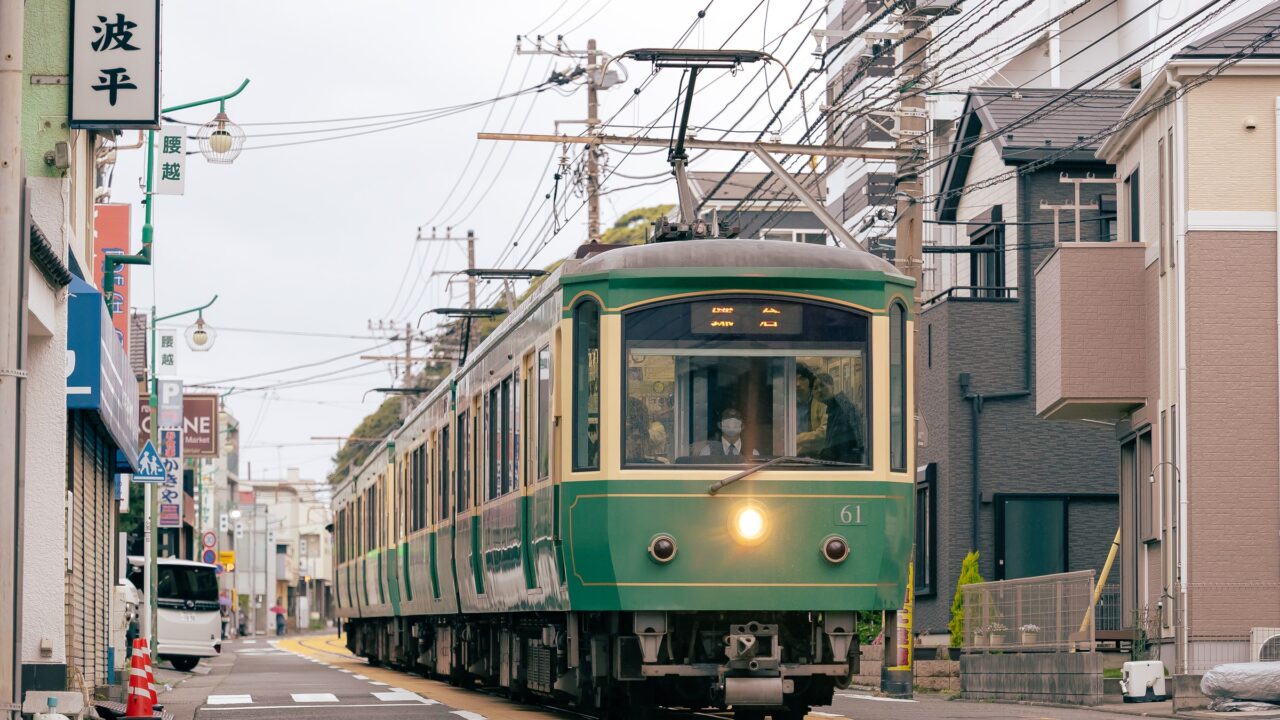
Tokyo has thirteen subway lines run by two operators plus the JR loop line. Osaka and Kyoto are much simpler. Kyoto in particular is a bus city rather than a train city, which catches people out.
→ Tokyo trains explained: JR, Metro, Toei and the private lines → Kansai transport: which pass for which trip → How to read a Japanese train timetable, sign and platform
Getting from the airport
Every major Japanese airport has a rail link into the city, and every one of them has at least two options at different prices. Narita has four. Getting this wrong costs an hour or several thousand yen.
→ Airport to city: Narita, Haneda, Kansai, Chubu, Fukuoka, New Chitose
Where trains stop working
Rural Japan is not served the way the cities are. A branch line may run five trains a day. A bus to a trailhead may run twice, and not at all on Sundays. Timetables assume you are a local who already knows.
If your itinerary includes the Noto Peninsula, inland Kyushu, much of Hokkaido, the Japan Alps beyond the main valleys, or almost any national park, price up a rental car. An International Driving Permit obtained in your own country before you leave is mandatory — you cannot get one in Japan.
→ Renting a car in Japan: licence, tolls, ETC and parking
Luggage
Japanese trains were not built for large suitcases, and the country solved the problem a different way: it moves your luggage separately.
Takkyubin forwarding takes a suitcase from your hotel’s front desk to your next hotel, usually overnight, for around 2,000 JPY. Travelling between cities with only a day bag is transformative, and it is what a lot of Japanese travellers do.
On the Tokaido, Sanyo and Kyushu Shinkansen, bags over 160cm in total dimensions need a free oversized baggage reservation made when you book.
→ Luggage in Japan: coin lockers, takkyubin and oversized baggage rules
When it goes wrong
It mostly does not. Japanese trains are punctual to the minute and delays are announced in English on every major line. But you will at some point miss a connection, put the wrong ticket in a gate, or realise at 11:40pm that the last train has gone.
None of these are emergencies. Every one has a standard, boring solution that station staff deal with dozens of times a day.
→ When things go wrong: missed trains, lost tickets and the last train
The five phrases that cover most of it
A sensible default plan
If you want one recommendation rather than a decision tree, this covers a two-week first trip:
Buy an IC card at the airport
Welcome Suica at Narita or Haneda, ICOCA at Kansai. Charge 5,000 JPY to start.
Skip the nationwide rail pass unless the numbers say otherwise
Price your actual route on a fare calculator first. Consider a regional pass for the part of the trip where you cover ground.
Book Shinkansen seats a few days ahead
Not weeks. Reserve for peak periods and for any journey where you are travelling as a group.
Forward your suitcase between cities
Ask at your hotel’s front desk the day before. Travel with a day bag.
Rent a car only for the rural stretch
One or two days, not the whole trip. City driving and parking in Japan is not worth it.
Questions people actually ask
Do I need to book trains before I arrive in Japan?
Almost never. Fares do not rise closer to departure and non-reserved seats are widely available. The exceptions are Golden Week (late April to early May), Obon (mid August) and the New Year period, when you should reserve as far ahead as possible.
Is Japanese public transport accessible for wheelchairs?
Major stations and all Shinkansen are well equipped, and station staff will meet you with a ramp if you ask at the gate. Smaller and older stations can still be step-only. Plan station by station rather than assuming.
How much should I budget for transport?
For a two-week trip covering Tokyo, Kyoto, Osaka and one other region, roughly 40,000 to 70,000 JPY per person including intercity travel, without a rail pass. City transport alone runs about 800 to 1,200 JPY a day.
Can I use my phone to pay for trains?
On an iPhone, yes: add Suica, PASMO or ICOCA to Apple Wallet and top it up. On Android, mobile IC cards generally require a Japanese-market handset, so carry a physical card instead.
Are trains really never late?
Long-distance trains are extraordinarily punctual. Urban commuter lines are delayed more often than the reputation suggests, usually by a few minutes. Build a little slack into tight connections in Tokyo.
Keep planning
Tokyo to Kyoto: Shinkansen, Night Bus or Plane?
The Shinkansen is the right answer for almost everyone: 2 hours 15 minutes, about 14,000 JPY, no check-in. Here is what the…
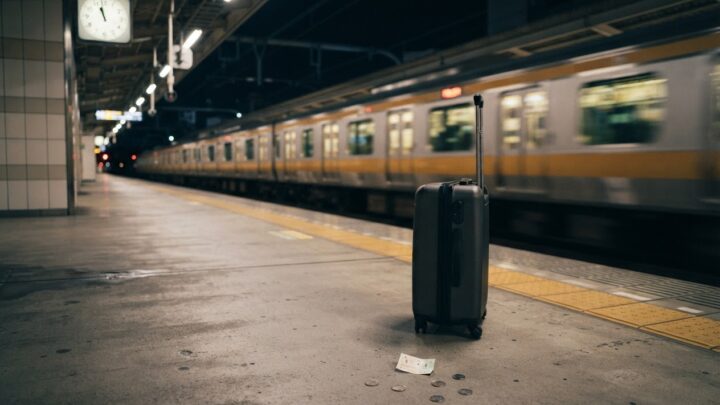
When Things Go Wrong: Missed Trains, Lost Tickets and the Last Train
You will miss a connection, feed the wrong ticket into a gate, or look up at 11:40pm and realise the last train…
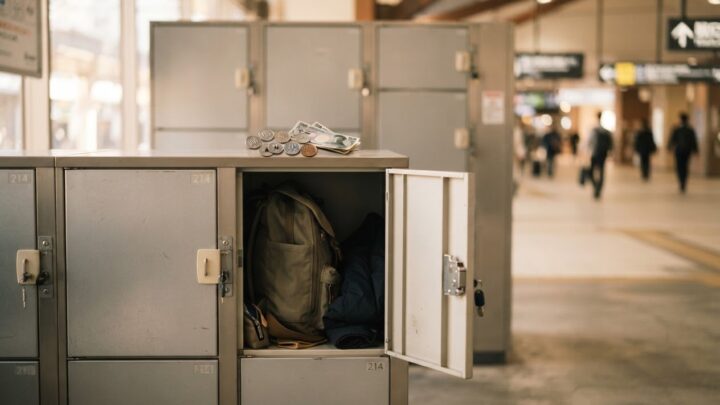
Luggage in Japan: Coin Lockers, Takkyubin and Oversized Baggage Rules
Japanese trains were not built for suitcases, so Japan moves the suitcase separately. How luggage forwarding works, what the 160cm rule means,…