Konbini Food: What to Buy at 7-Eleven, Lawson and FamilyMart
A 250 yen rice ball that is better than most restaurant food anywhere else. What to buy at each of the three chains, how to open an onigiri without destroying it, and why the egg sandwich has a cult following.
 Signpost Japan
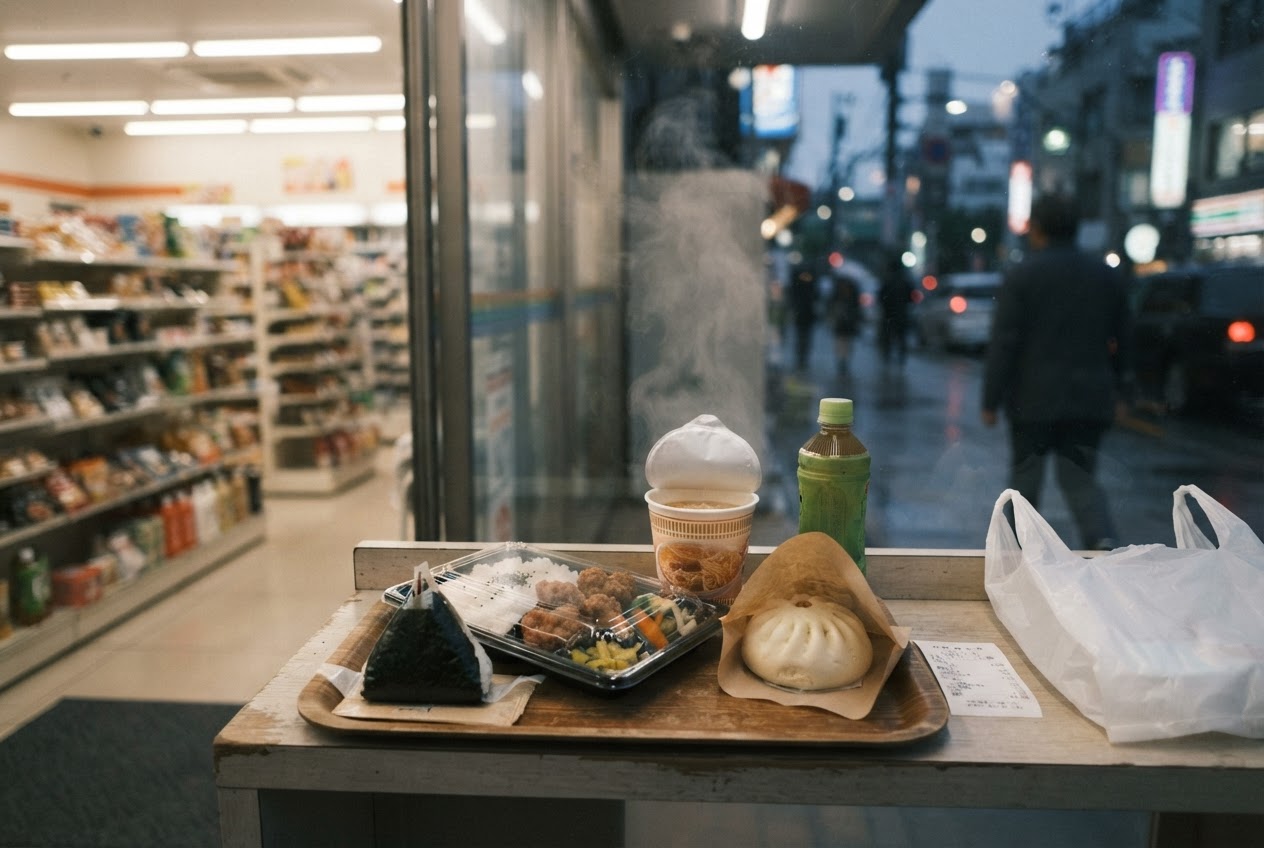
The Japanese convenience store is not a corner shop. It is a small, extremely well-run food operation with a supply chain that delivers fresh items three times a day, a private-label range developed by proper food companies, and quality control that would embarrass a lot of restaurants.
You will eat at one. Everybody does — commuters, office workers, schoolchildren and, in rural Japan, more or less everyone. Here is what to actually buy.
At a glance
- The three chains
- 7-Eleven, FamilyMart, Lawson. Roughly 55,000 stores nationwide.
- Typical meal
- 500–800 JPY for something genuinely good
- Deliveries
- Fresh food arrives up to three times daily; check the date sticker
- Also inside
- ATM, printer, parcel service, bill payment, clean toilet, a bin
- Heating
- Staff will microwave anything hot. Just hand it over.
What to buy at each chain
They overlap heavily, but each has things it is genuinely known for.
| Buy this | |
|---|---|
| 7-Eleven | Egg sandwich, gold-label private range, oden in winter, coffee, fried chicken |
| FamilyMart | Famichiki fried chicken, sweet potato in autumn, “Convenience Wear” socks |
| Lawson | Karaage-kun nuggets, premium roll cake, and Natural Lawson’s healthier range |
The 7-Eleven egg sandwich deserves its reputation. Crustless white bread, egg salad made with a high proportion of yolk, and nothing else. It costs a few hundred yen and there are film clips of foreign chefs reacting to it.
The essentials
Onigiri — a triangle of rice with a filling, wrapped in nori kept separate by a plastic sleeve so it stays crisp. 150–250 JPY. Tuna mayo (sea chicken), salmon (sake), and pickled plum (umeboshi) are the standards; the plum is very sour and a genuine acquired taste.
Opening one is a small engineering puzzle: pull tab 1 down the middle, then pull tabs 2 and 3 outwards. The nori wraps itself around the rice. Getting it wrong is a rite of passage.
Sandwiches (sando) — egg, katsu, fruit-and-cream. The fruit sandwich sounds wrong and is very good.
Bento — full meals, heated by staff. Karaage, grilled fish, curry. 500–700 JPY.
Noodles — cold soba and udon in summer with a dipping sauce included; instant cup noodles with a hot water dispenser in-store.
Oden — a winter counter by the till: fish cakes, daikon, boiled eggs and konjac simmering in dashi. Point at what you want; they ladle it into a cup with broth. Around 100–150 JPY per piece and one of the best cheap things in Japan.
Hot counter — fried chicken, croquettes, meat buns (nikuman) in winter, and American dogs.
Coffee — a machine by the till. Buy a cup at the register, put it under the machine, press the button. Around 120 JPY and better than most chain coffee.
Desserts — the roll cakes, puddings and mochi are made by serious confectioners. Lawson’s premium roll cake has a following.
Drinks — an entire wall. Unsweetened green tea (o-cha), barley tea, coffee in cans hot and cold, and dozens of things you will not recognise. Note that many bottled teas are unsweetened, which surprises people.
Everything else a konbini does
This is the part that surprises visitors more than the food.
- ATM — 7-Bank ATMs accept foreign cards, have English, and are open 24 hours. This is where you get cash in Japan.
- Printing and photocopying — including printing documents from a USB stick or your phone.
- Parcels — send and receive takkyubin luggage, and collect online orders.
- Bills — Japanese people pay utilities, taxes and event tickets here.
- Tickets — concert and attraction tickets from the in-store machine.
- Toilets — clean, free, and usually available without asking. This matters more than it sounds.
- A bin — Japan has very few public bins. The konbini is where you put your rubbish, ideally something you bought there.
- Umbrellas — about 700 JPY, and everyone has bought one.
- Free Wi-Fi.
Etiquette
- Eating inside is generally not done unless there is a seating area, and some stores have one.
- Eating while walking is mildly frowned upon. Stand near the shop, or take it back to your hotel.
- The rubbish bins by the door are for konbini rubbish. Do not empty your hotel bag into them.
- Hand over the item to be heated — atatamete kudasai, or just nod when asked atatame masu ka?
- Chopsticks and a spoon come automatically with anything that needs them; say hashi wa irimasen if you do not want disposables.
At the counter
Bags now cost a few yen by law, and most people carry their own.
A day’s food for under 1,500 JPY
| Three konbini meals | Cost |
|---|---|
| Breakfast — egg sandwich and coffee | 400 JPY |
| Lunch — two onigiri and a bottled tea | 480 JPY |
| Dinner — bento and a beer | 530 JPY |
| One day | 1,410 JPY |
Nobody should eat this way for a fortnight. But on a travel day, at 10pm in a small town, or when you are simply tired of deciding, it is a genuinely good option rather than a compromise.
Seasonal things to look for
Konbini ranges rotate hard with the seasons, and locals track them.
- Spring — sakura-flavoured everything, from lattes to mochi
- Summer — cold noodles, shaved ice, salt tablets
- Autumn — sweet potato, chestnut and pumpkin
- Winter — oden, nikuman, and hot canned drinks in a warmer cabinet
Supermarkets and depachika
Two better options if you have the time.
Supermarkets are cheaper than konbini and have larger prepared-food sections, discounted heavily after about 7pm with yellow stickers.
Depachika — the basement food halls of department stores — are the other extreme: some of the best food in the country, sold as takeaway, from counters run by famous restaurants and confectioners. They also discount in the last hour before closing. Go once even if you buy nothing.
Questions people actually ask
Is konbini food actually good?
Genuinely, yes. The supply chains are short, the turnover is rapid, and the private-label ranges are developed by serious food manufacturers. It is not a compromise the way convenience food is in most countries.
Which chain is best?
They are close. 7-Eleven has the best private label overall, FamilyMart the best fried chicken, Lawson the best desserts and the healthier Natural Lawson range.
Can vegetarians eat at a konbini?
With difficulty. Onigiri with umeboshi or kombu, plain salads, fruit, and some breads work. Dashi and pork extract appear in a great many things, and English labelling is limited.
Can I use a foreign card?
Yes, in all three chains for purchases, and 7-Bank ATMs reliably accept foreign cards for withdrawals.
Is there anywhere to sit?
Some branches have a small eat-in counter, particularly in rural areas and near stations. Most do not. Parks and station platforms are the usual alternative.
What is the single thing I should try?
The 7-Eleven egg sandwich, and oden in winter. Both cost very little and both explain something about how Japan approaches ordinary food.
Keep planning
Drinking in Japan: Sake, Shochu, Highballs and Where to Try Them
How to read a sake label, why everyone is drinking whisky and soda, and the difference between a standing bar and a…
Sushi, Ramen, Udon, Soba: What to Eat Where
Six things worth eating properly at least once, what separates a good version from a bad one, and roughly what each should…
Izakaya Etiquette: How a Japanese Night Out Actually Works
The small dish you did not order, the rule about pouring your own drink, and why everyone orders a beer first. An…