Vegetarian and Vegan in Japan: The Honest Guide
Japan is harder for vegetarians than almost any developed country, and the reason is a fish stock that is in nearly everything. Here is what is actually safe, what looks safe and is not, and how to eat well anyway.
 Signpost Japan
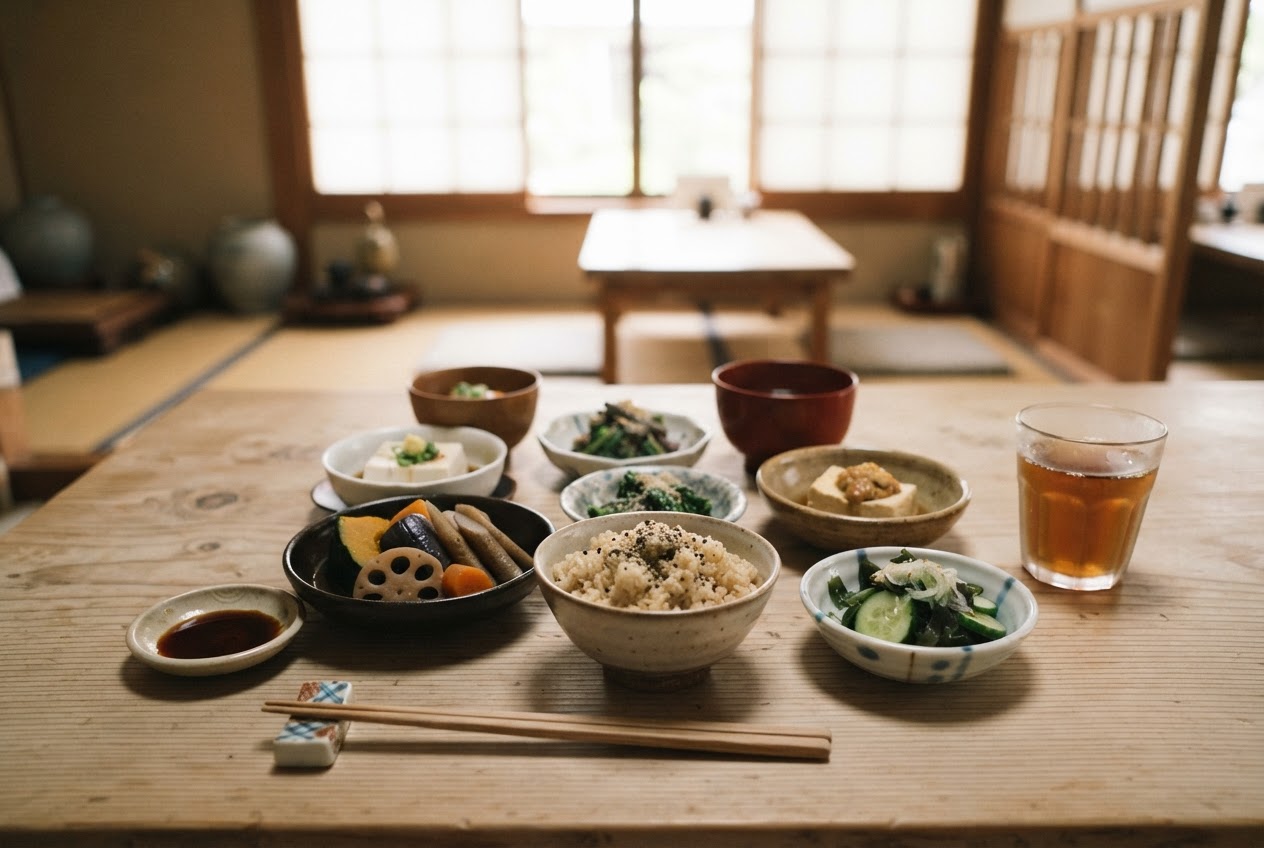
Japanese cuisine has a reputation for being light, plant-heavy and healthy, and vegetarians arrive expecting an easy time. It is one of the harder countries in the developed world, and the reason is specific.
Dashi — a stock made from katsuobushi, dried smoked skipjack tuna, usually with kelp — is the base flavour of Japanese cooking. It is in miso soup, in the broth of udon and soba, in simmered vegetables, in tamagoyaki, in dipping sauces, in rice seasonings, and in most things that taste savoury and are not fried.
It is not thought of as “fish”. It is thought of as the thing that makes food taste of anything. Ask a cook whether a vegetable dish contains fish and the honest answer, from their frame of reference, is often no.
At a glance
- The main obstacle
- Dashi (fish stock) in almost all savoury cooking
- Reliably safe
- Shojin ryori, dedicated vegan restaurants, Indian restaurants, some konbini items
- Looks safe, is not
- Miso soup, most udon and soba broth, tamagoyaki, most simmered vegetables
- Best cities
- Tokyo, Kyoto and Osaka have real vegan scenes. Rural Japan is hard.
- Essential tool
- A printed Japanese card listing what you cannot eat
- Temple cuisine
- Shojin ryori is entirely plant-based and genuinely excellent
What is actually safe
Shojin ryori — Buddhist temple cuisine. Entirely plant-based by doctrine, with no onion, garlic or other alliums either. Multi-course, seasonal, and very good. Available at temples in Kyoto, at Koyasan, and at specialist restaurants.
→ Wakayama: Koyasan and the Kumano Kodo
Dedicated vegan restaurants. Tokyo, Kyoto and Osaka all have real scenes now. HappyCow is the practical tool for finding them; Japanese chains such as T’s TanTan (vegan ramen, inside several Tokyo stations) are reliable.
Indian and Nepalese restaurants. Everywhere in Japan, cheap, and understand vegetarianism without explanation. This is the fallback that always works.
Zen-adjacent dishes: yudofu (simmered tofu, if the dipping sauce is checked), goma-dofu (sesame tofu), nasu dengaku (grilled aubergine with miso), kinpira (if not made with dashi).
Fried things: vegetable tempura, if the dipping sauce is replaced with salt. Ask for shio de — with salt.
Rice and pickles. Umeboshi and kombu onigiri, plain rice, tsukemono.
What looks safe and is not
This is the list that matters.
| Dish | The problem |
|---|---|
| Miso soup | Dashi |
| Udon and soba broth | Dashi |
| Tamagoyaki (rolled omelette) | Dashi |
| Simmered vegetables (nimono) | Dashi |
| Agedashi tofu | Dashi in the sauce |
| Okonomiyaki | Dashi in the batter, bonito flakes on top |
| Takoyaki | Octopus, and dashi |
| Vegetable curry | Often a meat-based roux |
| Salad dressings | Frequently contain fish or bonito |
| Furikake rice seasoning | Usually contains fish |
| Kimchi in Japan | Often contains fish sauce or shrimp |
Ramen is almost never vegetarian, including “vegetable” ramen, because the broth is pork or chicken. Vegan ramen shops exist and are excellent, but they are specific destinations.
The card
The single most useful thing you can carry is a printed card in Japanese stating what you do not eat. Show it rather than explaining.
Wording that works:
私はベジタリアンです。肉・魚・だし(かつお節)を使わない料理をお願いします。 Watashi wa bejitarian desu. Niku, sakana, dashi (katsuobushi) o tsukawanai ryouri o onegai shimasu. I am vegetarian. Please prepare food without meat, fish, or dashi (bonito stock).
For vegan, add:
卵・乳製品も食べません。 Tamago, nyuuseihin mo tabemasen. — I also do not eat eggs or dairy.
Print it. Phone screens die and translation apps mangle “dashi”.
Saying it out loud
Where to eat, by situation
Breakfast. Hotel buffets usually have rice, salad, fruit and bread. Konbini: fruit sandwiches, plain pastries, bananas, soy milk.
Lunch on the move. Indian restaurant, a vegan café, a konbini onigiri with umeboshi or kombu, or a department store food hall where labels are detailed.
Dinner. Book something dedicated. This is the meal to plan rather than improvise, particularly outside the big cities.
Izakaya with a group. Manageable — edamame, pickles, grilled vegetables, chips, tofu dishes, salted tempura. Warn the group you will be ordering separately.
Rural Japan and ryokan. The hardest case. Tell the ryokan when you book, not on arrival — kaiseki is prepared in advance and cannot be changed on the day. Most will accommodate with notice; some will decline the booking, which is better than arriving to a problem.
Vegan specifically
Harder again. Eggs and dairy appear widely in bread, sauces and desserts, and “vegan” is understood by far fewer people than “vegetarian”.
What works: dedicated vegan restaurants, shojin ryori (confirm — some temples now use bonito dashi for non-Buddhist guests), Indian restaurants with a clear ghee question, and self-catering from supermarkets.
Japan’s soy products are outstanding — tofu, yuba, natto, soy milk, miso — so cooking for yourself in an apartment rental is a genuinely good option for a longer stay.
Reading labels
Packaged food is labelled in Japanese, but a few characters do most of the work:
| Character | Meaning |
|---|---|
| 肉 | meat |
| 豚 | pork |
| 鶏 | chicken |
| 牛 | beef |
| 魚 | fish |
| かつお / 鰹 | bonito |
| だし / 出汁 | stock |
| 卵 | egg |
| 乳 | dairy |
| ゼラチン | gelatine |
Japan requires labelling of eight major allergens including egg and milk, which helps.
Questions people actually ask
Is it really that hard?
Harder than most of Europe, easier than it was five years ago. The cities have real vegan scenes; the difficulty is improvising in a small town, and the ubiquity of dashi.
Can I just avoid the visible meat?
Not if you are strict. Bonito stock is in things that look entirely vegetable, and it is not disclosed on menus. If you eat fish stock, Japan becomes dramatically easier.
Is miso soup vegetarian?
Almost never — the base is dashi. Vegan versions using kombu and shiitake stock exist and are usually labelled as such.
Will people be offended if I ask?
No. Staff will try hard to help. The risk is misunderstanding rather than annoyance, which is why the printed card matters more than the phrasing.
What about ryokan and kaiseki?
Notify when booking, with specifics. Many ryokan will prepare a shojin-style meal with notice; almost none can adapt on the night.
Is shojin ryori worth seeking out?
Yes, for anyone, vegetarian or not. It is one of the more sophisticated plant-based cuisines in the world and Koyasan is the place to eat it.
Keep planning
Drinking in Japan: Sake, Shochu, Highballs and Where to Try Them
How to read a sake label, why everyone is drinking whisky and soda, and the difference between a standing bar and a…
Sushi, Ramen, Udon, Soba: What to Eat Where
Six things worth eating properly at least once, what separates a good version from a bad one, and roughly what each should…
Izakaya Etiquette: How a Japanese Night Out Actually Works
The small dish you did not order, the rule about pouring your own drink, and why everyone orders a beer first. An…