Where Do Japanese People Actually Live? Inside a Normal Apartment
Not a machiya, not a capsule hotel. This is what an ordinary rented flat in a Japanese city looks like — the layout, the bathroom that arrives in one piece, and why the washing machine lives on the balcony.
 Signpost Japan
Almost every photograph of a Japanese home you have seen is wrong. Tatami rooms with sliding paper screens exist, but roughly the same way that thatched cottages exist in England: somewhere, occasionally, and rarely where anyone under forty lives.
The ordinary answer is a concrete or steel-frame apartment block of three to eight storeys, built between 1975 and 2010, on a street with no name, reached by a bicycle. Understanding it tells you more about Japan than most temples will.
At a glance
- Most common home
- A rented apartment in a low-rise block
- Typical size, single person
- 20–30 square metres
- Typical size, family of three
- 55–70 square metres
- What the rent buys
- Floor area, station distance, building age — in that order
- Biggest surprise for visitors
- No central heating
Reading a Japanese floor plan
Japanese apartments are advertised in a code that takes about a minute to learn and then works everywhere.
A number, then letters. 1K means one room plus a kitchen. 1DK means one room plus a dining-kitchen. 1LDK means one room plus a living-dining-kitchen. 3LDK means three separate rooms plus that living space — a family flat.
The number counts rooms you could sleep in, not total rooms. The bathroom and toilet never count.
Room sizes are given in jō (畳), the number of tatami mats that would fit, whether or not there is any tatami. One mat is roughly 1.65 square metres. A six-jō bedroom is about ten square metres, which is normal and does not feel as small as it reads.
| Listing | Rough size | Who lives there |
|---|---|---|
| 1K | 20–25 m² | Student, first job, single person |
| 1LDK | 35–45 m² | Couple, or a single person doing well |
| 2LDK | 50–60 m² | Couple with one child |
| 3LDK | 65–80 m² | The standard family flat |
The bathroom arrives in one piece
Open the door of a typical Japanese bathroom and you are standing in a moulded plastic shell — floor, walls, ceiling and bath, manufactured as a single unit bath and lowered into the building during construction.
It looks cheap to a European eye and is in fact extremely practical. The whole room is a wet room. You shower sitting on a low stool outside the tub, rinse, and only then get into the bath, which is why the water stays clean enough for the next person to use.
A control panel on the kitchen wall reheats the bathwater on demand. Families genuinely do share one bath of water through the evening, in order of who gets home.
The toilet is almost always in a separate small room. This is not squeamishness; it means two people can get ready at once in a flat with one bathroom.
Why the washing machine is on the balcony
In older buildings, the plumbing for a washing machine was often run to the balcony rather than inside. Even where the machine is indoors, the balcony is where laundry goes.
Tumble dryers are uncommon. Clothes are hung outside on poles that slot into fittings built into every balcony, and the weather forecast on morning television includes a laundry index telling you how well things will dry today. In a rainy week, flats fill with drying racks.
Balconies also serve as fire escapes. The dividing panel between you and your neighbour is thin board, designed to be kicked through in an emergency, and it is one reason balconies stay relatively uncluttered.
No central heating
This is the detail that surprises visitors most, and it explains a great deal about Japanese winter life.
Homes are heated room by room, usually by a wall-mounted air conditioner that also runs in reverse for heat, plus small electric or kerosene heaters. Hallways, bathrooms and bedrooms are simply cold. Insulation in older buildings is minimal, and single glazing is still common.
The cultural consequences are everywhere:
- The kotatsu — a low table with a heater underneath and a quilt over the edges — is not a novelty. It is how a family stays warm in one place.
- The bath is not a luxury but a heating strategy. A long hot soak before bed is what carries you through a cold bedroom.
- Interior doors stay shut, because heating a hallway is heating the outdoors.
Buildings completed in the last fifteen years are far better insulated, and new homes must meet stricter energy standards. But the majority of the rental stock predates that.
What it costs
Rent is quoted monthly, and the headline number is only part of it.
| Moving into a 1LDK in a regional city | Cost |
|---|---|
| Monthly rent | 78,000 JPY |
| Key money (礼金, non-refundable gift to the landlord) | 78,000 JPY |
| Deposit (敷金, partly refundable) | 78,000 JPY |
| Agency fee | 85,800 JPY |
| Guarantor company fee | 39,000 JPY |
| First month rent and insurance | 121,000 JPY |
| Cost of moving in | About 480,000 JPY |
Key money is the part that startles people: a non-refundable payment to the landlord, traditionally one to two months’ rent, for nothing in particular. It is slowly disappearing in competitive markets, and listings advertising 礼金なし (reikin nashi, no key money) are increasingly common.
Most tenants also need a guarantor. Where a family member cannot act as one, a guarantee company does it for a fee.
The neighbourhood is the real home
Japanese flats are small partly because the neighbourhood does the work a larger home would do elsewhere.
The convenience store is the pantry. The coin laundry handles the duvet. The public bath, where one survives, handles the long soak. The station building holds the supermarket, the pharmacy and the bakery. Restaurants are cheap enough that eating out is not an occasion.
This is why Japanese residential streets feel dense with small businesses in a way that suburbs elsewhere do not — and why walking through an ordinary neighbourhood at seven in the evening is one of the more rewarding things you can do as a visitor. Nobody is performing anything. People are collecting children, buying tofu and cycling home.
Questions people actually ask
Do Japanese people still sleep on futons?
Many do, particularly in smaller flats, because a futon folds away and turns a bedroom into a living room during the day. Beds are equally normal, especially for couples and in larger homes. Neither is more traditional in practice.
Are Japanese apartments really tiny?
City centre flats for single people are small by European or North American standards. Family flats in suburbs and regional cities are not unusual in size. The average new home nationwide is comparable to much of urban Europe.
Why do houses get demolished rather than resold?
Japanese wooden houses have traditionally been treated as depreciating assets with a functional life of about thirty years, so land carries the value rather than the building. That is changing, but slowly, and it explains why residential streets are rebuilt piecemeal.
Can a visitor see inside a normal home?
Rarely by invitation, but municipal housing museums and open-air architecture museums display real apartments from the 1950s onwards. The Edo-Tokyo Open Air Architectural Museum and Osaka’s Museum of Housing and Living both do this well.
Keep planning
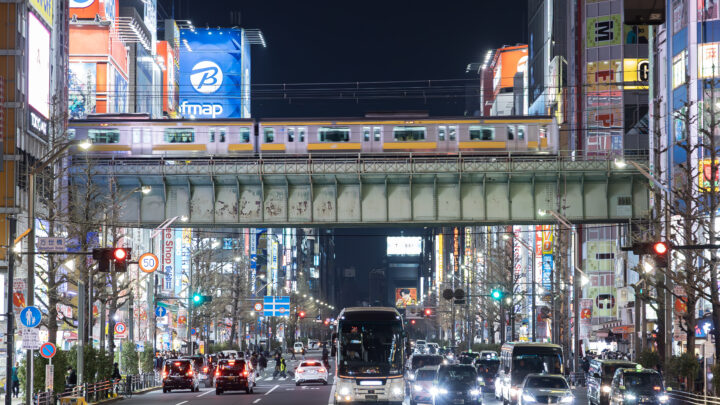
What Japanese People Think of Tourists — and the Unspoken Rules
Japan welcomed record visitor numbers and then started introducing tourist taxes, screens over viewpoints and residential no-go lanes. The honest version of…
Japan’s Ageing Population, Seen from the Train Window
Closed schools, unstaffed stations, and a taxi driver in his late seventies. Japan's demographic shift is not an abstraction — it is…
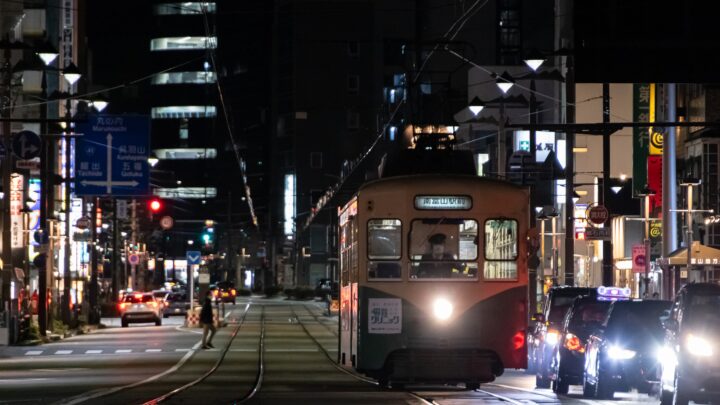
Why Japanese Cities Look the Way They Do
A noodle bar under a flat, a car park where a house was, wires overhead and no street names. Japanese cities look…