The Classic 7-Day Japan Itinerary (and How to Stretch It to 10)
Two cities, one Shinkansen, three day trips and no repacking after day four. The route that works for a first week in Japan, hour by hour, with what it costs and what to cut if you only have five days.
 Signpost Japan
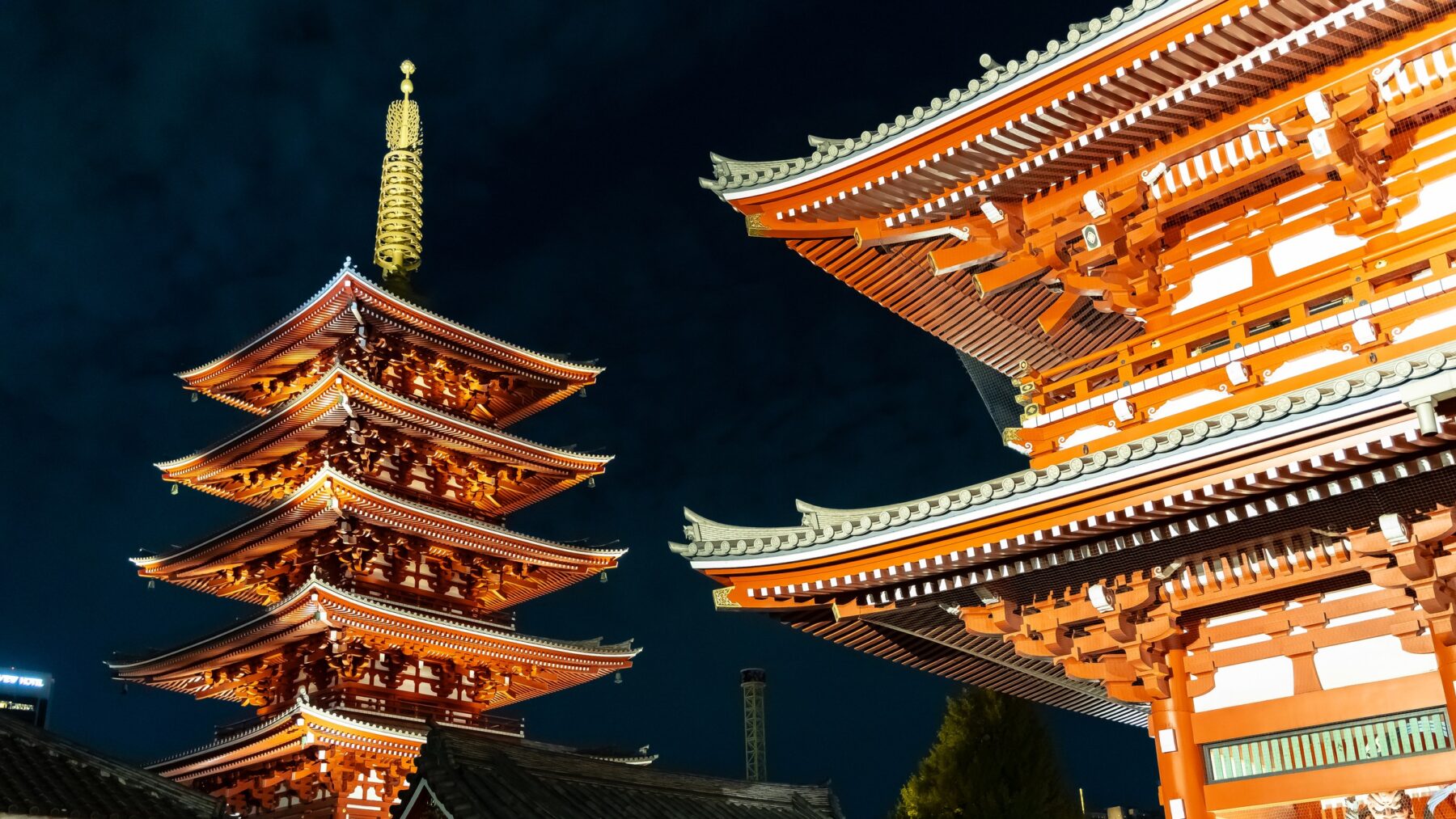
There is a reason the Tokyo–Kyoto week is the standard first trip: it is genuinely the right answer. Two cities two and a quarter hours apart, both enormous, both entirely different, with three of Japan’s best day trips inside easy reach of the second one.
This is that week, planned properly — with the mornings early, the afternoons loose, and only one hotel change.
At a glance
- Shape
- 3 nights Tokyo, 4 nights Kyoto. One train, one hotel change.
- Fly
- Into Tokyo, out of Osaka Kansai. An open-jaw ticket costs about the same as a return.
- Rail pass
- Not worth it on this route. Buy tickets individually.
- Budget
- About 120,000 JPY per person excluding international flights
- Walking
- 15,000–20,000 steps a day. Bring the good shoes.
Before you commit
Do not add a third city. The pull to squeeze in Hiroshima or Hakone is strong and it is the mistake that turns a good week into a blur of stations. If you have ten days, add them — see the end of this guide.
Fly out of Osaka, not Tokyo. Kansai Airport is 75 minutes from Kyoto. Flying home from Tokyo means a wasted day going back.
Day 1 — Tokyo: arrive and stay awake
Land, do the airport routine — cash, IC card, connectivity, forward your suitcase — and go straight into the city.
Do not go to the hotel. Leave a day bag in a locker and walk somewhere green: the Meiji Shrine woods, then out into Harajuku. Eat ramen. Bathe. Sleep at nine.
→ Your first 24 hours in Japan, hour by hour
Day 2 — Tokyo: the old east side
You will be awake at five. Use it.
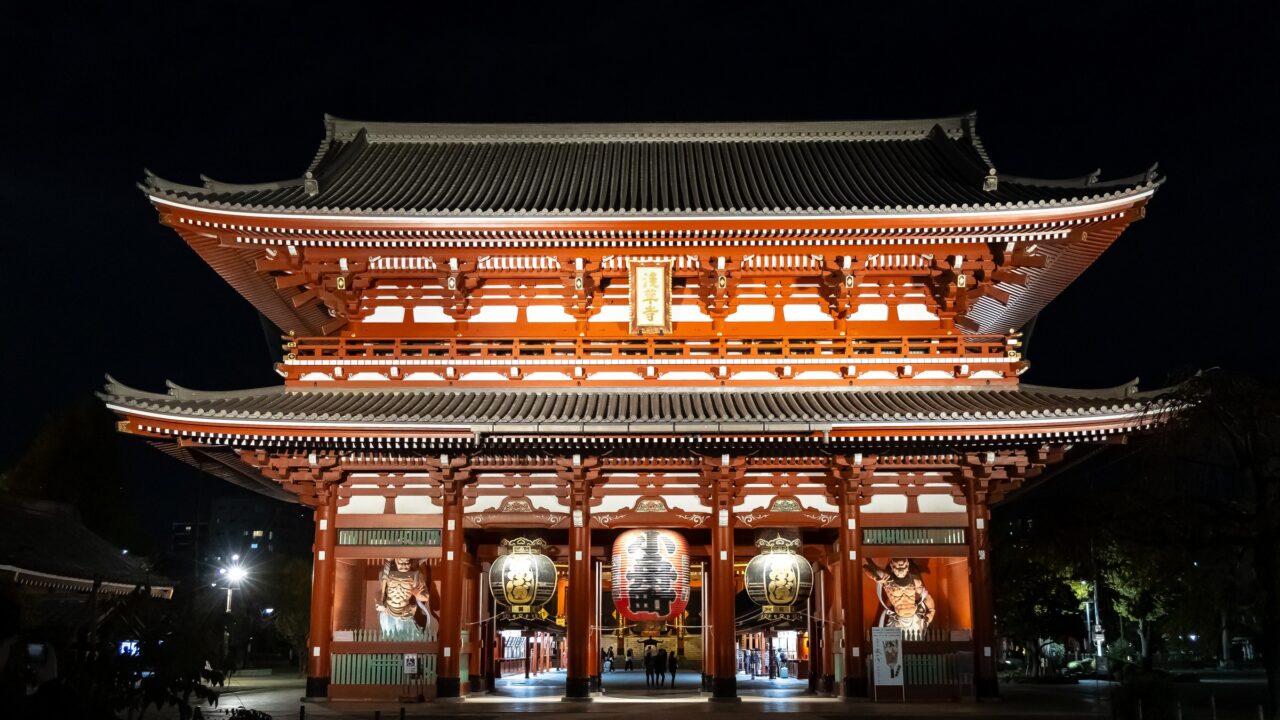
Morning. Senso-ji in Asakusa at 7am, before the coaches. The temple grounds are open all night and Nakamise street is empty at dawn. Then walk to the river and look at the Skytree.
Late morning. The Tsukiji outer market — the wholesale market moved to Toyosu but the outer market is still there and still working. Eat standing up.
Afternoon. Ueno Park and one museum. The Tokyo National Museum if you want context for everything you will see in Kyoto.
Evening. Yanaka: a low-rise, pre-war neighbourhood of temples, cats and old shops that survived the bombing. Then an izakaya.
Day 3 — Tokyo: the modern west side
Morning. Shibuya. The crossing, then up into the shopping streets behind it. Go early and it is a different place.
Midday. Shinjuku Gyoen — the best garden in central Tokyo, and worth the 500 JPY. Or the Metropolitan Government Building’s free observation deck for the view.
Afternoon. Pick one: Akihabara for electronics and games, Ginza for department store basements and camera shops, Shimokitazawa for vintage clothing and coffee, Nakameguro for the canal.
Evening. Omoide Yokocho or Golden Gai in Shinjuku — tiny bars under the railway. Or Ebisu for something calmer.
Day 4 — Tokyo to Kyoto
Morning in Tokyo. One more thing — the Imperial Palace East Gardens, or Kiyosumi Teien, or a last market.
Midday. Forward your suitcase to the Kyoto hotel from the front desk, then take the Shinkansen with a day bag. About 2h 15m. Sit on the right-hand side, D or E seat, for Mount Fuji about 40 minutes out on a clear day.
→ How to ride the Shinkansen without speaking Japanese
Afternoon in Kyoto. Go gently. Nishiki Market, then the Kamo river. Kyoto is smaller and slower than Tokyo and it takes an evening to adjust.
Day 5 — Kyoto: eastern hills
The single best day in the itinerary, and it depends entirely on starting early.
6:30am. Fushimi Inari. The gates are open all hours and free. Walk up at least as far as the Yotsutsuji viewpoint; most people turn back too soon and miss the point of the mountain.
9:30am. Kiyomizu-dera as it opens, then walk down Sannenzaka and Ninenzaka — the stone-stepped lanes — while they are still quiet.
Midday. Lunch in Gion. Then Kennin-ji, which is a working Zen temple and rarely crowded.
Afternoon. The Philosopher’s Path north to Ginkaku-ji, or Nanzen-ji and its aqueduct.
Evening. Pontocho alley.
Day 6 — Kyoto: west, or Nara
Two options. Both are good; pick by weather.
Option A — Arashiyama and the north-west. The bamboo grove at 8am before the crowds, then Tenryu-ji’s garden, the Hozu river, and the monkey park if you have the legs. Kinkaku-ji, the golden pavilion, in the afternoon.
Option B — Nara. Forty minutes by Kintetsu from Kyoto. Todai-ji’s Great Buddha, the deer, and — the part most people skip — the long walk up to Kasuga Taisha’s stone lantern paths and into the primeval forest behind it.
→ Nara: the day trip everyone rushes, and how not to
Day 7 — Osaka, and out
Morning. Whichever of Arashiyama or Nara you did not do yesterday. Or a slow Kyoto morning: the Imperial Palace grounds, a coffee, a bookshop.
Afternoon. Train to Osaka, 29 minutes. Leave your bag at the station and eat: takoyaki, okonomiyaki, kushikatsu. Dotonbori is a spectacle worth an hour and not much more; the streets behind it are where the food is.
Evening. Kansai Airport, 45–65 minutes from central Osaka.
What it costs
| 7 days, one person, mid-range | Cost |
|---|---|
| 6 nights accommodation | 58,000 JPY |
| Tokyo to Kyoto, Shinkansen | 13,300 JPY |
| Local transport, 7 days | 7,500 JPY |
| Kyoto to Osaka and airport | 2,400 JPY |
| Food and drink | 28,000 JPY |
| Entry fees and sights | 6,500 JPY |
| Luggage forwarding, lockers | 4,500 JPY |
| Airport transfers | 2,000 JPY |
| Total, excluding international flights | About 122,000 JPY |
A seven-day Japan Rail Pass costs around 50,000 JPY against the roughly 23,000 JPY of rail travel in this itinerary. Do not buy one for this trip.
→ Is the Japan Rail Pass worth it? Run the numbers first
If you only have five days
Cut day 3 and day 6. Two days in Tokyo, two in Kyoto, one for Nara or Osaka on the way out. It is tight but it works, and it is much better than adding a third city.
Stretching it to ten days
Three good ways to use three extra days, in order of how well they fit.
+3 Hiroshima and Miyajima. Two nights, between Kyoto and Osaka. The Peace Memorial takes a morning and stays with you; Miyajima takes an afternoon and is one of the loveliest places in Japan.
+3 Hakone and Fuji. Two nights, after Tokyo and before Kyoto. Onsen, the mountain loop, and Fuji from the lakes if the weather cooperates. Buy the Hakone Free Pass.
+3 Kanazawa and Takayama. Two nights, between Tokyo and Kyoto via the Hokuriku Shinkansen. Preserved samurai and geisha districts, one of Japan’s three great gardens, and a mountain town with a morning market. This is the option for a second trip, or for anyone who wants fewer people in their photographs.
Ten days also changes the pass arithmetic — with Hiroshima or Kanazawa added, run the numbers again.
Questions people actually ask
Is Tokyo or Kyoto better?
They do different jobs. Tokyo is the present tense — food, density, shops, neighbourhoods. Kyoto is the historical record, and it is more beautiful. Most people prefer Kyoto for three days and Tokyo for a fortnight.
Should I stay in Osaka instead of Kyoto?
Osaka has cheaper hotels and better nightlife, and it is 29 minutes away. If Kyoto accommodation is priced beyond you in high season, staying in Osaka and commuting is a legitimate answer — but you lose the early mornings, which are the whole trick in Kyoto.
Can I do this in reverse?
Yes, and it works well flying into Kansai and out of Haneda. The only argument for Tokyo first is that its scale is easier to absorb before jet lag has worn off than Kyoto’s detail.
Do I need to book anything in advance?
Accommodation, two to three months ahead in spring and autumn. Nothing else. Trains can be booked days ahead at no price penalty.
Is one day enough for Nara?
For Todai-ji, the deer and Kasuga Taisha, yes. Nara rewards a night if you have one — the park at dawn, without a single coach in it, is remarkable.
Keep planning
Japan with Children: What Works, and What to Skip
Japan is one of the easiest countries in the world to travel with children, with two exceptions: hotel rooms are sized for…
Where to Stay in Kyoto: The Five Areas, and the New Lodging Tax
Kyoto is a city you see before nine in the morning, which makes where you sleep matter more than it does in…
Where to Stay in Tokyo: Which Area, and What a Night Costs
In Tokyo you are not choosing a neighbourhood so much as a station. Six areas that work for a first trip, what…