14 Days in Japan: Getting Past Tokyo, Kyoto and Osaka
Two weeks is enough to leave the golden route and still see it. A rail-based loop through Kanazawa, Takayama and Hiroshima that adds four regions without adding a single rushed day.
 Signpost Japan
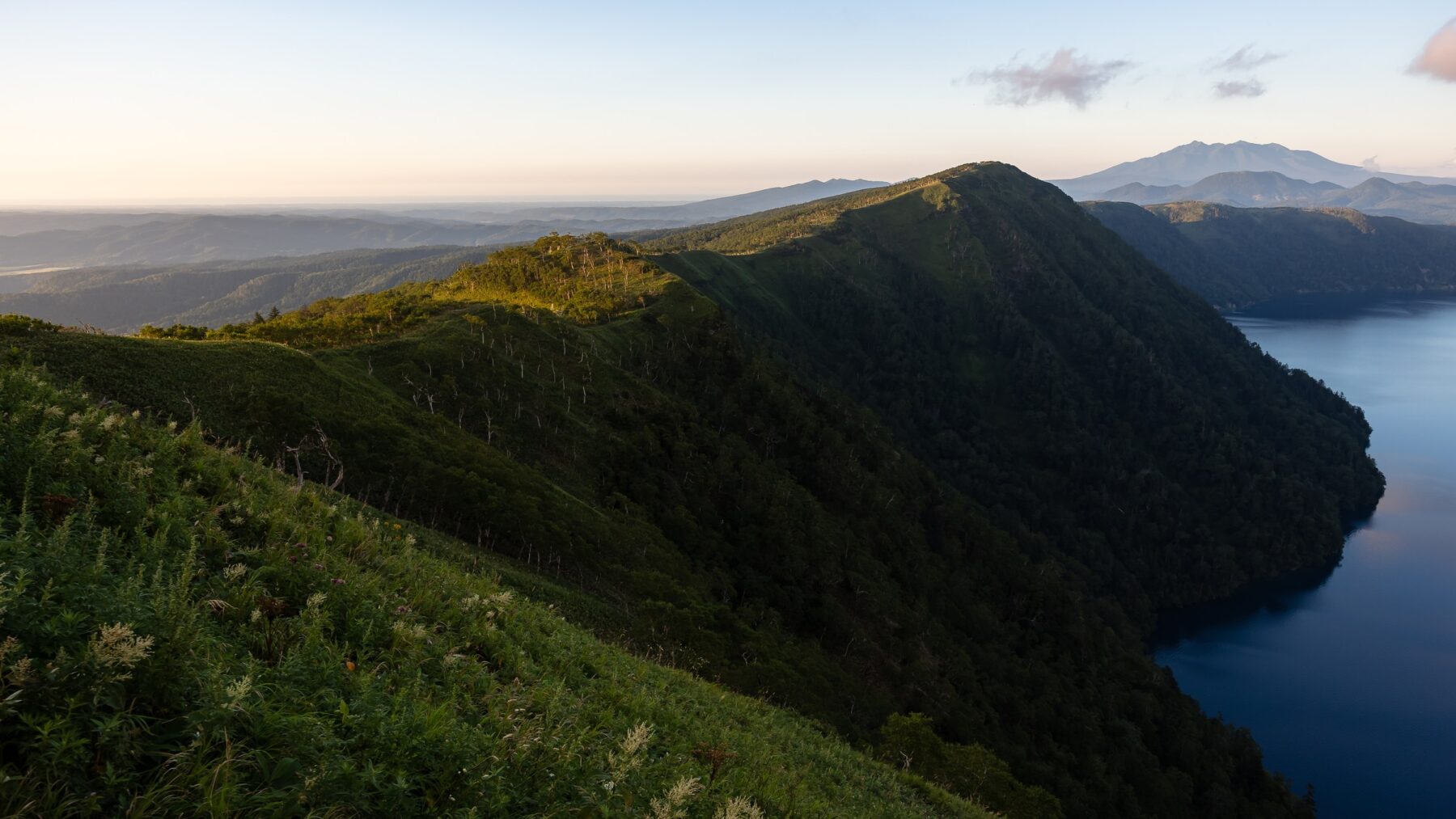
Fourteen days is the length at which Japan stops being a highlights reel. The extra week does not buy you more of Tokyo and Kyoto — it buys you the country in between, which is where most of the surprises are.
This is a loop, not a line: Tokyo across the mountains to the Japan Sea, down through the Alps to Kyoto, west to Hiroshima, and out through Osaka. One direction, no backtracking, and the rail arithmetic finally justifies a pass.
At a glance
- Shape
- Tokyo 3 · Hakone 1 · Kanazawa 2 · Takayama 2 · Kyoto 3 · Hiroshima 2 · Osaka out
- Fly
- Into Tokyo Haneda, out of Osaka Kansai
- Rail pass
- A 7-day national pass, activated on day 4, is usually worth it here
- Budget
- About 265,000 JPY per person excluding international flights
- Best months
- Mid-April to May, or October to November
Days 1–3 — Tokyo
Three nights, the same as the seven-day itinerary: the eastern side on day two, the western side on day three, and an arrival day spent staying awake.
→ The classic 7-day Japan itinerary — days 1–3 in detail
Forward your large suitcase from Tokyo directly to your Kyoto hotel on day 3. You will not need it for the next four days, and Hakone and Takayama are places where dragging a case is genuinely miserable.
Day 4 — Hakone
Ninety minutes from Shinjuku on the Odakyu line. Buy the Hakone Free Pass, which covers the whole loop: mountain railway, cable car, ropeway, boat and buses.
The loop takes most of a day: switchback train to Gora, funicular up, ropeway over the sulphur vents at Owakudani, boat across Lake Ashi, and a bus back. On a clear day Fuji sits above the lake.
Stay in a ryokan with an onsen. This is the night to spend money on — a proper kaiseki dinner and an outdoor bath, on day four, when you have adjusted enough to enjoy it.
→ Hakone: the onsen loop from Tokyo → Staying in a ryokan: what actually happens, hour by hour
Days 5–6 — Kanazawa
Back to Tokyo and across on the Hokuriku Shinkansen, about 2h 30m. Activate your rail pass today if you are using one.
Kanazawa is what people hope Kyoto will be: a preserved castle town that escaped wartime bombing, with far fewer visitors.
Day 5. Kenroku-en, one of the three great gardens of Japan, at opening time. Then the castle grounds, and the 21st Century Museum of Contemporary Art — a genuinely good modern museum in an unlikely place.
Day 6. The Higashi Chaya district, a preserved geisha quarter of wooden tea houses. The Nagamachi samurai district with its earthen walls. Omicho market for lunch — Kanazawa is a seafood city and this is where you eat it. Gold leaf: 99% of Japan’s is made here, and you can eat it on ice cream, which is silly and worth doing.
→ Kanazawa: Kyoto without the queues
Days 7–8 — Takayama and Shirakawa-go
Two and a half hours by bus from Kanazawa, through the mountains.
Day 7 — Shirakawa-go. The thatched gassho-zukuri farmhouses, some three hundred years old, built with steep roofs to shed the enormous snowfall. A UNESCO site and, unusually, still a living village. Go up to the viewpoint. Then on to Takayama.
Day 8 — Takayama. A morning market by the river, a preserved merchant quarter of dark timber buildings, sake breweries offering tastings, and Hida beef, which locals will tell you is better than Kobe. Walk the Higashiyama temple path in the afternoon.
The Takayama-Hokuriku Area Tourist Pass covers this whole stretch including the Shirakawa-go bus, and is one of the better-designed passes in Japan.
→ Regional rail passes: the 12 that actually save money
Days 9–11 — Kyoto
Down through the Alps to Nagoya, then across to Kyoto. Your suitcase has been waiting for five days.
Day 9. The eastern hills, starting at Fushimi Inari before seven. Day 10. Arashiyama in the morning, Kinkaku-ji in the afternoon. Day 11. Nara as a day trip, or a slow Kyoto day — the Imperial Palace, a garden, the covered arcades, a bookshop, a bath.
→ Kyoto in 3 days: the route that skips the crowds
Days 12–13 — Hiroshima and Miyajima
Two hours west by Shinkansen.
Day 12 — Hiroshima. The Peace Memorial Museum and the Peace Park. Allow a full morning, and allow yourself to be affected by it; this is not a sight to fit between other sights. Afterwards, okonomiyaki Hiroshima-style — layered rather than mixed, with noodles.
Day 13 — Miyajima. A tram and a ferry. The floating torii of Itsukushima Shrine, the deer, and — if you have the legs — the ropeway and walk up Mount Misen for the Inland Sea from above. Stay until the day-trippers leave; the island at dusk is another place entirely.
→ Hiroshima and Miyajima in one day
Day 14 — Osaka, and out
Ninety minutes back east. Leave your bag at the station, eat your way through Namba and Dotonbori for an afternoon, and go to Kansai Airport.
If your flight is early on day 15, stay in Osaka the night before rather than trying to make a dawn run from Hiroshima.
What it costs
| 14 days, one person, mid-range | Cost |
|---|---|
| 13 nights accommodation, including one ryokan | 138,000 JPY |
| 7-day Japan Rail Pass | 50,000 JPY |
| Hakone Free Pass and non-JR legs | 12,000 JPY |
| Local transport | 14,000 JPY |
| Food and drink | 58,000 JPY |
| Entry fees and sights | 14,000 JPY |
| Luggage forwarding, lockers, laundry | 9,000 JPY |
| Total, excluding international flights | About 265,000 JPY |
Does the rail pass work here?
This is the itinerary where it starts to. Activating a seven-day pass on day 4 covers Tokyo–Kanazawa, the Alps crossing to Kyoto, and Kyoto–Hiroshima — roughly 60,000 JPY of travel against a 50,000 JPY pass, plus free seat reservations and the Miyajima ferry.
Activate it on day 1 instead and you waste three Tokyo days on a pass that only covers the Yamanote line. The activation date is the whole decision.
Three variations
Swap Kanazawa and Takayama for Tohoku. Sendai, Matsushima, and the Yamadera temple steps. Emptier, cheaper, and the autumn colour arrives three weeks earlier.
Swap Hiroshima for Kyushu. Fukuoka, Nagasaki and the volcano country around Aso. Better food, hot springs, and a very different history.
Swap everything after Kyoto for Shikoku. The art islands of the Inland Sea, the Iya Valley, and udon in Kagawa. The least-visited of Japan’s four main islands.
Questions people actually ask
Is 14 days too long for a first trip?
No. It is the length at which Japan stops feeling like a sprint. If anything, the common regret is not building in more empty time.
Could I add Hokkaido or Okinawa?
Not on this loop. Both need a flight and at least three nights to be worth it. Save them for a trip of their own, or replace the Kanazawa–Takayama block with a Hokkaido flight.
How much luggage should I bring?
One case per person and a day bag, and use luggage forwarding between the long stops. Hakone, Takayama and Miyajima are all places where a large suitcase is a real burden.
Is Shirakawa-go worth the detour?
Yes, if you go early or stay overnight. Between 10am and 3pm it fills with coaches. It is a living village rather than a museum, and that shows most outside those hours.
What if it rains for three days?
It will at some point. Japan is well set up for it — covered arcades, department store basements, museums, onsen and bath houses. Kanazawa and Kyoto in rain are better, not worse.
Keep planning
Japan with Children: What Works, and What to Skip
Japan is one of the easiest countries in the world to travel with children, with two exceptions: hotel rooms are sized for…
Where to Stay in Kyoto: The Five Areas, and the New Lodging Tax
Kyoto is a city you see before nine in the morning, which makes where you sleep matter more than it does in…
Where to Stay in Tokyo: Which Area, and What a Night Costs
In Tokyo you are not choosing a neighbourhood so much as a station. Six areas that work for a first trip, what…