Japanese Etiquette: What Actually Matters, and What Doesn’t
Most etiquette advice about Japan is written for people who will never go. Here are the eight things that genuinely matter, the ten that do not, and the single principle that covers everything else.
 Signpost Japan
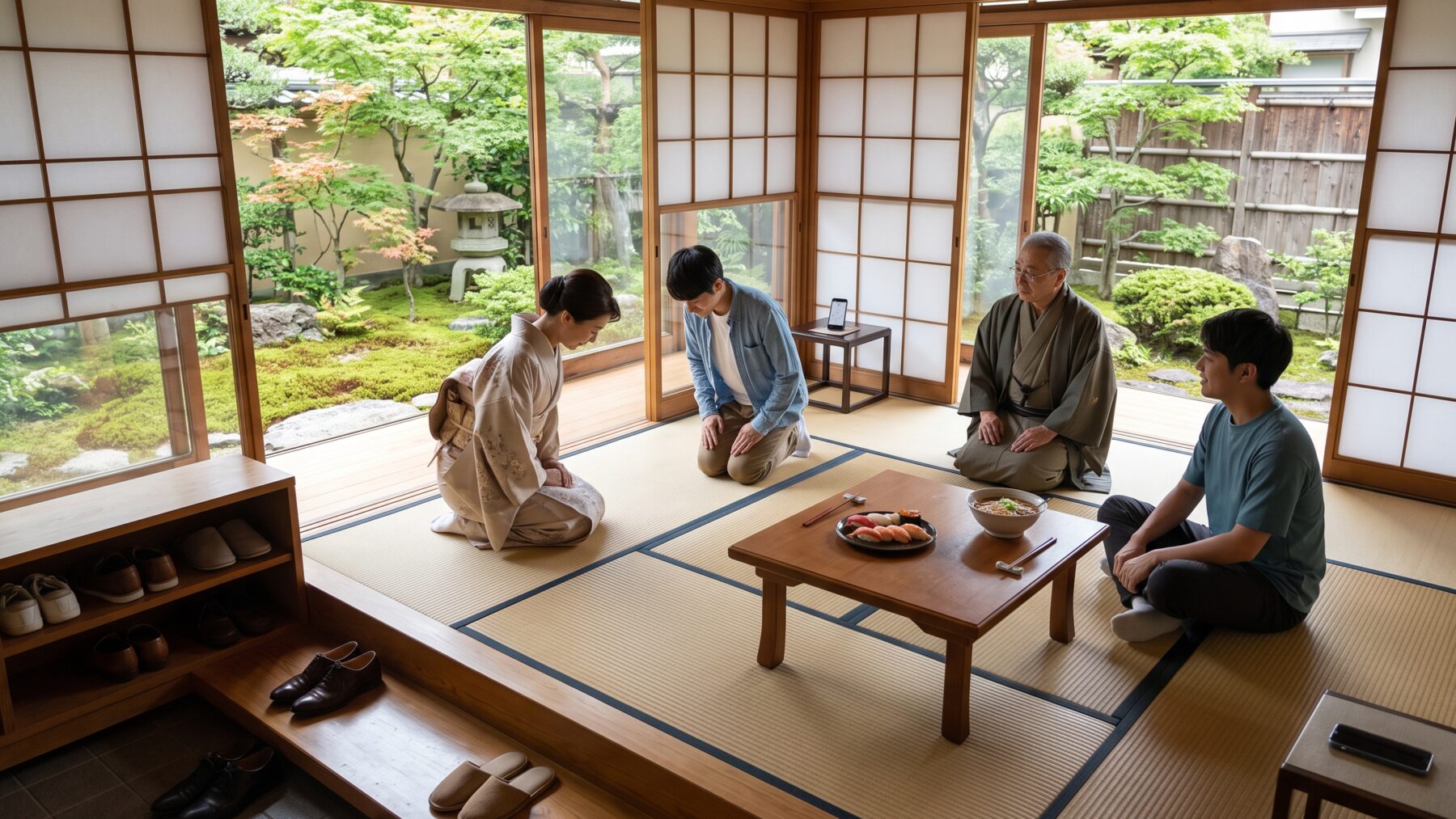
Visitors to Japan worry a great deal about causing offence, and almost none of them do. Japanese people do not expect foreigners to know Japanese customs, are pleased when they make an effort, and are far more tolerant of small errors than the internet suggests.
But there is a real distinction between the rules that matter and the ones that do not, and most etiquette guides do not draw it. Here is the honest version.
At a glance
- The principle
- Do not inconvenience the people around you. Everything follows from this.
- Genuinely matters
- Noise, shoes, queueing, rubbish, cash handling, not eating while walking
- Does not matter
- Bowing depth, chopstick technique, using the wrong greeting
- Never do
- Stand chopsticks in rice, pass food chopstick to chopstick, tip
- When unsure
- Watch what everyone else is doing and copy it. This always works.
The principle
Japanese social norms are built around meiwaku — causing trouble or inconvenience to others. Almost every rule you will encounter is a specific application of one idea: your presence should not make life harder for the people around you.
Once you see it, the individual rules stop needing memorisation. Talking loudly on a train is meiwaku. Blocking a pavement with a suitcase is meiwaku. Leaving rubbish for someone else to deal with is meiwaku. Wearing outdoor shoes into a house is meiwaku, because someone cleans that floor.
The eight that matter
1. Be quiet on public transport
The most visible difference from most countries. Trains are near-silent. Do not take phone calls — go to the vestibule between carriages. Keep conversation low. Use headphones and check they are not leaking.
This is the rule most frequently broken by visitors and most noticed by everyone else.
2. Take your shoes off
At homes, ryokan, temple interiors, some restaurants, changing rooms, and anywhere there is a raised step or a row of slippers at the door.
The line where the floor level changes is the boundary. Step out of your shoes onto the raised floor without letting your socked foot touch the lower one, and turn your shoes to face the door.
Toilet slippers are a separate pair, kept in the bathroom. Wear them in there and take them off when you leave. Walking out into the room in toilet slippers is the classic visitor mistake and is genuinely embarrassing.
Wear socks without holes. You will be seen in them constantly.
3. Queue
Marked positions on platforms, orderly lines at shops, and lifts and escalators boarded in order. Do not join a queue at the side.
Escalators: stand on one side, walk on the other. Tokyo stands left; Osaka stands right. Watch and copy. Note that many stations now campaign against walking on escalators at all, so standing still on either side is increasingly acceptable.
4. Take your rubbish with you
Japan has almost no public bins — a legacy of the 1995 sarin attack — and yet the streets are clean, because people carry their rubbish home.
Carry a small bag. Convenience stores have bins by the door for things bought there. Do not leave rubbish on a bench, in a park, or on a train seat.
5. Use the tray for money
Almost every till has a small tray. Put notes and coins in it rather than in the cashier’s hand. Change comes back the same way, often counted out to you.
6. Do not eat while walking
Mildly frowned upon in most contexts and genuinely disapproved of in crowded shopping streets — Kyoto has posted signs about it in Nishiki Market and parts of Gion.
Buy the street food, stand near the stall, eat it, then walk.
7. Do not tip
Not in restaurants, taxis, hotels or anywhere. Leaving money will cause confusion and often someone chasing you down the street to return it.
→ Tipping in Japan, and why nobody wants your money
8. Two chopstick rules
- Never stand chopsticks upright in rice.
- Never pass food chopstick to chopstick.
Both resemble funeral rites and both are genuinely uncomfortable to see. Everything else about chopsticks is minor.
The ten that do not matter
Things visitors worry about that nobody expects of you.
- Bowing correctly. A small nod is plenty. Nobody expects a foreigner to calibrate bow depth, and a handshake is fine.
- Perfect chopstick technique. Awkwardness is expected and unremarked. Forks are available if you ask.
- Using the right level of politeness in Japanese. Any attempt at Japanese is received warmly. Sumimasen and arigatou gozaimasu cover almost everything.
- Slurping or not slurping. Both are fine. Slurping hot noodles is normal and helps; not doing it is also fine.
- Which greeting for the time of day. Getting konnichiwa and konbanwa mixed up is invisible.
- Pouring soy sauce. Nobody is watching the amount you use.
- Business card ceremony. Only relevant if you are actually doing business.
- Removing your backpack on the train. It is polite and worth doing when crowded, but not a rule.
- Wearing a mask. Common but no longer expected. Do as you prefer.
- Saying itadakimasu. Nice if you do; nobody minds if you do not.
Situational specifics
Temples and shrines — bow at the gate, do not walk down the exact centre of a shrine approach, wash your hands at the basin. Photography rules vary and are posted.
→ Shrines and temples: what to do from the gate onwards
Onsen — wash thoroughly before entering, no swimwear, no towel in the water, no splashing. Tattoos may be an issue.
→ Onsen for beginners: rules, tattoos and the small towel
Restaurants — call staff with sumimasen rather than waiting to be noticed. Pay at the till.
Photographing people — ask. In Kyoto’s Gion, photographing geiko and maiko on the street is prohibited with posted fines.
Gifts — if someone gives you something, receive it with both hands. Small gifts from your home country are appreciated but not expected.
Things visitors get wrong that actually annoy people
Worth stating plainly, because these are the ones locals mention.
- Talking loudly on trains and in quiet places.
- Blocking pavements and station corridors with luggage or by stopping in flows of people.
- Photographing people without asking, especially in residential areas and in Gion.
- Trespassing for photographs — private lanes and residential gardens are not attractions.
- Being drunk and loud outside. Drinking is tolerated; noise is not.
- Ignoring queue systems at attractions, buses and shops.
None of these are cultural subtleties. They are the same things that would annoy people anywhere; Japan just has less tolerance for them and less inclination to say so.
The polite basics
What Japanese people actually think
Worth saying, because the anxiety is disproportionate.
Japanese people are overwhelmingly pleased that you came, interested in where you are from, and entirely unsurprised when you do not know a custom. The standard applied to visitors is not the standard applied to residents, and everyone knows it.
The things that generate genuine irritation are not etiquette failures — they are the noise, the litter and the blocking. Get those three right and you will be a good guest by any measure.
→ What Japanese people think of tourists, and the unspoken rules
Questions people actually ask
Do I need to bow?
A small nod is enough, and a handshake is perfectly acceptable. Nobody expects a foreign visitor to bow correctly, and over-bowing looks more awkward than not bowing.
Is it rude to speak English to people?
No. Open with sumimasen, then ask Eigo wa hanasemasu ka? — do you speak English. Most people will try hard to help even with limited English.
What if I make a mistake?
Say sumimasen and correct it. Nobody will be angry, and most errors go unremarked entirely.
Can I wear shorts and casual clothes?
Yes. Japanese dress is neat rather than formal, and no visitor site has a dress code. Shorts on adult men are less common in cities outside high summer, which is a fashion observation rather than a rule.
Are tattoos a problem?
Only at onsen, public baths, some gyms and pools. On the street they attract no attention at all in cities.
Should I learn Japanese before going?
Not necessary, but five phrases transform interactions. Sumimasen, arigatou gozaimasu, onegai shimasu, kore o kudasai and gochisousama deshita will carry a whole trip.
Keep planning
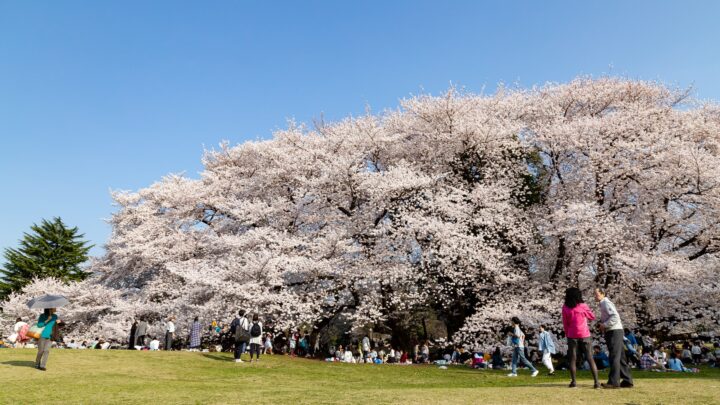
The Japanese Year: Hanami, Tsuyu, Momiji and New Year
Japan pays more attention to the calendar than almost any country, and the whole population moves in step with it. What each…

Matsuri: What Happens at a Japanese Festival and How to Join In
Portable shrines carried by four hundred people, illuminated paper warriors, and a dance anyone can join. The dozen festivals worth planning a…
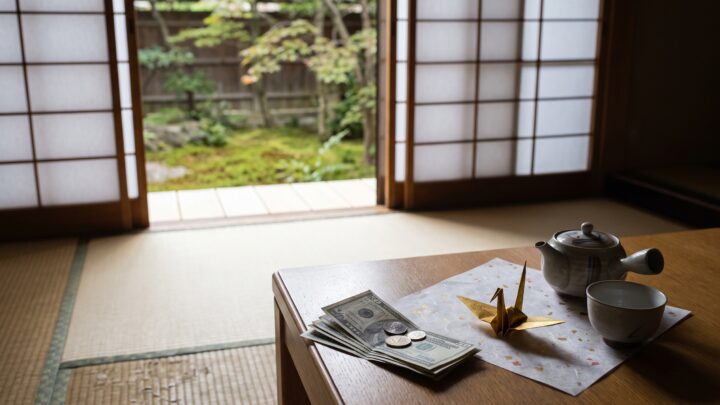
Tipping in Japan, and Why Nobody Wants Your Money
There is no tipping in Japan, in any situation, and attempting it causes a small crisis. Here is why, what the charges…